Welcome to CENFACS’ Online Diary!
17 June 2026
Post No. 461

The Week’s Contents
• Execution of the Third Energy Crisis Mitigation and Poverty Reduction Codes for CEDM (Creative Economic Development Month) 2026 Sub-themes (from Week Beginning Monday 15/06/2026)
• Matching Organisation-Investor via a Clean Cooking Project – Activity 4 (15 to 21/06/2026): Matching Organisation’s Monitoring and Verification with Investor’s Monitoring, Verification and Co-benefits
• Thanksgiving Days: Supporters’ Days (29 & 30/06/2026)
… And much more!

Key Messages
• Execution of the Third Energy Crisis Mitigation and Poverty Reduction Codes for CEDM (Creative Economic Development Month) 2026 Sub-themes (from Week Beginning Monday 15/06/2026)
To introduce these Third Codes and this week’s work on CEDM 2026, we are going to briefly explain the Third Energy Crisis Mitigation and Poverty Reduction Codes, unveil the creations and innovations for both sub-themes 1 and 2, and highlight the codes for each sub-theme composing the Third Codes.
• • What Are the Third Energy Crisis Mitigation and Poverty Reduction Codes for CEDM 2026?
Let us first explain energy codes, then the two types of codes making our sub-themes 1 and 2.
• • • What are Energy Codes (ECs)?
ECs refer to either building Energy Codes (which dictate how efficiently structures use energy) or Energy System Codes (the regulatory rules governing the gas and electricity markets). Let us summarize them.
Building Energy Codes (also known as Efficiency and Construction Codes) are sets of regulations and building standards that dictate the energy efficiency requirements for new construction and major renovations. They establish minimum performance standards for insulation, windows, lighting and HVAC (heating, ventilation, and air conditioning) systems.
Energy Industry Codes (also termed as Markets and Grid Rules) are – in deregulated utility markets – the heavy-duty, legal and commercial documents that govern the electricity and gas systems. They dictate how energy suppliers, network operators, and consumers interact.
In the context of CEDM 2026, we are dealing with Energy Crisis Mitigation and Poverty Reduction Codes. What are they?
• • • The Third Energy Crisis Mitigation Codes
Energy Crisis Mitigation Codes (ECMCs) are regulatory frameworks and emergency guidelines used by government and grid operators to manage critical fuel or electricity shortages. In the UK (1), these are primarily governed by the Electricity Supply Emergency Code (ESEC), which outlines how the grid enforces demand reductions and protects vulnerable consumers during severe supply constraints.
In the last two weeks, we provided the First and Second ECMCs for CEDM. This week, we are publishing the Third ECMCs for CENFACS’ CEDM.
• • • The Third Energy Poverty Reduction Codes
Energy Poverty Reduction Codes (EPRCs) refers to regulation frameworks, building energy standards and utility guidelines designed to protect vulnerable households and reduce the costs of heating, cooling, and powering homes. They fall into two categories: a) Building and Housing Standards b) Utility and Consumer Protection Codes.
a) Building and Housing Standards
These are regulatory codes that mandate minimum energy efficiency for homes, specifically targeting lower-income households. They are used to upgrade housing stock to reduce the amount of energy required to stay warm or cool. They include Minimum Energy Efficiency Standards (MEES) and Energy Performance Certificates (EPC).
b) Utility and Consumer Protection Codes
These are codes of practice and regulatory rules that energy providers must follow to prevent vulnerable customers from being disconnected or overcharged. They include Priority Services Registers (PSR), Disconnection Protections, Social Tariffs, etc.
These reduction codes work in tandem with government initiatives to fund free insulation, heat pumps, and solar installation for qualifying households.
The Third Codes for CEDM (Creative Economic Development Month) 2026 Sub-themes refer to a set of rules or principles allowing for action on creative economic development during June 2026. They help in delivering the activities planned for the CEDM 2026. They also identify the third level of sub-themes for CEDM 2026.
• • Unveiling Creations and Innovations for CEDM (Creative Economic Development Month) 2026 Sub-themes
We have two types of creations and innovations as explained below.
• • • Creations and Innovations to Mitigate the Impacts of Energy Crisis (for Sub-theme 1)
• • • • Creations to Mitigate the Impacts of Energy Crisis (CMIEC)
For the Third Codes of CEDM 2026, these creations are those to Transition to Affordable Renewable Energy.
The corresponding codes for this third category involve
σ Community renewables
σ Energy as-a-service
σ Decentralized generation.
• • • • Innovations to Mitigate the Impacts of Energy Crisis (IMIEC)
For the Third Codes of CEDM 2026, these innovations are Decentralised and Community Energy.
The matching Codes are those capturing bottom-up, localized technological solutions. They include
σ Off-grid renewable installations
σ Off-grid biogas plants to mitigate cooking fuel costs
σ Zero-upfront-cost installations via community energy programmes
Etc.
• • • Creations and Innovations to Tackle Long-term Energy Poverty (CITLTEP) (for Sub-theme 2)
• • • • Creations to Tackle Long-term Energy Poverty (CTLTEP)
For the Third Codes of CEDM 2026, these creations are Behavioural Energy Advice and Consumer Empowerment.
These codes refer to
σ Grassroots
σ Educational interventions
σ Guidance interventions.
They encompass energy literacy and community initiatives.
• • • • Innovations to Tackle Long-term Energy Poverty (ITLTEP)
For the Third Codes of CEDM 2026, these innovations are Behavioural and Educational Measures.
These codes highlight consumer-facing strategies designed to empower low-income households. The relevant Codes are
σ Tailored energy advice
σ Behavioural change through educational campaigns
σ Monitoring and evaluation.
The above-mentioned creations and innovations and corresponding codes are making up this week’s work on CEDM 2026. They are part of projects of CEDM 2026 this week’s CEDM 2025 Working Plan.
For those who may be interested in any of the above-mentioned codes of each sub-theme of this plan, they can read more under the Main Development section of this post.

• Matching Organisation-Investor via a Clean Cooking Project – Activity 4 (15 to 21/06/2026): Matching Organisation’s Monitoring and Verification with Investor’s Monitoring, Verification and Co-benefits
Both African Charity Investee’s/Africa-based Sister Charitable Organisation (ACI/ASCO) and Not-for-profit (NFP) Impact Investor agreed to align their respective views on distribution as well as on key success metrics to track, to measure product adoption, such as conversion rate, time to value, and frequency of purchases. NFP Impact Investor has accepted the implementation plan of Clean Cooking Project (CCP) proposed by ACI/ASCO.
ACI/ASCO has committed to employ communication, community engagement and data-driven insights to connect with CCP beneficiaries to create change that lasts. Additionally, both parties agree to shift from traditional models to results-based financing (RBF), outcome contracts, and co-designed community interventions.
Because of these alignments (on distribution, adoption, implementation and behaviour), they have decided to move to the next stage (Activity 4) of these matching talks, which is Monitoring and Verification for ACI/ASCO and Monitoring, Verification and Co-benefits for NFP Impact Investor.
To deal with this Activity 4, we have organised the notes in the following manner:
σ Activity 4 Matching Concepts
σ African Charity Investee’s/Africa-based Sister Charitable Organisation’s Monitoring and Verification
σ Not-for-profit Impact Investor’s Monitoring, Verification and Co-benefits
σ Reaching a Negotiated Agreement
σ The Match or Fit Test.
Let us look at each of these headings.
• • Activity 4 Matching Concepts
There are three main concepts forming this Activity 4. These concepts are monitoring, verification and co-benefits. Let us explain them.
• • • Monitoring
According to ‘evalcommunity.com’ (2),
“Monitoring is a process of observing and tracking activities and progress. It is a critical component of any successful project, intervention, public policy, or programme”.
It is indeed an ongoing continuous process requiring the collection of data at multiple points throughout the programme or project cycle, including at the beginning to provide a baseline and goals.
Charities Evaluation Services (3) argues that
“When you monitor, you can collect information on a wide variety of things relevant to the project. You are most likely to need information on your outputs and your outcomes” (p. 16).
ACI/ASCO will likely need information on how its CCP activities will be running, and progress towards its CCP objectives. Likewise, it will also include information to check the changes that will result from CCP activities, and progress towards meeting its aims.
• • • Verification
The UK Government (4) explains that
“Verification is an activity that ensures that a solution (or part of) is complete, accurate, reliable and matches its design specification”.
Literature on verification also indicates that verification should not be confused with validation. Validation is, according to the UK Government (op. cit.),
“An activity that ensures a solution (or part of) meets the needs of the business. Validation ensures that business requirements are met even though these might have changed since the original design”.
ACI/ASCO needs to have a clear idea about the way it will verify CCP. Likewise, its understanding of verification has to meet NFP Impact Investor’s own interpretation of verification if there has to be any change of agreement between the two.
• • • Co-benefits
The website ‘sustainability-directory.com’ (5),
“Co-benefits are the additional positive outcomes that occur alongside the primary goal of a sustainability initiative, enhancing its overall value”.
ACI/ASCO needs to elucidate the full spectrum of positive outcomes or additional advantages or positive ripple effects of the CCP.
For instance, the website ‘cleancooking.org’ (6) provides 10 Key Co-benefits of Clean Cooking for Climate, Nature, and Communities. ACI/ASCO can mention the co-benefits of CCP to match NFP Impact Investor’s understanding of co-benefits.
The above-mentioned key concepts will determine the way in which each side of these negotiations will perform in this Activity 4.

• • African Charity Investee’s/Africa-based Sister Charitable Organisation’s Monitoring and Verification
Ther are two aspects that require clarification: data collection and carbon crediting.
Concerning data collection, ACI/ASCO needs to demonstrate that it has a strategy to collect data, to track stove usage, fuel consumption, and user experiences to ensure the technology is actually being used as intended.
Regarding carbon crediting, ACI/ASCO can prove that it will gather data for carbon emission reductions to meet criteria for international standards such as Gold Standard. This will verify the carbon credits that often fund these projects.
In brief, ACI/ASCO needs to have a monitoring plan and explain to the NFI Impact Investor what it will monitor and the types of monitoring and verification it will conduct. For instance, will it use process monitoring or real-time monitoring or progress tracking or progress validation or performance monitoring?
• • Not-for-profit Impact Investor’s Monitoring, Verification and Co-benefits
The focus for NFP Impact Investor is on gathering field-level data on stove usage, carbon reductions, and health improvements. The NFP Impact investor will want also to know about the tracking of reductions in indoor air pollution (SDG 3) and reductions in time-poverty for women, ensuring CCP aligns with broader development mandates where it will be implemented.
In response to the NFP Impact Investor, ACI/ASCO can show that CCP will not only reduce carbon emissions but also will support the health and livelihoods of communities most impacted by climate change. CCP will also offer health, gender and deforestation co-benefits, addressing the dire consequences of polluting fuels on health and the environment.
The above-mentioned metrics will be the measures to be used to reach an agreement between ACI’s/ASCO’s M&V and NFP Impact Investor’s M, V&C.

• • Reaching a Negotiated Agreement
The two sides (ASCO and the NFP Impact Investor) need to reach a negotiated agreement on the contents of Monitoring and Verification (MV) for the former and Monitoring, Verification and Co-benefits (M, V&C) for the latter. It means they need to align their positions.
• • • Aligning their positions
Aligning their positions requires a hybrid measurement, reporting, and verification (MRV) framework. Both ACI/ASCO and NFP Impact Investor can align by adopting recognized certifications, integrating tech-enabled tracking, and implementing tierced Key Performance Indicators (KPIs).
They can adopt standardized frameworks and certifications by aligning on recognized third-party methodologies in terms of carbon credits, health and gender co-benefits.
They can also implement tech-enabled monitoring by using modern tech bridges like Internet of the Things (IoT) stove sensors and digital platforms.
They can further establish tierced and phased KPIs by using output metrics, outcome metrics, and phased rollout.
They can instead co-design the theory of change by involving local stakeholders and community members in project design, ensuring that the data being collected reflects actual community benefits.
They can as well consider outcome-based financing structures by exploring Results-Based Financing (RBF) or reputable independent third-party verification agents to validate the impact-relieving from direct auditing duties.
They can finally use alignment metrics.
• • • Alignment metrics
ACI/ASCO and NFP Impact Investor can use alignment metrics across three pillars: emissions reductions, health/socio-economic co-benefits, and technology adoption. This will allow ACI/ASCO to access results-based carbon finance with meeting NFP Impact Investor‘s impact reporting requirements.
They can use the following metrics:
σ Carbon and Emission Metrics (e.g., Emissions Averted, Fuel Savings and Device Performance)
σ Technology Adoption and Usage Metrics (e.g., Usage Rate, Stove Stacking)
σ Socio-economic Co-benefits Metrics (e.g., Time Saving for gathering fuel or cooking, Health Empowerments, Economic Empowerment, etc.).
The NFP Impact Investor can specify that it is prioritizing most, for instance carbon credits, gender or health.
By proceeding in the above-stated manner they can reach an agreement. If there is a disagreement between ASCO and NFP Impact Investor, this could open up the possibility for a match/fit test. The match/fit test can be carried out to try to help the two sides of the matching process. The match/fit test can also be undertaken if there is a disagreement on any of aspects of CCP.
• • The Match or Fit Test Service
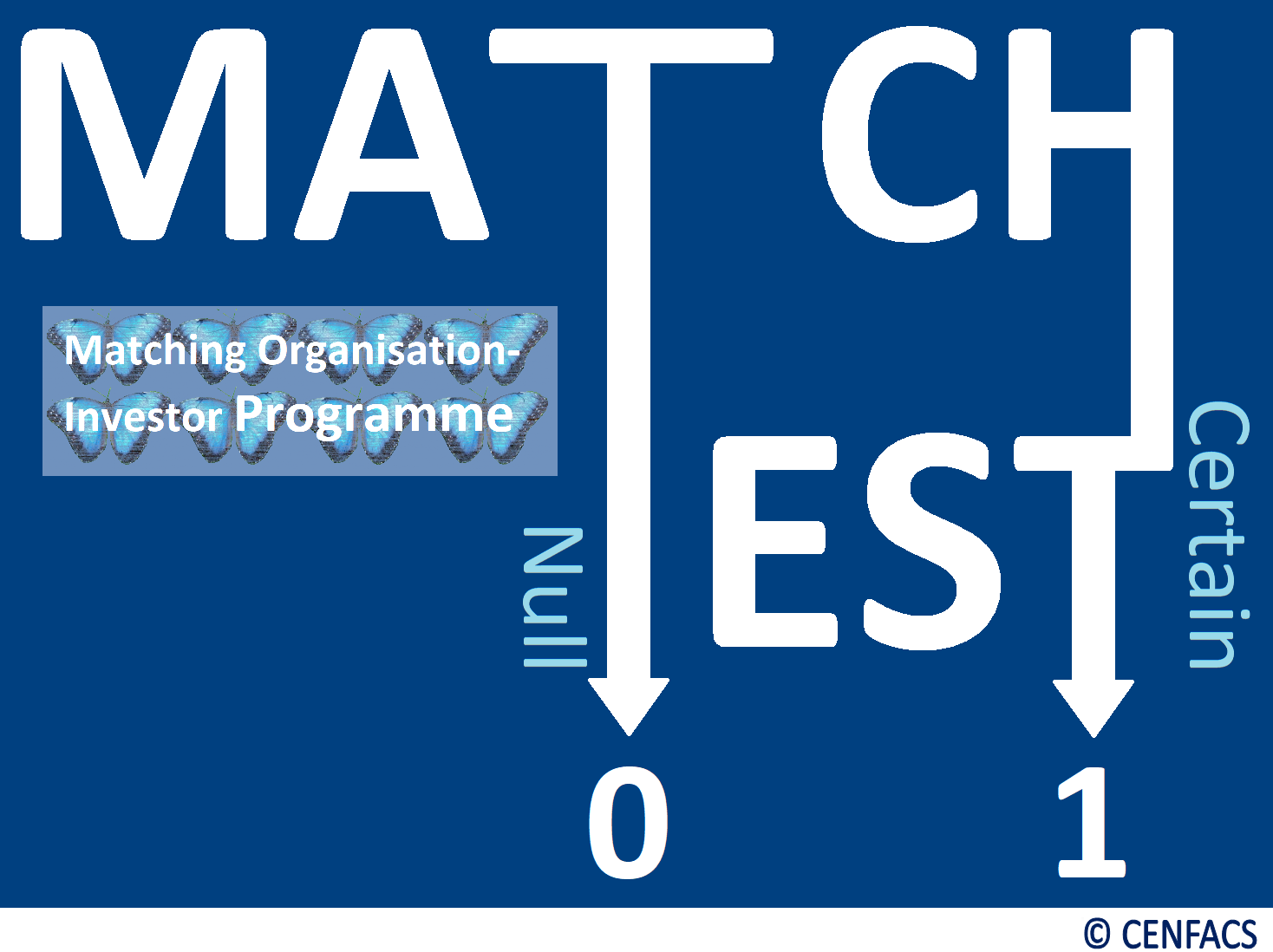
As part of the match or fit test, the contents of ACI/ASCO’s M&V Stage must be matched with NFP Impact Investor’s view on M, V&C. The match test (or matched sampling) will help to increase the accuracy and statistical efficiency of the study of the CCP by carefully selecting subjects for comparison. The purpose here will be to increase the statistical efficiency of the study on CCP by controlling for confounding variables when forming a sample.
The fit test will assist in determining how well the observed sample data matches a specified theoretical distribution. The fit test will check if the data collected fits a model or an assumed population distribution. So, the purpose of the fit test is to validate or invalidate the statistical model by checking if the sample data follows an expected distribution.
The match can be perfect or close (that is, when every unit is paired with an equivalent unit) in order to reach an agreement. If there is a huge or glaring difference between the two (i.e., between what the NFP Impact Investor’s approach to M&V Stage and what ACI/ASCOC is saying about its M&V Stage, between what the investor would like the M&V Stage to indicate and what ASCO’s M&V Stage is really saying), the probability or chance of having an agreement at this Fourth round of negotiations could be null or uncertain.
• • • Impact Advice to ASCO and Guidance to NFP Impact Investor
Where there could be a disagreement, CENFACS can impact advise ACI/ASCO to improve the contents of its M&V Stage. CENFACS can as well guide NFP Impact Investors to work out their expectations in terms of M&V Phase to a format that can be agreeable by potential ASCOs.
CENFACS’ impact advice for ASCOs and guidance on impact investing for NFP Impact Investor, which are impartial, will help each of them (i.e., investee and investor) to make informed decisions and to reduce or avoid the likelihood of any significant losses or misunderstandings or mismatches.
• • • The Rule of the Matching Game
The rule of the game is the more impact investors are attracted by ACI’s or ASCOs’ M&V Stage the better for ACIs or ASCOs. It means that ACI’s or ASCOs’ process must pass the attractiveness test (that is, the evaluation of market’s appeal). Likewise, the more ACIs or ASCOs can successfully respond to impact investors’ level of enquiries and queries about the CCP the better for investors. In this respect, the matching game needs to be a win-win one to benefit both players (i.e., investee and investor).
The above is the Fourth Activity of the Matching Organisation-Investor via CCP.
Those potential organisations seeking investment to set up a CCP and NFP Impact Investors looking for organisations that are interested in their giving, they can contact CENFACS to be their matchmaker to find their perfect investee or investor.
• • • CENFACS as a Matchmaker
As a Matchmaker, CENFACS can streamline your search process, save time, money and resources to help you find the perfect match in the world of impact investing.
CENFACS platform will help facilitate the matching process between investees and investors. By leveraging the power of AI tools, CENFACS’ Matching Organisation-Investor Programme can streamline the search process for funding opportunities, connecting African charities and impact investors/funders.
Briefly speaking, CENFACS can work with matching applicants and use AI to match organizations with the right impact investors, filtering profiles based on development stages, sectors, and aims.
In this matching process, CENFACS can arrange the match or fit test for them. They can have their fit test carried out by CENFACS’ Hub for Testing Hypotheses.
• • • CENFACS’ Hub for Testing Hypotheses
The Hub can help use analysis tools to test assumptions and determine how likely something is within a given standard of accuracy. The Hub, which can serve as a learning or reference place for those who would like to understand and apply statistical hypothesis testing, can assist to
√ clean, merge and prepare micro-data sources for testing, modelling and analysis
√ conduct data management and administration
√ carry out regression analysis, estimate and test hypotheses
√ interpret and analyse patterns or trends or insights in data or results.
In this respect, CENFACS’ H-tests Hub is knowledge repository designed to demystify the process of using data to make informed decisions and move beyond intuition and guesswork.
For instance, in the context of this Activity 4, it is possible to evaluate or test hypotheses whether ACI’s/ASCO’s M&V plans align with NFP Impact Investor’s M, V&C.
• • • • Hypotheses Testing around the agreement between ACI’s/ASCO’s Monitoring and Verification (M&V) and NFP Impact Investor’s Monitoring, Verification and Co-benefits
These hypotheses focus on reducing M&V costs, preventing impact washing, standardizing co-benefits, and de-risking results-based finance. Core hypotheses surrounding this dynamic include cost reduction and resource efficiency, the ‘Trojan Horse’ of co-benefits, impact verification integrity, and monetization and outcome pricing.
In the clean cooking sector, these hypotheses revolve around data harmonization, transaction costs and co-benefit quantification. These hypotheses explore how offering goals can be aligned into a cohesive (Monitoring, Reporting and Verification) framework.
For instance, if one considers monetization of co-benefits, one can test the ‘Premium Price’ Hypothesis, which can be stipulated as follows:
“There is a strong, tested hypothesis in impact investing that robust measurement of co-benefits – such as averted ill health (SDG 3) and increased women’s empowerment/quality time (SDG5) – will attract outcome buyers’ willingness to pay a premium for carbon Credits”.
Another example is when dealing with Transaction Costs and Administrative Burdens. One can use the Efficiency Hypothesis which can be formulated as follows:
“Integrating an investee’s localized baseline-tracking with a NFP Impact Investor’s standardized ESG reporting lowers administrative costs and avoids the duplication of resources”.
The above-mentioned hypotheses and other ones can be tested. Their results can contribute to the Matching Organisation-Investor via CCP.
Those who would like to apply hypothesis testing in fields of economic development or to deal with poverty reduction, they are welcome to use CENFACS’ H-tests Hub.
For any queries and/or enquiries about this Fourth stage (or phase) activity of Matching Organisation-Investor via CCP, please do not hesitate to contact CENFACS.

• Thanksgiving Day: Supporters’ Day (30 June 2026)
The last week of June is a thanksgiving one in accordance to CENFACS development calendar. On 29 and 30 June 2026, we will be thanking all our supporters (current and past ones).
We would like to take the opportunity of the end of June to thank them (and you if you are one of them) for helping…
CENFACS IN ENHANCING AND SUSTAINING FREEDOMS AND CAPABILITIES BY WORKING IN ALLIANCE WITH LOCAL PEOPLE TO DEVELOP SUSTAINABLE INITIATIVES.
• • What Do Mean by Thanking Day or Supporters’ Day?
This is a Special Day of Thank You within CENFACS we would like to dedicate to all those who contributed to our work for any types of support they have given us over this financial year. This dedication is normally held in the last week of and by the end of June. For this year, Thank-you Days will be held on 29 and 30 June 2026 in order to keep our tradition. CENFACS will use these two days to express gratitude, share impact stories and demonstrate how specific contributions have directly advanced CENFACS’ mission.
As we are in CENFACS’ Creative Economic Development Month and Year of Alternatives, we shall find all sorts of creative, innovative, restorative, alternative and communicative ways of thanking our invaluable supporters and backers.
The days will be structured around appreciation initiatives such as
√ Conversing with our supporters over phones
√ Signing and sending thank-you prints or e-cards to them
√ Telling them the stories or outcomes about the people and communities they helped through their support
√ E-mailing, texting and tweeting them with messages of gratitude
√ Telling and sharing thank-you stories
√ Playing and listening with them music and songs of thank you
√ Making and playing thank-you videos and films
√ Giving back to them by volunteering our time to the cause they deeply care about
√ Undertaking a free translation service (French to English and vice versa)
√ Reading African poems and poetry
√ Sending to them digital, generative AI (Artificial Intelligence) and technologically animated thank-you messages
√ Doing creative and design works symbolising thank you
√ Sending out designed and hand crafted made objects and crafts of acknowledgement
√ Making video calls if we cannot have in-person contact with them
Etc.
In Brief, these initiatives will revolve around four areas:
a) Impact reports and updates
b) Virtual and in-person events
c) Direct outreach
d) Public recognition.
If you are one of the CENFACS’ supporters, please we would like to let you know the Thanking Days at CENFACS are your Days. Do not hesitate to get in touch, if you do not mistakenly hear from us.
We will welcome you, reconnect with you and thank you on the occasion for the helpful difference you made to our work and project beneficiaries, and for being with us on the side of those in need especially during this challenging year of the lingering effects of the polycrises.
Your invaluable support has meant a lot for our programmes and project beneficiaries over this ending financial year.
We would like to express all our sincere gratitude to you for helping us to help reduce poverty – CENFACS’ noble and beautiful cause.
We would like as well to say thank you for making our voice heard especially in ever challenging world of polycrises and where the voices of the small are sometimes ignored or simply forgotten.
For further details, please contact CENFACS’ Thanksgiving-End-of-June-2026 Team.

Extra Messages
• Business Education Programme for Low-income Families to Reduce Poverty – In Focus from 15/06/2026: Financial Literacy and Capability Projects
• Fundraising for Creative Economic Development Month (CEDM)
• The Relationships between the Creator Economy, Poverty Reduction, and Creations and Innovations Month

• Business Education Programme for Low-income Families to Reduce Poverty – In Focus from 15/06/2026: Financial Literacy and Capability Projects
To continue our business education programme/campaign for low-income families, we are working on Financial Literacy and Capability projects this week. The plan for this week’s campaign is as follows:
σ Explanation of financial literacy and capabilities
σ The contribution of financial literacy and capabilities in reducing poverty for low-income families
σ Ways in which CENFACS can work with low-income families on financial literacy and capability projects.
Let us uncover each of these items.
• • Explaining Financial Literacy and Capabilities
• • • Financial Literacy
According to ‘financestrategists.com’ (7),
“Financial literacy is the capability to understand financial concepts and apply this skill in decisions related to savings, investments and debt management”.
From this perspective, the key components of financial literacy are budgeting and expenses management, retirement planning, insurance and risk management, and understanding financial products.
Low-income families planning or wanting to start up income-generating activities or micro-enterprises or entrepreneurship projects need to have or acquire financial literacy skills.
• • • Financial Capabilities
The definition of financial capability used here comes from the World Bank (8) which states that
“Financial capability is the internal capacity to act in one’s best financial interest, given socio-economic environmental conditions. Financial capability encompasses the knowledge, attitudes. skills, and behaviours of consumers with regard to managing their resources and understanding, selecting, and making use of financial services that fit their needs”.
Low-income families undertaking an income-generating activity or micro-enterprise or even entrepreneurship project need to have a certain amount of financial capabilities.
• • The Contribution of Financial Literacy and Capabilities in Reducing Poverty for Low-income Families
Financial literacy and capabilities can help low-income families escape poverty by enabling them to build savings, avoid costly debt and access mainstream financial services. This knowledge empowers these families to manage tight budgets, protect them against economic shocks, and invest in education or small-scale entrepreneurship.
For instance, financial literacy and capabilities can be a pathway to poverty reduction for those families fostering entrepreneurship. In this sense, understanding financial products can help these families secure funding and manage cash flow, which promotes successful small business ventures.

• • Ways of Work with Low-income Families on Financial Literacy and Capability Projects
CENFACS can work with low-income families making its community and sister communities by offering them financial literacy support tailored to their needs. This support can build the core money management skills and entrepreneurial confidence needed to launch or sustain successful income-generating activities, micro-enterprises, and entrepreneurial projects.
To build financial capabilities and foster entrepreneurships, CENFACS can implement the following targeted strategies:
σ Financial literacy e-workshops: We can work with them on e-workshops (which we have already doing through some of our programmes and projects) on practical skills covering personal budgeting, credit management and navigating taxes for the types of activities or businesses they are engaged in;
σ Signpost to mentorship: We can signpost them to business mentors who can guide them through cashflow forecasting, pricing strategies, and business plan creation;
σ Guidance on digital tools: We can direct them to affordable, user-friendly accounting software and digital payment systems to streamline bookkeeping.
Those who have any queries or enquiries to make about the topic of Families on Financial Literacy and Capability Projects, they can talk to CENFACS.
Those who may be interested in or willing to support Business Education Programme for Low-income Families to Reduce Poverty, they should not hesitate to contact CENFACS.

• Fundraising for Creative Economic Development Month (CEDM)
The Month of Creations and Innovations or Creative Economic Development Month at CENFACS is also of fundraising. There are two ways that creators and innovators can help CENFACS raise funding this month:
a) Sponsorship and selling creations
b) Donation of physical or digital creations.
Let us highlight them.

• • Innovations Sponsorship and Selling Own Creations
Those who would like can sponsor innovations and/or sell their own creations to raise funds for CENFACS’ beautiful and noble cause of poverty reduction. They can transform their old items into functional creations. They can craft items (like artwork, baked goods, digital art) and auction or sell them online. They can then direct the proceeds to CENFACS‘ cause if they wish.

• • CENFACS Zero-Waste e-Store with the Creative Collaboration from Creators in the Creator Economy
As part of CEDM (Creative Economic Development Month) 2026, CENFACS is appealing to creators in the creator economy to contribute to its poverty reduction campaign this end of Spring Season by leveraging their creative skills.
They can donate their physical or digital creations – such as games or light merchandise to CENFACS’ Zero-Waste e-Store bundles, with proceeds going directly to CENFACS poverty reduction and sustainable initiatives.
To direct your proceeds or donate, please contact CENFACS. Thank you!

• The Relationships between the Creator Economy, Poverty Reduction, and Creations and Innovations Month
CEDM provides a dedicated framework to celebrate and analyse the artistic expression and entrepreneurial drive that sustain the creator ecosystem. To find out how this can be done, let us first explain the creator economy, then highlight this relationship and see how the creators in the creator economy can accelerate poverty reduction.
• • What Is the Creator Economy?
The website ‘thecreatoreconomy.com’ (9) argues that
“The creator economy refers to the ecosystem of individuals, platforms, tools, and services that enable people to earn income by creating and distributing digital content. This includes video creators, writers, podcasters, visual artists, musicians, educators, and anyone who monetizes attention, expertise, or community through digital channels”.
The website ‘thecreatoreconomy.com’ also defines creator as anyone who produces original digital content.
• • The Relationship between the Creator Economy and CEDM
This relationship can manifest in specific ways such as
σ A month of opportunity for creators and enhancers of poverty reduction and sustainable development to review their craft models and highlight how their ideas can be turned into sustainable makings
σ A month of leveraging tools like Generative AI to further reduce poverty and enhance sustainable development.
CEDM is about generating new ideas, creations and innovations, while the creator economy is about executing those ideas into goods, services or sustainable platforms (for instance, to mitigate energy crisis and tackle long-term energy poverty).
Creators, particularly but not exclusively creators in the creator economy can help reduce and accelerate poverty reduction.
• • Creators in the Creator Economy as Poverty Reduction Accelerators
They can accelerate CENFACS’ poverty reduction mission by using their influence to drive large-scale fundraising campaigns, mobilizing young demographics who are traditionally hard to reach and creating systemic economic change by championing entrepreneurship and digital commerce for impoverished communities. Impact-driven creators can donate resources to poverty reduction causes, like CENFACS’ noble and beautiful one.
So, CEDM is also about looking at the above-mentioned relationships. Those who would like to find more about these relationships, they can contact CENFACS.

Message in French (Message en français)
• À paraître cet été 2026 : le numéro 92 de FACS s’intitulera
« La Comptabilité et la Tenue de Livres des Organisations Caritatives Africaines au Service de la Réduction de la Pauvreté en Afrique »
La comptabilité et la tenue de livres sont essentielles à la réduction de la pauvreté en Afrique. La Comptabilité et la Tenue de Livres des Organisations Caritatives Africaines au Service de la Réduction de la Pauvreté en Afrique (CTLOCASRPA), en particulier, impliquent le suivi et le rapport financiers spécifiques que les organisations caritatives africaines peuvent utiliser pour gérer leurs ressources et prouver leur impact.
CTLOCASRPA contribuent à garantir que les subventions et dons internationaux soient strictement consacrés aux problèmes systémiques tels que la pauvreté, la faim, l’insécurité alimentaire, les épidémies, etc. Outre la démonstration de l’impact, CTLOCASRPA permettent aux petites et moyennes organisations caritatives d’obtenir des financements et de prévenir les échecs de leur modèle économique et de leur organisation. Elles aident également les gouvernements à suivre efficacement les dépenses sociales, à garantir la transparence fiscale et à optimiser les ressources publiques pour les infrastructures essentielles et les programmes sociaux.
Il n’est pas surprenant que l’Université du Bénin (10) affirme que ces résultats soulignent que des pratiques comptables efficaces améliorent considérablement la transparence et la responsabilité financières, ce qui contribue à son tour à une gestion plus efficace des ressources dans les programmes de réduction de la pauvreté.
Les organisations caritatives africaines peuvent aborder la comptabilité en combinant des contrôles financiers standardisés avec des solutions de proximité s’appuyant sur les technologies. Pour lutter contre la pauvreté, elles doivent considérer la comptabilité comme un outil d’autonomisation qui renforce la confiance, débloque les financements des donateurs/rices et contribue directement à l’éducation financière des communautés qu’elles servent.
Cependant, il apparaît clairement que la comptabilité des organisations caritatives en Afrique sert principalement à garantir leur légitimité, à attirer des financements étrangers et à se conformer aux exigences et mécanismes complexes de déclaration légale. C’est pourquoi il est nécessaire d’établir une priorité entre la comptabilité des organisations caritatives africaines et la lutte contre la pauvreté. Autrement dit, la comptabilité des organisations caritatives africaines doit être mise au service de la réduction de la pauvreté. À cet égard, le 92e numéro de FACS vise à promouvoir l’utilisation de la comptabilité des organisations caritatives africaines comme levier direct de réduction de la pauvreté en Afrique.
Le 92e numéro de FACS traitera de la manière dont les organisations caritatives africaines peuvent aborder la comptabilité afin de mener à bien leur mission, notamment, mais pas exclusivement, la réduction de la pauvreté. Ce numéro examinera également comment elles tirent parti des technologies (notamment mobiles), telles que les services bancaires mobiles et les plateformes numériques, pour réduire leurs coûts administratifs. Il abordera en outre les questions de transparence, en particulier la forte dépendance des organisations caritatives africaines à l’égard de la comptabilité standardisée pour gérer les fonds des donateurs/rices et démontrer l’impact de leur action de lutte contre la pauvreté auprès des parties prenantes.
Le 92e numéro de FACS abordera les principales théories de la comptabilité en analysant leurs liens avec la réduction de la pauvreté en Afrique. Ces liens s’appuient sur de multiples cadres complémentaires, allant du développement économique local aux politiques publiques macroéconomiques. Ces théories clés expliquent comment le suivi des données permet aux individus de s’émanciper, améliore la gouvernance institutionnelle et contribue à l’édification de sociétés équitables. Parmi ces théories figurent la théorie des ressources appliquée aux microentreprises, l’inclusion financière et les théories comportementales, la gestion des finances publiques et la théorie institutionnelle, ainsi que la comptabilité critique et dialogique.
La comptabilité au service de la réduction de la pauvreté va au-delà des relevés traditionnels pour suivre les impacts multidimensionnels. Elle combine des indicateurs de gestion financière avec des indicateurs de performance socio-économique tels que l’indice de pauvreté multidimensionnelle, le niveau de pauvreté et le retour sur investissement communautaire. Le 92e numéro intégrera les indicateurs de comptabilité axés sur la lutte contre la pauvreté. Il comprendra notamment les indicateurs suivants :
σ Indicateurs fondamentaux de pauvreté et de développement humain, notamment l’indice multinational de pauvreté, l’indice de pauvreté et l’écart de pauvreté, l’indice de grande pauvreté et de gravité, ainsi que les ajustements relatifs aux ressources et aux coûts des ménages ;
σ Indicateurs d’allocation financière et de ressources, tels que le pourcentage des dépenses de programme, l’indicateur de contribution marginale et l’efficacité des dépenses ;
σ Indicateurs d’impact social et de RSI (retour social sur investissement), comprenant le RSI et le rapport entre les résultats et les impacts.
Ce 92e numéro ne se limitera pas à la simple description d’une comptabilité rigoureuse des fonds, d’une transparence absolue, du respect strict des conditions d’octroi des subventions, de la distinction entre fonds affectés et non affectés, du suivi des dépenses des programmes de lutte contre la pauvreté, de la démonstration d’un impact mesurable pour maintenir la confiance des donateurs/rices et la conformité réglementaire, ni à l’enregistrement et à la déclaration de la juste valeur marchande des contributions non monétaires (dons en nature). Il relatera également les impacts environnementaux obtenus grâce à l’intégration de la comptabilité du carbone et du capital naturel dans les normes comptables des organisations caritatives africaines.
Cette intégration implique de mesurer l’empreinte écologique des projets de réduction de la pauvreté (par exemple, l’accès à l’énergie ou le développement agricole), d’attribuer des valeurs financières ou physiques aux changements environnementaux et de suivre les indicateurs de durabilité parallèlement aux indicateurs clés de performance (ICP) financiers afin d’aligner la réduction de la pauvreté sur les Objectifs de Développement Durable des Nations Unies. Le 92e numéro mettra donc en lumière les stratégies clés de cette intégration, telles que le suivi des ICP environnementaux, l’adoption d’une comptabilité écosystémique et carbone, la réalisation d’analyses coûts-avantages pour la planète et le recours à des achats durables.
En bref, le 92e numéro montrera que les meilleures pratiques de comptabilité sont essentielles pour les organisations caritatives africaines, car elles peuvent les aider à bâtir des bases financières solides et à mieux accomplir leur mission. Il informera également les lecteurs/rices que ces pratiques comptables seront pertinentes et éclairantes si elles répondent aux besoins et attentes des populations pauvres d’Afrique.
Pour en savoir plus sur ce nouveau numéro, veuillez consulter régulièrement les publications de CENFACS durant l’été 2026. Pour réserver un exemplaire papier de ce 92e numéro de FACS, veuillez contacter CENFACS en indiquant vos coordonnées postales.

Main Development
• Execution of the Third Energy Crisis Mitigation and Poverty Reduction Codes for CEDM (Creative Economic Development Month) 2026 Sub-themes (from Week Beginning Monday 15/06/2026)
The Third Energy Crisis Mitigation and Poverty Reduction Codes for CEDM 2026 Sub-themes will be executed under the following headings:
σ What Are Third Energy Crisis Mitigation and Poverty Reduction Codes for CEDM 2026?
σ Unveiling Creations and Innovations for CEDM (Creative Economic Development Month) 2026 Sub-themes and Corresponding Codes
σ Working with the Community and Africa-based Sister Organisations on Third Codes.
Let us uncover each of these headings.
• • What Are the Third Energy Crisis Mitigation and Poverty Reduction Codes for CEDM 2026?
Let us first explain energy codes, then the two types of codes making our sub-themes 1 and 2.
• • • What are Energy Codes (ECs)?
ECs refer to either building Energy Codes (which dictate how efficiently structures use energy) or Energy System Codes (the regulatory rules governing the gas and electricity markets). Let us summarize them.
Building Energy Codes (also known as Efficiency and Construction Codes) are sets of regulations and building standards that dictate the energy efficiency requirements for new construction and major renovations. They establish minimum performance standards for insulation, windows, lighting and HVAC (heating, ventilation, and air conditioning) systems.
Energy Industry Codes (also termed as Markets and Grid Rules) are – in deregulated utility markets – the heavy-duty, legal and commercial documents that govern the electricity and gas systems. They dictate how energy suppliers, network operators, and consumers interact.
In the context of CEDM 2026, we are dealing with Energy Crisis Mitigation and Poverty Reduction Codes. What are they?
• • • The Third Energy Crisis Mitigation Codes
Energy Crisis Mitigation Codes (ECMCs) are regulatory frameworks and emergency guidelines used by government and grid operators to manage critical fuel or electricity shortages. In the UK (op. cit.), these are primarily governed by the Electricity Supply Emergency Code (ESEC), which outlines how the grid enforces demand reductions and protects vulnerable consumers during severe supply constraints.
In the last two weeks, we provided the First and Second ECMCs for CEDM. This week, we are publishing the Third ECMCs for CENFACS’ CEDM.
• • • The Third Energy Poverty Reduction Codes
Energy Poverty Reduction Codes (EPRCs) refers to regulation frameworks, building energy standards and utility guidelines designed to protect vulnerable households and reduce the costs of heating, cooling, and powering homes. They fall into two categories: a) Building and Housing Standards b) Utility and Consumer Protection Codes.
a) Building and Housing Standards
These are regulatory codes that mandate minimum energy efficiency for homes, specifically targeting lower-income households. They are used to upgrade housing stock to reduce the amount of energy required to stay warm or cool. They include Minimum Energy Efficiency Standards (MEES) and Energy Performance Certificates (EPC).
b) Utility and Consumer Protection Codes
These are codes of practice and regulatory rules that energy providers must follow to prevent vulnerable customers from being disconnected or overcharged. They include Priority Services Registers (PSR), Disconnection Protections, Social Tariffs, etc.
These reduction codes work in tandem with government initiatives to fund free insulation, heat pumps, and solar installation for qualifying households.
The Third Codes for CEDM (Creative Economic Development Month) 2026 Sub-themes refer to a set of rules or principles allowing for action on creative economic development during June 2026. They help in delivering the activities planned for the CEDM 2026. They also identify the third level of sub-themes for CEDM 2026. These codes are summarised in the table below.

• • Unveiling Creations and Innovations for CEDM (Creative Economic Development Month) 2026 Sub-themes and Corresponding Codes
• • • Creations and Innovations to Mitigate the Impacts of Energy Crisis (for Sub-theme 1)
• • • • Creations to Mitigate the Impacts of Energy Crisis (CMIEC)
For the Third Codes of CEDM 2026, these creations are those related to Transition to Affordable Renewable Energy.
a) What are Creations to transition to affordable renewable energy?
They are those relating to the ongoing process of shifting energy production away from fossil fuels to cleaner, renewable energy sources. Because transition is essential to combat climate change and achieve net-zero carbon emissions, there is a need to have creations to accompany this transition.
b) Corresponding Codes for Creations to transition to affordable renewable energy
The corresponding codes for this third category involve
σ Community renewable energy: It refers to local, citizen-led clean energy projects that are democratically governed. Instead of being run by large centralized corporate utilities, these projects – like solar arrays, wind turbines, or local heat networks – are owned and controlled by local residents, businesses or councils.
σ Energy as-a-service (EaaS): EaaS is a pay-for-performance business models where a third party owns, installs and manages energy infrastructure (like solar panels, batteries. or HVAC). Instead of buying hardware, you pay a subscription for the energy outcomes (e.g., lower bills, backup power).
σ Decentralized generation: It is also called distributed generation and refers to the production of electricity or heat at or near the point of consumption, rather than at large, centralized power plants. Instead of relying entirely on massive grid infrastructure, it empowers individuals and businesses to become ‘prosumers’ through technologies like rooftop solar panels, wind turbines, and combined heat and power (CHP) systems.
• • • • Innovations to Mitigate the Impacts of Energy Crisis (IMIEC)
For the Third Codes of CEDM 2026, these innovations are Decentralised and Community Energy.
a) What are decentralized and community energy as innovations?
Innovations linked to decentralized energy systems (often referred to as distributed energy resources) are those brought by small-scale power generation technologies located close to the point of use, rather than at a large, centralized plant. These systems include solar panels, wind turbines, battery storage, microgrids, and even combined and power systems.
Innovations relating to community energy, on the other hand, are those involving local community or energy cooperatives which are groups of citizens, businesses, and public institutions that produce, share, and manage energy at the neighbourhood or district level (11).
b) Corresponding Codes for decentralized and community energy as innovations
The matching Codes are those capturing bottom-up, localized technological solutions. They include
σ Off-grid renewable installation: It is an independent energy system that generates, stores and consumes power without connecting to the centralized public utility grid;
σ Off-grid biogas plants to mitigate cooking fuel costs: These are decentralized energy generation system that converts organic waste into renewable power and heat. It operates independently of the central gas pipelines and main electrical networks, relying on anaerobic digestion to produce and utilize biogas directly via onsite.
σ Zero-upfront-cost installation: It is often referred to as an Energy-as-a-service model or 0-down finance and allows homes and businesses to install energy-efficiency upgrades – like solar panels, heat pumps or smart batteries – with no initial capital required. Instead of buying the hardware, the user pays for the energy generated or pays a fixed, low monthly service fee.
• • • Creations and Innovations to Tackle Long-term Energy Poverty (CITLTEP) (for Sub-theme 2)
• • • • Creations to Tackle Long-term Energy Poverty (CTLTEP)
For the Third Codes of CEDM 2026, these creations are Behavioural Energy Advice and Consumer Empowerment.
a) What are Creations related to behavioural energy advice and consumer empowerment?
Creations related to behavioural energy advice are those attached to strategies and interventions designed to encourage individuals to change their energy consumption habits. The advice aims to reduce energy consumption and bills by addressing barriers to energy efficiency and creating incentives for socially desirable energy-saving behaviours.
Creations connected to consumer empowerment are those giving consumer the power to make informal and impactful decisions in the marketplace. According to ‘sustainability-directory.com’ (12),
“Consumer empowerment is not solely about economic power. It is the ability to collectively organize and advocate for change and political power (influencing regulations and policy that protect consumer interests. It also encompasses informational power (having access to relevant data; social power)”.
b) Corresponding Codes for Creations related to behavioural energy advice and consumer empowerment
These codes refer to
σ Grassroots: A ‘grassroots’ energy code describes bottom-up energy policies or green building guidelines developed by local commnunities, not-for-profit organisations, or grassroots social movements. These initiatives focus on renewable energy, energy efficiency, and sustainability to fill infrastructural and regulatory gaps.
σ Educational interventions: They are part of building energy codes and refers to train, outreach, and capacity building programmes designed to teach architects, builders, and inspectors how to understand, apply, and comply with energy-efficiency standards. They ensure building codes translate from paper to practice.
σ Guidance interventions: In the context of the UK energy sector, guidance interventions refer to the regulatory tools, rule changes, and strategic direction Ofgem (13) uses to guide the energy industry codes. These codes set the commercial, operational, and technical rules for the gas and electricity systems.
• • • • Innovations to Tackle Long-term Energy Poverty (ITLTEP)
For the Third Codes of CEDM 2026, these innovations are Behavioural and Educational Measures.
a) What are Innovations associated with behavioural and educational measures?
Innovations associated with behavioural measures are those reflecting the techniques used in psychology and social sciences to assess observable behaviours rather than relying solely on self-reports or introspection (14).
Innovations associated with educational measures are those that are linked to the systematic processes, tools, and interventions used to quantify student abilities, track academic progress, or enforce corrective actions in a learning environment. The term ‘educational measures’ falls into two distinct categories: measurement and assessment or disciplinary and corrective action.
In terms of energy crisis mitigation and energy poverty reduction, educational measures include targeted behavioural campaigns, frontline professional training, and school-based climate literacy. These initiatives focus on improving energy efficiency, promoting clean energy, and empowering vulnerable groups with the knowledge to reduce utility costs.
b) Corresponding Codes for Innovations associated with behavioural and educational measures
These codes highlight consumer-facing strategies designed to empower low-income households. The relevant Codes are
σ Tailored energy advice: It refers to government-backed, personalized guidance designed to help households identify specific cost-effective energy-saving measures. It acts as a digital code or action plan to translate your home’s unique data into clear, actionable retrofit steps.
σ Behavioural change: It refers to the practice of reducing energy demand through human habit adjustments rather than structural or technological upgrades. It involves implementing policies, smart feedback systems, or corporate guidelines to influence occupants to actively save energy in their everyday lives.
σ Educational campaigns: It refers to structured initiatives and outreach programmes designed to promote energy conservation, build compliance awareness, and teach building occupants or construction professionals how to achieve maximums energy efficiency. These campaigns act as essential ‘soft’ energy code or compliance pathway-designed to bridge the gap between adopting strict technical rules and actually achieving the intended energy savings.
σ Monitoring and evaluation (M&E): M&E refers to the framework used to collect data on energy performance, track whether efficiency targets are being met, and analyze the real-world impact of decarbonization or retrofit projects. M&E generally breaks down into three key phases that ensure your energy initiatives – like building retrofits, renewable installations, or energy management programmes – are actually delivering the intended savings.
The above-mentioned creations, innovations and their corresponding codes are making up this week’s work on CEDM 2026. They are part of projects of CEDM 2026 and this week’s CEDM 2026 Working Plan.
• • Working with the Community and Africa-based Sister Organisations (ASOs) on these Third Codes
Concerning the work with our community members, it involves delivering direct frontline support, establishing community-led energy initiatives, and advocating for systemic policy changes for them like social tariffs.
It also encompasses the following:
σ Providing direct energy and money advice: Helping our members understand their energy costs. CENFACS energy advisors or volunteers can assist with matters such as tariff switching, securing fuel vouchers, navigating hardship energy funds, and other energy issues.
σ Campaigning and ‘lived experience’ advocacy: It is about mobilizing or encouraging our members to share their stories of fuel poverty to influence solutions to energy poverty.
σ Signposting our members to health and housing services if members are energy poor.
Regarding our work with ASOs, it is about
σ Supporting the rules that govern the Third Codes
σ Interacting with ASOs on CEDM 2026 matters
σ Helping them to prepare their own action on the Third Codes and CEDM 2026
σ Improving their user experience about the Third Codes and CEDM matters
σ Assisting them to develop appropriate strategy to act in various situations of the Third Codes and CEDM
Etc.
Those members of our community and ASOs willing to work with us on the Third Codes, they are welcome to contact CENFACS.
The above is the third execution of our CEDM 2026 Working Weeks and Plan.
For those who may be interested in any of the Third Codes of each sub-theme of this plan, they can contact CENFACS.
For those who would like to learn more about CEDM 2026, they can also communicate with CENFACS.
_________
• References
(1) https://www.gov.uk/government/publications/electricity-supply-emergency-code (accessed in June 2026)
(2) https://www.evalcommunity.com/wp-content/uploads/2023/07/what-is-Monitoring.pdf (accessed in June 2026)
(3) Charities Evaluation Services (2002), First Steps in Monitoring and Evaluation at www.ces-vol.org.uk
(4) https://projectdelivery.gov.uk/teal-book/home/part-of-solution-delivery/chapter-34-verification-and-validation/ (accessed in June 2026)
(5) https://pollution.sustainability-directory.com/term/co-benefits/ (accessed in June 2026)
(6) https://cleancooking.org/news/10-key-co-benefits-of-clean-cooking-for-climate-nature-and-communities/ (accessed in June 2026)
(7) https://www.financestrategists.com/financial-advisor/financial-literacy/ (accessed in June 2026)
(8) https://responsiblefinance.worldbank.org/en/responsible-finance/financial-capability (accessed in June 2026)
(9) https://thecreatoreconomy.com/post/the-state-of-the-creator-economy-2026 (accessed in June 2026)
(10) https://repository.uniben.edu/role-accounting-poverty-reduction-through-transparency-and-accountability (accessed in June 2026)
(11) https://eiscouncil.org/beyond-the-grid-the-case-for-decentralized-energy-systems/(accessed in June 2026)
(12) https://esq.sustainability-directory.com/term/consumer-empowerment/ (accessed in June 2026)
(13) https://www.ofgem.gov.uk/energy-regulation/how-we-regulate/energy-codes (accessed in June 2026)
(14) https://neurolaunch.com/behavioural-measures-psychology/ (accessed in June 2026)
_________
• Help CENFACS Keep the Poverty Relief Work Going This Year
We do our work on a very small budget and on a voluntary basis. Making a donation will show us you value our work and support CENFACS’ work, which is currently offered as a free service.
One could also consider a recurring donation to CENFACS in the future.
Additionally, we would like to inform you that planned gifting is always an option for giving at CENFACS. Likewise, CENFACS accepts matching gifts from companies running a gift-matching programme.
Donate to support CENFACS!
FOR ONLY £1, YOU CAN SUPPORT CENFACS AND CENFACS’ NOBLE AND BEAUTIFUL CAUSES OF POVERTY REDUCTION.
JUST GO TO: Support Causes – (cenfacs.org.uk)
Thank you for visiting CENFACS website and reading this post.
Thank you as well to those who made or make comments about our weekly posts.
We look forward to receiving your regular visits and continuing support until the end of 2026 and beyond.
With many thanks.