Welcome to CENFACS’ Online Diary!
12 August 2026
Post No. 469

The Week’s Contents
• FACS Issue No. 92, Summer 2026: African Charity Bookkeeping and Accounting for Poverty Reduction in Africa
• Trend Analysis 2026 Activities from 12/08/2026
• Trend Analysis of CENFACS Services
And much more!

Key Messages
• FACS Issue No. 92, Summer 2026: African Charity Bookkeeping and Accounting for Poverty Reduction in Africa –
How to Make African Charity Bookkeeping and Accounting Direct Drivers of Poverty Reduction in Africa
Charity bookkeeping and accounting are foundational to poverty reduction in Africa. African Charity Bookkeeping and Accounting for Poverty Reduction in Africa (ACB&A4PRiA), in particular, involves the specific, financial tracking and reporting African Charities use to manage resources and prove their impact. ACB&A4PRiA helps ensure that international grants and donations are strictly spent on systemic issues such as poverty, hunger, food insecurity, epidemics, etc. Besides proving their impact, ACB&A4PRiA empowers Small and Medium-sized Charities to secure financing and prevent business model and charity failures, and help governments efficiently track social spending, ensure tax transparency, and optimize public resources for vital infrastructure and social programmes.
African Charities can approach bookkeeping by blending standardized financial controls with grassroots, tech-enabled solutions. To drive poverty reduction, they need to treat bookkeeping as an empowerment tool that builds trust, unlocks donor funding, and directly supports the financial literacy of the communities they serve.
However, evidence shows that bookkeeping and accounting for charities in Africa primarily serve as an instrument to ensure organisational legitimacy, attract foreign donor funding and navigate the complex statutory reporting requirements and mechanisms. Because of that, there is a need to prioritize the link between African Charity Bookkeeping and Accounting on one part and poverty reduction on the other. In this respect, the 92nd Issue of FACS aims at advocating to make African Charity Bookkeeping and Accounting direct drivers of poverty reduction in Africa.
The 92nd Issue of FACS is thus about how African Charities can approach bookkeeping and accounting in order to deliver their mission, particularly but not exclusively their poverty reduction mission. The Issue will also look at how they leverage technology (mobile tech), like mobile phone banking and digital platforms to reduce administrative costs. The Issue further covers transparency matters, in particular how African Charities heavily rely on standardized accounting to manage donor funds and try to prove the impact of their poverty alleviation work with stakeholders.
The 92nd Issue of FACS refers to key bookkeeping and accounting theories by investing the relationship between bookkeeping, accounting and poverty reduction in Africa. Their relationship is rooted in multiple complementary frameworks ranging from grassroots economic development to macro-level public policy. These key theories explain how tracking numbers empowers individuals, improves institutional governance, and helps shape equitable societies. Among these theories are the Resource-based View of Micro-enterprises, Financial Inclusion and Behavioural Theories, Public Financial Management and Institutional Theory, and Critical and Dialogical Accounting.
Bookkeeping and Accounting for Poverty Reduction as an area of work moves beyond traditional statements to track multidimensional impacts. It combines financial stewardship metrics with socio-economic performance indicators such as the Multidimensional Poverty Index, Poverty Depth, and Community Return on Investment. The 92nd Issue integrates the metrics for poverty-focused bookkeeping and accounting. In particular, it will include the following metrics:
σ Core Poverty and Human Development Metrics, which include Multinational Poverty Index, Headcount Index and Poverty Gap, Deep Poverty and Severity Index, Household Resource and Cost Adjustments;
σ Financial and Resource Allocation Metrics consisting of Programme Expense Percentage, Marginal Contribution Indicator, Spending Effectiveness, etc;
σ Social Impact and SROI (Social Return on Investment) Metrics comprising of SROI and Output vs Outcome.
The 92nd Issue is a more than just a story of strict fund accounting, absolute transparency, rigorous grant compliance, segregation between restricted and unrestricted funds, tracking poverty relief programme expenses, demonstration of measurable impact to maintain donor trust and regulatory compliance, recording and reporting the fair market value of non-cash contributions (in-kind donations). It is also a narrative of environmental impacts seized by integrating carbon and natural capital accounting into Africa’s standard bookkeeping and accounting for charities.
This integration involves measuring the ecological footprint of poverty reduction projects (e.g., energy access or agricultural development), assigning financial or physical values to environmental changes, and tracking sustainability metrics alongside financial Key Performance Indicators (KPIs) to align poverty reduction with the United Nations Sustainable Development Goals. The 92nd Issue therefore highlights key strategies for this integration like tracking environmental KPIs, adopting ecosystem and carbon accounting, performing cost-benefit analysis for the planet, and leveraging sustainable procurement.
In short, the 92nd Issue indicates that the best bookkeeping and accounting are for African Charities, the more they can help them build strong financial foundations and better accomplish their mission. It also informs readers that bookkeeping and accounting will be meaningful and insightful if they respond to the needs of the poor in Africa.
To get inside scoop on the Issue No. 92, please read the key summaries of its contents as provided under the Main Development section of this post.

• Trend Analysis 2026 Activities from 12/08/2026
We are carrying on with the four types of Trend Analysis 2026 Activities, which are:
a) Trend Analysis for CENFACS as a charity
b) User Activity Trend Analysis
c) Trend Analysis of the Poverty Reduction Market by following the Direction of Poverty Reduction via the Lack of Alternatives
d) Trend Analysis in Sustainable Development.
This week, we are dealing with the second focuses of these 2026 Summer Trend Analysis Activities; focuses which are given below.
• • Trend Analysis for CENFACS as a charity –
In Focus from Wednesday 12/08/2026: Donor Engagement
To analyse donor engagement, we shall deal with these three elements: donor audience identification, donor retention, and donor satisfaction. Let us briefly explain them.
• • • Donor audience identification
To identify CENFACS donors, we shall analyse the demographic data of donors and potential donors to decide if this identification process can help find out new audience segments and tailor our outreach efforts.
• • • Donor retention
This is the process of tracking donor retention rates (e.g., how many donors renewed their support during the financial year 2025-2026 or annually) can highlight areas where donor engagement strategies need improvement.
• • • Donor satisfaction
It is gathering feedback through surveys or other channels to check if the feedback exercise can help understand donor motivations, satisfaction levels, and areas where CENFACS can improve its communication and impact.
To better deal with the above-mentioned three elements, we are going to use donor engagement metrics, which are key indicators of how involved and connected donors are with CENFACS. Among these metrics, we can mention donor retention rate, donor lifetime value, donor acquisition rate, donor acquisition cost, donor churn rate, etc.
• • User Activity Trend Analysis –
In Focus from Wednesday 12/08/2026: Development of User-centric Features
Within the literature about user activity trend analysis, user-centric features are defined as design elements and functionalities within a product or service that are specifically tailored to meet the needs, preferences, and expectations of the end-user. There are about prioritising usability, accessibility, and a positive user experience throughout the design process. The features ensure the product is easy to understand, efficient to use, and enjoyable for the user.
The development of these features will enable the following:
increased user satisfaction, improved usability, higher engagement and retention, reduced support costs, competitive advantage, etc.
• • Trend Analysis of the Poverty Reduction Market by following the Direction of Poverty Reduction via the Lack of Alternatives –
In Focus from 12/08/2026: Low Growth Elasticity
According to ‘brimco.io’ (1),
“Growth elasticity measures the responsiveness of a dependent variable’s growth rate to a change in an independent variable growth rate”.
Literature on the matter also suggests that growth elasticity measures how much a specific welfare or economic indicator changes in response to a percentage change in economic growth. It shows if economic growth actually helps improve people’s lives or reduce hardships. A high number means growth does a great job of quickly lowering poverty, whereas a low number signifies that economic expansion happens without very much helping lower income groups.
For instance, economic growth (that is, Gross Domestic Product increases) in parts of Sub-Saharan Africa translates less effectively into higher household incomes for the poorest populations compared to other global regions.
As part of our work, we are looking at this ineffective translation of economic growth in Africa and ways of improving this translation both in quantity and quality. We are as well checking factors or variables making some parts of Africa best translators and others worst ones.
To follow with us the direction of poverty reduction via the lack of or addressing the lack of alternatives and in particular low growth elasticity, please contact CENFACS.
• • Trend Analysis in Sustainable Development –
In Focus from Wednesday 12/08/2026: Social Value
It is about tracking and revealing trends regarding social value stemming from sustainable development initiatives carried out by our Africa-based Sister Organisations in Africa. This tracking and evaluation focus on community benefit, equity and inclusion.
σ Community Benefit
It is about measuring the direct positive changes in target populations and local well-being. There are metrics associated with community benefit. They assess social value, public health input, or organisational impact using quantitative and qualitative indicators. Key domains include local economic enhancement, wellbeing and lived experience, social cohesion, and community capacity-building.
σ Equity and Inclusion
It involves assessing how well initiatives promote fair access, diversity, and human rights. Equity and inclusion also have metrics which are quantitative and qualitative data points used by organizations to track, measure, and evaluate fairness, equal access to opportunities, and daily experiences of different demographic groups within a workplace.
We shall consider the sustained direction of sustainability metrics (linked to community value, equity and inclusivity) in the design and implementation of sustainable development initiatives in Africa.
The above is our trend analysis work from Wednesday 12/08/2026.
For any queries and/or enquiries about the Trend Analysis Month, please do not hesitate to communicate with CENFACS.
• Trend Analysis of CENFACS Services
This week, we are adding to Trend Analysis for CENFACS as a charity the trend analysis of services offered by CENFACS. This is the practice of reviewing historical delivery data over 2025-2026 to spot patterns, changes in community demand, and shifting user needs. In particular, the review is on information, advice and guidance services carried out through the following three projects:
1) Basic Community Support
2) Consume to Reduce Poverty
3) Bridging Financial Information Gap.
Let us briefly explain these trend analyses.
• • Project Trend Analyses
• • • Trend Analysis (TA) of ‘Basic Community Support’ Project
It is about reviewing historical data over 2025-2026 and the previous years – such as referral rates, project applicant demographics, utilization patterns, and resource costs – to identify consistent directions, shifting needs, and emerging gaps in the community.
Core components of this TA are data collection, pattern recognition, demographic mapping, and resource evaluation.
It helps predict future demand, optimize resource allocation, and improve service quality.
• • • Trend Analysis of ‘Consume to Reduce Poverty’ Project
It evaluates how the users of this project perform over 2025-2026 in alleviating consumption poverty following the tips and hints given to them by CENFACS under the provision of this project.
It tracks adoption rates, spending shifts, and long-term socio-economic impacts on low-income members of our community.
• • • Trend Analysis of ‘Bridging Financial Information Gap’ Project
It evaluates how well we helped beneficiaries understand financial data over 2025-2026 and in the previous years.
Key trends can show a shift towards mobile-friendly digital tools, a good household financial control, and data-driven impact measurement to increase financial inclusion for the vulnerable members of our community and sister communities.
The review of these three projects helps us measure whether our assistance is growing or shrinking, adapt these projects or any of our financial programme layouts, and plan for future budgets. It also contributes to identifying hidden needs, improving budgeting, and aid fundraising.
• • Trend Analysis of CENFACS Services (i.e., Information, Advice and Guidance)
It is about tracking the performance of CENFACS services over the last three years in order to identify which services offered are gaining or losing traction within the community we serve and in the poverty reduction market.
Let us briefly explain these trend analyses.
• • • Trend Analysis of Information Service
It is the systematic process of collecting, tracking, and evaluating data generated by our information service over 2025-2026 to identify consistent patterns, shifts, or behavioural directions. It helps organizations see if usage, performance, or data demands are growing, shrinking, or staying flat.
Key types of metrics tracked in this process include upward or growth trends, downward or declining trends, seasonal or cyclical patterns, etc.
• • • Trend Analysis of Advice Service
It is the systematic evaluation of historical beneficiary data and inquiry logs over 2025-2026 to identify emerging patterns. It is about using these insights to plan for any issues or crises service users/beneficiaries may face.
It also involves spotting emerging crises, allocating resource, campaigning with evidence and measuring impact.
• • • Trend Analysis of Guidance Service
It is the practice of reviewing historical beneficiary data over 2025-2026 to spot patterns, shifts in demand, and emerging social needs. It helps us move from looking at isolated case files to understanding macro-level changes in the communities we support.
Metrics that can be tracked include enquiry volumes, average resolution times and advisor caseload changes, repeat contact rates, referral patterns, etc.
We are indeed evaluating past data from these services to identify patterns and make informed predictions about future changes or behaviours. With the help of data, we can project changes in the dynamics of these services. This involves understanding the underlying factors that drive these changes and using trend analysis metrics for services offered.
• • Trend Analysis Metrics for CENFACS Services
These metrics will help understand patterns and predict future outcomes by analysing historical data. They will also provide insights into beneficiary/user behaviour, service performance, and market trends, enabling data-driven decision, for improvement and growth.
Key trend analysis metrics for services will include the following:
σ Beneficiary/user satisfaction (e.g., beneficiary/user score)
σ Service performance (e.g., cost per contact)
σ Revenue and usage (e.g., beneficiary lifetime value)
σ Marketing and service provision (e.g., beneficiary acquisition cost).
These metrics are useful in understanding patterns and predicting future outcomes.
• • Usefulness of Trend Analysis of CENFACS Services
The analysis will help to develop effective services and readapt these services to meet changing and newly emerging beneficiary needs. The analysis can reveal impactful insights for the development of these services and CENFACS services strategy. This can help not only to improve these services, but also to reduce poverty within the community.
• • Have Queries and/or Enquiries about Trend Analysis of CENFACS Services
For any queries and/or enquiries about the Trend Analysis of CENFACS Services, please do not hesitate to communicate with CENFACS.

Extra Messages
• All-in-one Double-entry Happiness, Healthiness and Wellness Journal for Summer 2026 – Creative Activity 4: Create Your All-in-one Double-entry Journal of Real Household Disposable Incomes (Journal A) and the Triple Bottom Line (Journal B)
• Online TRACK to CENFACS Zero-Waste e-charity Summer Shop for Summer Goods Donations and Buys: Turn Your Waste into Relief for Others
• Virtual and In-person Trips for Fieldwork Research

• All-in-one Double-entry Happiness, Healthiness and Wellness Journal for Summer 2026 – Creative Activity 4: Create Your All-in-one Double-entry Journal of Real Household Disposable Incomes (Journal A) and the Triple Bottom Line (Journal B)
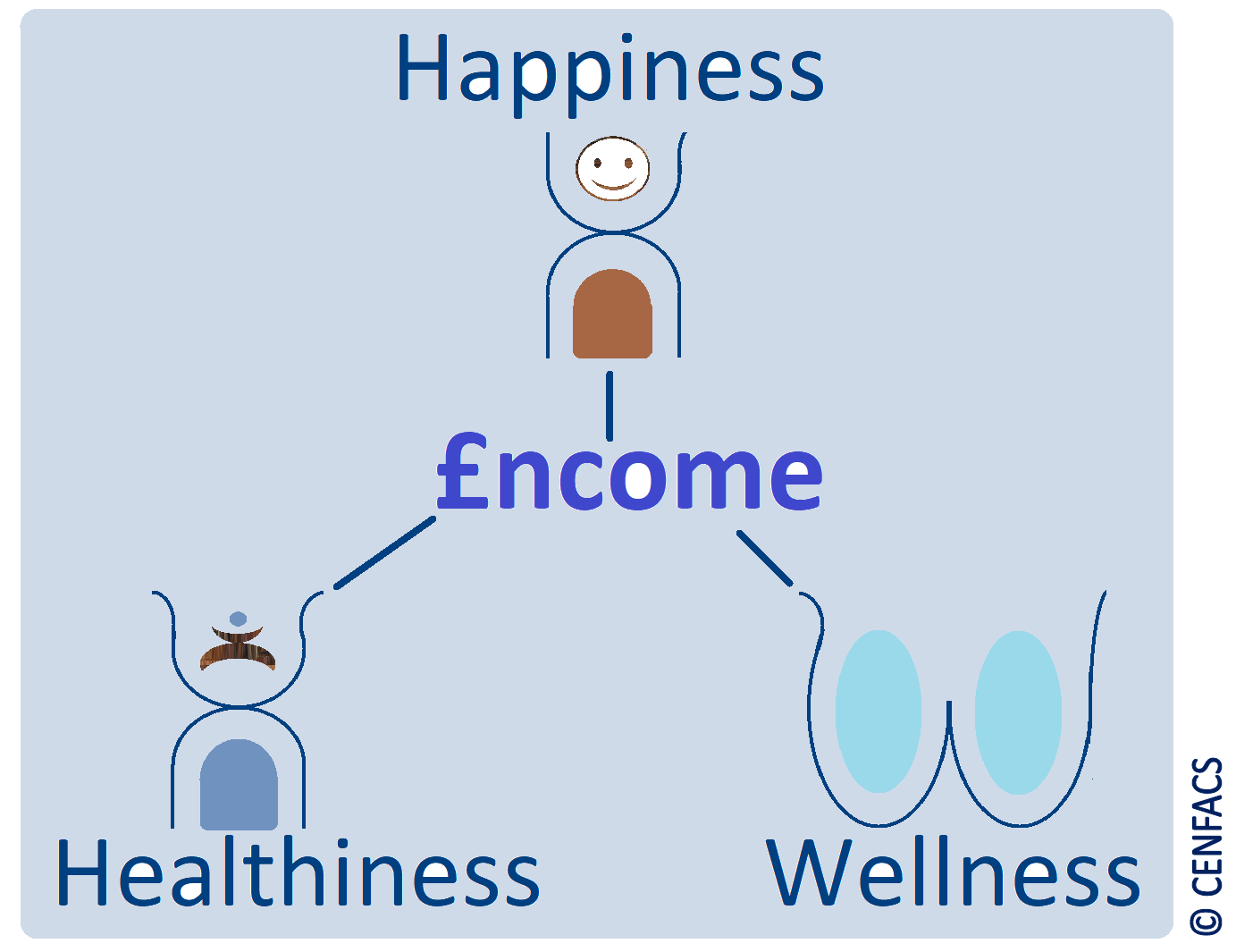
There are relationships between happiness and income, between healthiness and income, between wellness and income. One can express these relationships through the production of a journal. Before embarking on journaling, let us briefly explain these relationships.
• • Relationship between Happiness and Income
Regarding this relationship, Laura Kudrna and Kostadim Kushlev (2) explain the following:
“More income provides people with opportunities and, sometimes, capabilities to consume more and thus satisfy more of their preferences, meet their desires and obtain more of what they want and need. These are all reasons to assume that higher income will bring greater happiness – or, at least, that low income will bring low happiness”.
Kudrna and Kushlev also argue that
“Some research challenges the assumption that earning more should lead to greater happiness”.
One can use the explanation and argument of Kudrna and Kushlev to journal their own experiences, feelings and thoughts in terms of the relationship between happiness and their income.
• • Relationship between Healthiness and Income
There are many studies about the relationship between health and income. One of them was produced by ‘health.org.uk’ (3) in 2021, which explained that
“44% of people on the lowest income rate their health as fair, bad or very bad (less than good). In the middle (the fifth income decile) this figure is 25% and for people on the highest incomes the figure is 12%. Across the income spectrum, higher incomes are associated with better self-reported health”.
Likewise, ‘healthaffairs.org’ (4) talking about the USA case argues that
“There is an extensive body of research examining the relationship between income and health, and this evidence, both correlational and causal, predominantly finds that higher income is associated with better health. Findings from large-scale observational studies indicate that people with lower incomes have shorter lifespans and greater morbidity relative to those with higher incomes and that these health risks are greatest amongst people living in poverty”.
From the explanation of ‘health.org.uk’, ‘healthaffairs.org’ and other ones, one can write about their own experiences, feelings and thoughts in terms of the relationship between their health and income.
• • Relationship between Wellness and Income
To explain this relationship, let us first define wellness. One of its definitions comes from the Global Wellness Institute (5), which argues that
“Wellness is the active pursuit of activities, choices and lifestyles that lead to a state of holistic health”.
There could be links between the choices we make about our lives and holistic health, between our lifestyles and holistic health, between the activities we undertake and holistic health.
Those who would like to narrate their own experiences, feelings and thoughts in terms of their wellness and income, they can journal their perspective.
When speaking about income, we mean real disposable income. But what is real disposable income?
• • Understanding Real Disposable Income to Create Your Journal of Happiness, Healthiness and Wellness
Generally, income is any earning in the form of wages and salaries, the return of investments, pension contributions, and other receipts (such as profit, interest, dividend, rent, capital gains, royalties, etc.). This income can be real disposable. What is a real disposable income?
Using the definition provided by ‘tutor2u.net’ (6), real disposable income is
“The amount of money an individual or household has available to spend or save after accounting for taxes and adjusting for inflation. It is a key measure of the purchasing power and economic well-being of individuals or households”.
One can refer to this definition of real disposable income to create their Journal of Happiness, Healthiness and Wellness.
• • An Example of Way of Creating a Journal of Real Disposable Income
One can explain how with restricted or limited income they have been able to meet Summer 2026 holiday expenses or simply do the things they wanted or planned to do with happiness, healthiness ad wellness. They can as well include in their journal any efforts they undertook to make extra income to meet their Summer living costs or improve their economic well-being.
• • Creating Your All-in-one Double-entry Journal of Real Household Disposable Incomes (Journal A) and the Triple Bottom Line (Journal B)
You can create either an all-in-one journal or multi-journal system of your real household disposable income. You can as well create a single-entry or double-entry journal of your disposable income.
All-in-one journal would be a single, consolidated logbook or spreadsheet designed to capture all these flows – income, taxes, savings, and adjusted purchasing power – in one place rather than across separate ledgers.
Double-entry journal will be referring to a fundamental or classic bookkeeping method where every transaction has equal and opposite debit and credit entries to keep accounts balanced.
A journal with the Triple Bottom Line will integrate a sustainability accounting framework; framework that broadens business/charity performance evaluation beyond traditional financial profit to include social and fundamental impact – commonly known as the 3Ps: People, Planet and Prosperity.
To create an all-in-one double-entry journal of your real household disposable income with the triple bottom line, you need to track monetary flows alongside non-financial resources as follows:
σ Financial/Prosperity Pillar: It is a standard double-entry tracking of cash, revenue, expenses, and net income;
σ People/Social Pillar: It is about quantifying or logging social metrics, such as community investment, fair wages, or labour impacts relative to real income generation;
σ Planet/Environmental Pillar: It involves recording ecological inputs and externalities, such as carbon offsets, resource usage, or waste management costs.
So, you can use standard double-entry systems or simple ledgers to track income and expenses, as well as apply the Triple Bottom Line (TBL). Applying the TBL to a household means a family would track their financial cash flow alongside their ecological footprint and social community impacts.
You could finally impact share your story/journal if you received or given any financial help.
• • Impact Record and Share of Your Journal of Real Disposable Income
You/they can impact record your/their thoughts, feelings, experiences, souvenirs and memories in relation to real disposable income and income-generating capacity or opportunities. You/they can impact share with the community your/their experience of happiness, healthiness and wellness with income. This can be recorded in your/their journal and be shared by the end of Summer 2026.
To impact share the contents of your/their happiness, healthiness and wellness journal relating to real disposable income and income-generation, to happy, healthy and good financial life via income, and help build a better Summer holiday experience; you/they can contact CENFACS.
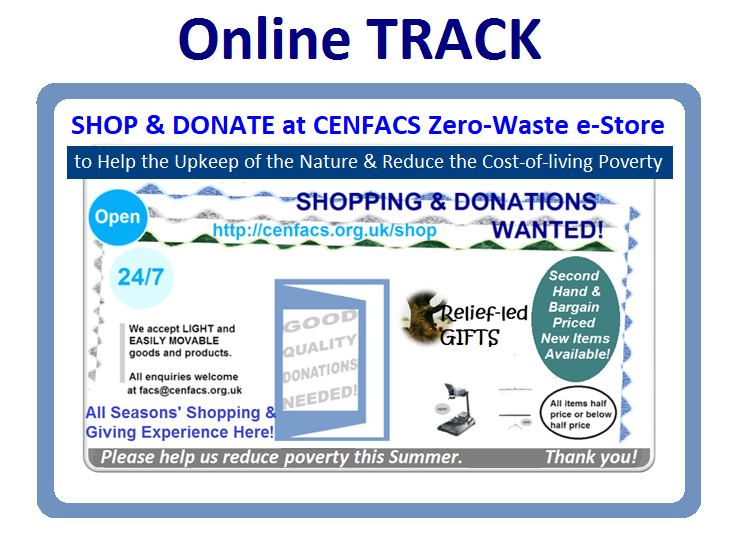
• Online TRACK to CENFACS Zero-Waste e-charity Summer Shop for Summer Goods Donations and Buys: Turn Your Waste into Relief for Others
• • Online TRACK to CENFACS Zero-Waste e-charity Summer Shop for Summer Goods Donations and Buys
It is the digital workflow we use to process summer item donations and circular shopping. It involves digital donation track (giving goods) and circular buy track (acquiring goods).
σ Digital donation track (giving goods)
It includes online booking, contactless hand-off, live tracking, and impact verification.
σ Circular buy track (acquiring goods)
It encompasses digital inventory, direct purchasing, and traceability showing the carbon saved and social value generated.
Both tracks help turn waste into relief for others.
• • Turn Your Waste into Relief for Others
Every season is an opportunity to do something about the environment and poverty.
You can recycle or donate your unwanted or unused goods and presents to do something about the environment and or poverty.
You can also buy goods to meet the same ends.
This Summer you can online track CENFACS e-charity shop to help the environment and poverty relief. You can turn your waste into relief for those in need.
If you are a fun of online tracking and shopping, you can take an online course of action or online path or even course of travel to save the environment and reduce poverty with CENFACS.
Instead of you in-person going to physically shop or donate your goods, you can from the comfort of your home buy or donate goods to CENFACS e-charity shop to help the beautiful and noble cause of poverty relief and sustainable development.
To support us either by shopping or supplying us with products or goods you no longer want or use so that we can sell and raise the money for the beautiful cause of poverty relief and sustainable development, please go to http://cenfacs.org.uk/shop/
• Virtual and In-person Trips for Fieldwork Research
Let us first explain these trips and those made to the local needs.
• • What Are Virtual and In-person Trips for Fieldwork Research?
A Virtual Trip for Fieldwork Research is a digital simulation of an off-site location. It uses 360-degree videos, satellite maps, virtual reality, and online databases to let investigators explore, analyze, and collect data from remote environments without physically travelling.
Key technologies for a virtual trip include 360° imagery and video, geospatial tools, immerse VR, and remote sensors and feeds.
An In-person Trips for Fieldwork Research is a physical journey to a specific study site. Researchers travel there to gather real-world data, talk with local people, or watch natural and social environments firsthand rather than working from an office or online.
Key activities include direct observation, interviews and surveys, data and sample collection.
• • This Week’s Trips to the Local Needs with Extra Care
This week, trips to the local needs also include those travels made or to be made to conduct fieldwork research in Africa and anywhere else in the context of poverty relief and sustainable development projects.
We recommend to those who want to do trips for fieldwork research to take extra care in terms of health and safety. Where health risks are nullified or minor, people can in-person visit local projects and those running them. These trips can also be done virtually.
When in-person visiting projects and people, it is in the interest of everybody that they should take care of the following:
√ They have to be fully vaccinated and or negatively tested against any diseases that may threaten them
√ They should wear appropriate personal protective equipment to protect themselves and others against any viruses or diseases where they go
√ They should follow local, national and international rules related to the protection against any threatening disease or epidemic symptoms.
These fieldwork researches or practical experiences to gain knowledge and skills could be of varying forms such as observation and collection of raw data, interviews, focus group discussions, practical activities to support overseas development projects, etc.
If you are a researcher and did or are doing some fieldwork research on sustainable development and poverty reduction, and think that your work can enhance CENFACS’ work, you could share with us your experience, research findings or outcomes.
To share the experiences and results of your fieldwork research, just contact CENFACS and CENFACS will get back to you.
Message in English-French (Message en Anglais-Français)

• CENFACS’ be.Africa Forum E-discusses the Following Topic:
How to Make Standard Macroeconomic Models Translate Broad Economic Growth into Household Welfare in Africa
To introduce this e-discussion/topic, let us briefly explain standard macroeconomic models.
• • Standard Macroeconomic Models
It stems from economics literature that standard macroeconomic models are simplified mathematical frameworks used to study economy-wide phenomena like output, inflation, and unemployment. The primary models include IS-LM or AD-AS model for short-term fluctuations. DSGE models for dynamic policy analyses, and CGE models for long-term structural changes.
σ Short-run and Fluctuations Models
They include IS-LM and AD-AS models.
σ σ IS-LM Model: IS-LM stands for Investment – Saving (IS) and Liquidity preference – Money supply (LM). This model links interest rates and asset market (LM) with goods and services (IS) to show how monetary and fiscal policies shift aggregate demand.
σ σ AD-AS Model: AD-AS stands for the Aggregate Demand-Aggregate Supply model. It is a core macroeconomic tool used to explain how total output (real GDP) and the overall price level (inflation) are determined in an economy, balancing total spending against total production. In short, it explains shifts in price levels and national output over business cycles.
σ Modern Dynamic and Policy Models
They are DSGE (Dynamic Stochastic General Equilibrium) models and Large-scale Macroeconomic Models.
σ σ DSGE Models: They are built on microeconomic foundations and simulate how households and firms optimize choices over time when hit by random economic shocks (used widely by central banks).
σ σ Large-scale Macroeconomic Models: They blend theoretical relations with historical data to generate empirical forecasts (such as the Office for Budget Responsibility’s macroeconomic model).
σ Long-term and Structural Models
Among them are Solow-Swan Growth Model and CGE (Computer General Equilibrium) Models.
σ σ Solow-Swan Model: It explains long-run economic growth via capital accumulation, population, and technological progress.
σ σ CGE Models: They dissect how permanent policies, tax changes, or trade agreements ripple through specific industries over long horizons.
• • Translating Broad Economic Growth into Household Welfare in Africa
Standard macroeconomic models – such as the neo-classical growth model, computable general equilibrium models, and traditional monetary-fiscal frameworks – imply that poverty reduction happens best through broad economic growth, open trade, low inflation, and efficient resource allocation, though they often overlook direct distribution.
To translate broad economic growth into household welfare in Africa, macroeconomic models must incorporate micro-data, disaggregate household sectors by income and location, and track informal labour, non-market production, and public service delivery rather than relying solely on aggregate GDP per capita.
Indeed, aggregate GDP masks how wealth distributes across different groups. Standard metrics miss informal markets and subsistence farming. National averages ignore local inflation and the true cost of living for the poor. For a better translation, it is recommended to link macro to meso to micro, disaggregate sectors, include non-market activity, and track public goods.
The above makes our e-discussion for this week while providing materials and space for reflection, expression, discussion and action.
Those who may be interested in reflection, expression, discussion and action on
‘How to Make Standard Macroeconomic Models Translate Broad Economic Growth into Household Welfare in Africa’
can join our poverty reduction pundits and/or contribute by contacting CENFACS’ be.Africa Forum, which is a forum or space for discussion on poverty reduction and sustainable development issues in Africa and which acts on behalf of its members by making proposals or ideas for actions for a better Africa.
To contact CENFACS about this discussion, please use our usual contact address on this website.
• Le Forum ‘Une Afrique Meilleure’ de CENFACS discute en ligne la question suivante :
Comment peut-on faire pour que les modèles macroéconomiques classiques traduisent la croissance économique globale en bien-être des ménages en Afrique?
Pour introduire ce sujet de discussion en ligne, présentons brièvement les modèles macroéconomiques standards.
• • Modèles macroéconomiques standards
La littérature économique définit les modèles macroéconomiques standards comme des cadres mathématiques simplifiés utilisés pour étudier des phénomènes à l’échelle de l’économie tout entière, tels que la production, l’inflation et le chômage. Les principaux modèles incluent le modèle IS-LM ou le modèle AD-AS pour les fluctuations à court terme, les modèles DSGE pour l’analyse dynamique des politiques, et les modèles CGE pour les changements structurels à long terme.
σ Modèles de court terme et de fluctuations
Ils comprennent les modèles IS-LM et AD-AS.
σ σ Modèle IS-LM : L’acronyme IS-LM signifie « Investment-Saving » (Investissement-Épargne) et « Liquidity preference – Money supply » (Préférence pour la liquidité – Masse monétaire). Ce modèle établit un lien entre les taux d’intérêt et le marché des actifs (LM) d’une part, et le marché des biens et services (IS) d’autre part, afin de montrer comment les politiques monétaires et budgétaires modifient la demande globale.
σ σ Modèle AD-AS : L’acronyme AD-AS désigne le modèle « Aggregate Demand-Aggregate Supply » (Demande globale-Offre globale). C’est un outil macroéconomique fondamental utilisé pour expliquer comment la production totale (le PIB réel) et le niveau général des prix (inflation) sont déterminés dans une économie, en équilibrant les dépenses totales et la production totale. En bref, il explique les variations des niveaux de prix et de la production nationale au cours des cycles économiques.
σ Modèles dynamiques modernes et modèles de politique économique
Il s’agit des modèles DSGE (Équilibre général dynamique et stochastique) et des modèles macroéconomiques à grande échelle.
σ σ Modèles DSGE : Ils reposent sur des fondements microéconomiques et simulent la manière dont les ménages et les entreprises optimisent leurs choix au fil du temps lorsqu’ils sont confrontés à des chocs économiques aléatoires (très utilisés par les banques centrales).
σ σ Modèles macroéconomiques à grande échelle : Ils combinent des relations théoriques et des données historiques pour générer des prévisions empiriques (comme le modèle macroéconomique de l’Office for Budget Responsibility du Royaume Uni).
σ Modèles de long terme et structurels
Parmi eux figurent le modèle de croissance de Solow-Swan et les modèles CGE (Équilibre général calculable).
σ σ Modèle de Solow-Swan : Il explique la croissance économique à long terme par l’accumulation du capital, l’évolution de la population et le progrès technologique.
σ σ Modèles CGE : Ils analysent la manière dont des politiques pérennes, des modifications fiscales ou des accords commerciaux se répercutent sur des secteurs spécifiques à long terme.
• • Traduire la croissance économique généralisée en bien-être des ménages en Afrique
Les modèles macroéconomiques classiques — tels que le modèle de croissance néoclassique, les modèles d’équilibre général calculable et les cadres monétaires et budgétaires traditionnels — postulent que la réduction de la pauvreté passe avant tout par une croissance économique généralisée, l’ouverture des échanges, une inflation faible et une allocation efficace des ressources, bien qu’ils négligent souvent la question de la redistribution directe.
Pour traduire la croissance économique globale en bien-être des ménages en Afrique, les modèles macroéconomiques doivent intégrer des microdonnées, désagréger les catégories de ménages selon le revenu et la localisation, et prendre en compte le travail informel, la production non marchande ainsi que la prestation de services publics, plutôt que de se fonder uniquement sur le PIB agrégé par habitant.
En effet, le PIB global masque la manière dont la richesse est répartie entre les différents groupes. Les indicateurs classiques omettent les marchés informels et l’agriculture de subsistance. Les moyennes nationales occultent l’inflation locale et le coût réel de la vie pour les populations pauvres. Pour une meilleure traduction de la réalité, il est recommandé d’articuler les niveaux macro, méso et micro, de désagréger les secteurs pour inclure les activités non marchandes et de suivre les biens publics.
Ces éléments constituent le fondement de notre discussion en ligne de cette semaine, tout en offrant un espace et des ressources propices à la réflexion, à l’expression, au débat et à l’action.
Ces échanges s’adressent aux personnes souhaitant réfléchir, s’exprimer, débattre et agir autour de la question suivante :
« Comment peut-on faire pour que les modèles macroéconomiques classiques traduisent la croissance économique globale en bien-être des ménages en Afrique ? »
peuvent (re)joindre notre groupe d’experts sur la réduction de la pauvreté et/ou contribuer en contactant le ‘me.Afrique’ du CENFACS (ou le Forum ‘Une Afrique Meilleure’ de CENFACS), qui est un forum ou espace de discussion sur les questions de réduction de la pauvreté et de développement durable en Afrique et qui agit au nom de ses membres en faisant des propositions ou des idées d’actions pour une Afrique meilleure.
Pour contacter le CENFACS au sujet de cette discussion, veuillez utiliser nos coordonnées habituelles sur ce site Web.

Main Development
• FACS Issue No. 92, Summer 2026: African Charity Bookkeeping and Accounting for Poverty Reduction in Africa –
How to Make African Charity Bookkeeping and Accounting Direct Drivers of Poverty Reduction in Africa
The contents and key summaries of the 92nd Issue of FACS are given below.
• • Contents and Pages
I. Key Terms Relating to the 92nd Issue of FACS (Page 2)
II. Theories and Frameworks Used in the 92nd Issue of FACS (Page 2)
III. Making African Charity Bookkeeping and Accounting Direct Drivers of Poverty Reduction Instead of Being Donor Reporting Requirements (Page 3)
IV. Prioritizing the Link between Poverty Reduction and African Charity Bookkeeping and Accounting (Page 4)
V. African Charities and the Tracking of Multidimensional Impacts (Page 4)
VI. Les Flux Financiers Illicites, la Tenue des Livres et la Comptabilité des Organisations Caritatives Africaines (Page 5)
VII. Les Organisations Caritatives Africaines et l’Amélioration du Suivi de l’Impact (Page 5)
VIII. Les Organisations Caritatives Africaines et la Comptabilité Axée sur les Résultats (Page 6)
IX. Les Organisations Caritatives Africaines, la Comptabilité Carbone et la Comptabilité en Coût Réel (Project 6)
X. Survey, Testing Hypotheses, E-questionnaire and E-discussion on Charity Bookkeeping and Accounting for Poverty Reduction in Africa(Page 7)
XI. Support, Tool and Metrics, Information and Guidance on Bookkeeping and Accounting for Poverty Reduction (Page 8)
XII. Workshop, Focus Group and Financial Booster Activity about Bookkeeping and Accounting for Poverty Reduction (Page 9)
XIII. Giving and Project (Page 10)
• • Key Summaries
Please find below the key summaries relating to the 92nd Issue of FACS from page 2 to page 10.
• • • Key Terms Relating to the 92nd Issue of FACS (Page 2)
There are two key terms used in the context of this Issue of FACS, which are bookkeeping and accounting.
• • • • Bookkeeping and accounting
According to Corporate Finance Institute (7),
“Bookkeeping involves the recording, on a regular basis, of company’s financial and transaction”.
The website ‘netsuite.com’ (8) explains that
“Accounting is the process of recording and categorizing a company’s transactions, and then reporting on these activities”.
There are differences between bookkeeping and accounting. The website ‘forbes.com’ (9) points out that
“Bookkeeping focuses on maintaining clean, accurate records and tracking transactions, categorizing activity and keeping everything current… Accounting, on the other hand, uses that data to analyze performance, prepare financial statements and guide decisions”.
However, what we are interested in here is bookkeeping and accounting for poverty reduction. What is bookkeeping for poverty reduction and what is accounting for poverty reduction?
• • • • Bookkeeping and accounting for poverty reduction
Bookkeeping for poverty reduction focuses on managing the accounts, grants, and financial records for not-for-profit organisations, charities, and social enterprises dedicated to alleviating poverty. It involves handling fund accounting, tracking restricted donor funds, and ensuring compliance with regulatory standards.
Accounting for poverty reduction is the application of fund accounting, grant management, and economic analysis to not-for-profit organisations, non-governmental organisations, or government agencies. It is about ensuring donor funds and public budgets are transparently tracked and efficiently deployed to maximize social impact rather than commercial profit.
There are theories and frameworks behind these definitions.
• • • Theories and Frameworks Used in the 92nd Issue of FACS (Page 2)
The 92nd Issue of FACS refers to key bookkeeping and accounting theories by investing the relationship between bookkeeping, accounting and poverty reduction in Africa. Their relationship is rooted in multiple complementary frameworks ranging from grassroots economic development to macro-level public policy. These key theories explain how tracking numbers empowers individuals, improves institutional governance, and helps shape equitable societies.
Among these theories are the Resource-based View of Micro-enterprises, Financial Inclusion and Behavioural Theories, Public Financial Management and Institutional Theory, and Critical and Dialogical Accounting.
Those readers of this newsletter who will be interested in the above-mentioned theories and wanting further details can contact CENFACS.

• • • Making African Charity Bookkeeping and Accounting Direct Drivers of Poverty Reduction Instead of Being Donor Reporting Requirements (Page 3)
To transform bookkeeping from a donor chore into a poverty reduction tool, African Charities (ACs) must use financial data to track local economic impact, optimize resource allocation for marginalized groups, and build community-owned wealth rather than just satisfying foreign compliance metrics.
It requires from them a shift in financial focus, empowering local leadership, refining donor engagement.
Regarding a shift in financial focus, ACs can
~ track social return on investment (SROI) alongside cash flow
~ measure local procurement rates to see how much money stay in the community
~ monitor indirect job creation and supplier growth through project spending codes
~ audit programmes by cost-per-beneficiary to maximise direct aid delivery.
Concerning the empowerment of local leadership, ACs can
~ train community members in participatory budgeting and transparent tracking
~ decentralize financial decision-making to grassroots for community oversight
~ replace complex donor reporting templates with community-validated impact metrics.
With respect to refining donor engagement, ACs can
~ negotiate unrestricted funding using clear local data as proof of trust
~ report on long-term asset building rather than short-term activity outputs
~ showcase local economic multiplier effects to attract impact-focused investors
~ standardize open-book transparency to build equal partnerships with donors.
In pursuing the above-mentioned strategies, ACs can make bookkeeping and accounting becoming direct drivers of poverty reduction in Africa instead of being simply a response to donor reporting requirements.

• • • Prioritizing the Link between Poverty Reduction and African Charity Bookkeeping and Accounting (Page 4)
To link poverty reduction and charity accounting/bookkeeping in Africa, it needs to treat financial reporting as a tool for impact. Clear books build trust with donors. Trust brings more money. More money funds local programmes that reduce poverty. It implies aligning your daily ledgers with social goals.
For this purpose, ACs can adopt the following strategies: track social metrics, adopt transparent software, train local staff, focus on compliance, etc.
In short, it requires taking some steps for better impact, steps which are:
~ show the cost per life improved
~ publish clear reports
~ and audit regularly.
• • • African Charities and the Tracking of Multidimensional Impacts (Page 4)
ACs track multidimensional impacts in their accounting systems by using fund accounting, cost allocation, and impact tagging. These methods connect financial data directly to social and environmental results.
For core accounting systems, they use fund accounting to track restricted funds and apply activity-based costing.
Concerning impact tagging and metrics, they can add project codes, link general ledger accounts, and use integrated software.
Regarding reporting and accountability, they can build integrated reports, follow standard rules and share transparent updates.

• • • Les Flux Financiers Illicites, la Tenue des Livres et la Comptabilité des Organisations Caritatives Africaines (Page 5)
La tenue de livres et la comptabilité des organisations caritatives africaines peuvent contribuer à lutter contre les flux financiers illicites en Afrique.
Les flux financiers illicites sont, selon « trust.org » (10),
« des mouvements illégaux d’argent et d’actifs au-delà des frontières, représentant des fonds acquis, transférés ou utilisés de manière illégale. Ils englobent également l’évasion fiscale et l’évitement fiscal agressif, souvent par le biais de stratégies complexes ».
La tenue de livres et la comptabilité des organisations caritatives africaines peuvent lutter contre ces flux en garantissant une transparence totale, en assurant un suivi précis des fonds des donateurs/rices, en prévenant le détournement de ressources vers des économies souterraines et en respectant des normes internationales rigoureuses en matière de déclaration pour démontrer que l’aide parvient réellement aux projets de développement locaux.
Cela implique, pour ces organisations, de disposer de pistes d’audit claires, d’assurer une transparence dans le reporting et de permettre un suivi par les donateurs/rices. En matière de réduction des risques et de la fraude, elles doivent mettre en place des contrôles internes, des systèmes de détection des signaux d’alerte et assurer leur conformité juridique.
• • • Les Organisations Caritatives Africaines et l’Amélioration du Suivi de l’Impact (Page 5)
Les organisations caritatives africaines peuvent améliorer le suivi de leur impact en utilisant des logiciels de comptabilité dans le cloud, en mettant en place des outils numériques de collecte de données, en normalisant les indicateurs et en formant le personnel local à la gestion financière et à la maîtrise des données.
Ces mesures permettent d’établir des données de référence fiables et des registres financiers clairs pour les programmes de lutte contre la pauvreté. Elles permettent également de moderniser les systèmes financiers et les méthodes de collecte de données, ainsi que d’harmoniser les indicateurs d’impact.
Il ressort de ce qui précède que les organisations caritatives africaines peuvent accroître leur impact en améliorant leurs pratiques comptables et de tenue de livres, renforçant ainsi leur contribution à la réduction de la pauvreté en Afrique.
• • • Les Organisations Caritatives Africaines et la Comptabilité Axée sur les Résultats (Page 6)
La comptabilité axée sur les résultats peut contribuer à diversifier l’impact des organisations caritatives africaines. Mais en quoi consiste exactement cette approche ?
Selon « wolverhampton.moderngove.co.uk » (11):
« La comptabilité axée sur les résultats est un cadre de reporting qui met l’accent sur la mesure et la communication des impacts environnementaux et sociaux réels découlant des activités d’une organisation, plutôt que de se concentrer uniquement sur la performance financière. »
L’adoption de cette comptabilité offre aux organisations caritatives africaines l’opportunité d’élaborer des stratégies intégrant et assurant le suivi d’indicateurs clés de performance (ICP) environnementaux, de mettre en œuvre une comptabilité écosystémique et carbone, de réaliser des analyses coûts-avantages pour la planète et de tirer parti d’une politique d’achats durables.
• • • Les Organisations Caritatives Africaines, la Comptabilité Carbone et la Comptabilité en Coût Réel (Page 6)
Les concepts de comptabilité et de calcul des coûts évoluent. Les organisations caritatives africaines qui prennent en compte cette évolution intégreront de nouvelles méthodes comptables et de nouvelles façons d’évaluer les coûts. L’une des démarches possibles consiste à adopter la comptabilité carbone et la comptabilité du coût réel (*true cost accounting*).
La comptabilité carbone et la comptabilité du coût réel sont des concepts utilisés par Di Vaio et al. (12) dans leur analyse de la lutte contre la pauvreté. Ces auteurs expliquent que la comptabilité carbone aide les entreprises à élaborer des stratégies de décarbonation favorisant des pratiques durables — fondées sur des partenariats — en lien avec l’Objectif de Développement Durable n° 1.
Ils soutiennent également que la comptabilité du coût réel permet d’évaluer les impacts économiques, sociaux et environnementaux des activités des entreprises, facilitant ainsi une prise de décision durable et l’identification d’opportunités pour des modèles économiques visant à réduire la pauvreté.
Bien qu’ils fassent référence aux entreprises et à leurs modèles économiques, ces deux concepts sont applicables au secteur caritatif et aux organisations à but non lucratif. Les organisations caritatives africaines peuvent elles aussi mettre en œuvre la comptabilité carbone et la comptabilité du coût réel. Ces approches permettent d’affiner les méthodes de contribution à la réduction de la pauvreté en Afrique.

• • • Survey, Testing Hypotheses, E-questionnaire and E-discussion on Charity Bookkeeping and Accounting for Poverty Reduction in Africa (Page 7)
• • • • Survey on Charity Bookkeeping and Accounting for Poverty Reduction
The survey is a research project or data collection tool/effort aiming at evaluating how financial record keeping, basic financial literacy, micro-charity accounting tools help individuals and those who run small income-generating activities out of poverty. It examines how African charities and not-for-profit organisations fighting poverty record their finances, track restricted funds, and report their social impact to donors, regulators, and the public.
Participation to this survey is voluntary.
As part of the survey, we are running a questionnaire which contains some questions. Among these questions, there are four below relating to bookkeeping practices, transparency and reporting, compliance and reporting, training and needs respectively.
⇒ Question referring to bookkeeping practices:
Do you maintain a separate ledger for restricted poverty reduction grants?
⇒ Question regarding transparency and reporting:
How do you measure the administrative cost ratio versus direct programme delivery costs?
⇒ Question applying to compliance and auditing:
What internal controls do you use to prevent fraud or misallocation of funds?
⇒ Question concerning training and needs:
Would specialized training or impact-based accounting help your poverty reduction efforts?
You can respond and directly send your answer to CENFACS.
• • • • Testing hypotheses on making charity bookkeeping and accounting as direct drivers of poverty reduction instead of simply responding to donor reporting requirements in Africa
Using charity accounting as an active tool for poverty reduction rather than a passive compliance task shifts the focus from satisfying donors to empowering local communities. This framework treats financial transparency and data as strategic assets for grassroots economic growth. There are hypotheses around this statement.
For those of our members who would like to dive deep into hypotheses about accounting as an active tool for poverty reduction, they can test the inference of the following hypotheses:
Hypothesis 1: Shifting from rigid donor-driven line-item budgeting to participatory, impact-focused accounting aligns spending with actual community needs
Hypothesis 2: Rigorous transparent local accounting builds trust among domestic and regional donors rather than relying on international aid.
The above tests to be carried out are for those of our members who would like to dive deep into making charity bookkeeping and accounting as direct drivers of poverty reduction instead of simply responding to donor reporting requirements in Africa. In order to conduct these tests, they need data.
• • • • E-questionnaire on your view about charity bookkeeping and accounting for poverty reduction in Africa
This is a digital survey tool to be used to collect data, assess financial tracking, and evaluate transparency practices among charities and not-for-profit organizations working to alleviate poverty in Africa. As part of this research project, there are questions to answer. Five of these questions, which are linked to the work that our Africa-based Sister Organisations (ASOs) do, are:
Q1: How does your organisation track the information relating to bookkeeping and accounting for poverty reduction in Africa?
Q2: What is the biggest obstacle to approaching bookkeeping and accounting to deliver your poverty reduction mission?
Q3: Which one of these two is the most important in bookkeeping and accounting in Africa: 1) prioritizing the link between poverty reduction and bookkeeping and accounting or 2) donor reporting requirements?
Q4: How can you strike the balance in accounting practices between donor relations management and the assessment of direct social impact?
Q5: Africa faces accounting skills deficit. Do you think developing accounting technicals will help reduce poverty in Africa?
Any of our ASOs and users can answer the above-mentioned question. You can provide your answer directly to CENFACS.
For those answering these questions and needing first to discuss the matter, they can contact CENFACS.

• • • • E-discussion on transparent and accurate financial record-keeping
This e-discussion or online dialogue is on…
How transparent and accurate financial record-keeping in African Charities can directly drive economic development and lower poverty levels across African communities.
For those of our members who may have any views or thoughts or even experience to share with regard to this matter, they can join our e-discussion to exchange their views or thoughts or experience with others.
To e-discuss with us and others, please contact CENFACS.
• • • Support, Tool and Metrics, Information and Guidance on Bookkeeping and Accounting for Poverty Reduction (Page 8)

• • • • Support for services relating to bookkeeping and accounting for poverty reduction
This support means helping small local groups, charity projects and low-income generating activity owners manage their accounts correctly. This help builds trust with donors, creates steady income generating sources, helps these activities grow, and proves that funds are used well to lift people out of poverty.
Those who are interested in this support can CENFACS for Guidance on organisations that deal with bookkeeping and accounting for poverty reduction. CENFACS can guide them on where to find them.
The above-mentioned areas of guidance can also be done through capacity building, advocacy, advice, networking, signposting, etc. run by CENFACS.
For those African Charities, especially CENFACS’ Africa-based Sister Organisations that are looking for guidance or direction for those services, CENFACS is prepared to work with them on this matter.
CENFACS can work with them to explore ways of aligning their mission with bookkeeping and accounting for poverty reduction.
We can work with them under our International Advice-, Guidance- and Information-giving Service. We can as well signpost them to organisations working on charity bookkeeping and accounting for poverty reduction.
Need advice, guidance and information; please contact CENFACS for support.

• • • • Tools and metrics of the 92nd Issue of FACS
A blend of technological tools and impact metrics can be used to transform charity accounting into a tool for poverty reduction in Africa.
Amongst the tools and core strategic frameworks to be used, we can mention the following:
σ Dimensional Chart of Accounts: It consists of restructuring standard accounting codes to tag expenses not just by project or donor, but by local economic retention – tracking what percentage of funds stay within target communities (e.g., local procurement versus international consultant)
σ Community-led Participatory Budgeting Tools: It is about using collaborative software and localized mobile platforms where community beneficiaries co-design budget allocations, turning financial ledgers into social contracts
σ Open-source Financial Management System: It involves implementing adaptable platforms that allow local adaptation, transparent public ledgers, and community-facing financial dashboards
σ Social Return on Investment (SROI) Accounting Modules: It includes integrating SROI metrics directly alongside traditional ledgers to measure long-term changes in household income, asset creation, and local market stimulation per dollar spent
σ Mobile Money and Digital Ledger Integration: It is about utilizing direct-to-beneficiary digital wallet trackers (such as integrations with regional mobile banking) to ensure transparent, traceable resource delivery that builds local financial inclusion and autonomy.
In terms of metrics, Bookkeeping and Accounting for Poverty Reduction moves beyond traditional statements to track multidimensional impacts. It combines financial stewardship metrics with socio-economic performance indicators such as the Multidimensional Poverty Index, Poverty Depth, and Community Return on Investment. The 92nd Issue integrates the metrics for poverty-focused bookkeeping and accounting. In particular, it will include the following metrics:
σ Core Poverty and Human Development Metrics
These metrics track holistic well-being and deprivation instead of just measuring absolute income lines. They include
~ Multinational Poverty Index: It measures deprivations in health, education, and living standard, at the household level;
~ Headcount Index and Poverty Gap: It tracks how many individuals fall below a specific poverty threshold, and how far their resources are from that threashold;
~ Deep Poverty and Severity Index: It indicates the percentage of the population living significantly below the poverty line;
~ Household Resource and Cost Adjustments: Metrics that deduct inescapable costs like childcare, housing, and disability costs) from total income.
σ Financial and Resource Allocation Metrics
These metrics track whether funds and programmes are effectively reaching intended beneficiaries and efficiently managed. They consist of:
~ Programme Expense Percentage: It is the proportion of total funding or budget spent directly on poverty-reduction initiatives versus administrative or fundraising overhead;
~ Marginal Contribution Indicator: It evaluates the impact of specific fiscal interventions (like subsidies or cash transfers) on the overall poverty rate;
~ Spending Effectiveness: It compares the observed poverty reduction against the minimum budget required to achieve that same reduction.
σ Social Impact and SROI (Social Return on Investment) Metrics
These quantify the broader socio-economic value created by an organisation. They comprise of
~ Social Return on Investment (SROI): It is a cost-benefit framework that attributes a monetary value to social changes – such as gained employment or improved health-relative to the initial investment.
~ Output vs Outcome Metrics: They track the direct products of a project (e.g., number of people trained) alongside long-term impact on poverty levels (e.g., sustained increase in household income).
Because strong financial metrics track resource delivery, local economic impact, and long-term programme value rather than just meeting donor rules, the following metrics can as well be used:
σ Programme Expense Ratio and Cost-Per-Beneficiary to track resource allocation
σ Return on Social Investment, Asset Creation Metrics, and Cash Flow Velocity to measure economic impact.
The 92nd Issue is also a narrative of environmental impacts seized by integrating carbon and natural capital accounting into Africa’s standard bookkeeping and accounting for charities. This integration involves the following:
σ measuring the ecological footprint of poverty reduction projects (e.g., energy access or agricultural development)
σ assigning financial or physical values to environmental changes
σ and tracking sustainability metrics alongside financial Key Performance Indicators (KPIs) to align poverty reduction with the United Nations Sustainable Development Goals.
The 92nd Issue is therefore a highlight of key strategies for this integration like tracking environmental KPIs, adopting ecosystem and carbon accounting, performing cost-benefit analysis for the planet, and leveraging sustainable procurement.
The above-mentioned range of tools and many others are available for use for those who would like to understand charity bookkeeping and accounting for poverty reduction in Africa.

• • • • Information, guidance and signposts on charity bookkeeping and accounting for poverty reduction in Africa
Information, Guidance and Signposts (IGS) on charity bookkeeping and accounting for poverty reduction in Africa are resources that provide expertise and support for those looking for IGS on these matters.
IGS offers guidance, capacity building and knowledge products that inform stakeholders on charity bookkeeping and accounting for poverty reduction in Africa.
IGS includes three types or areas of support via CENFACS, which are:
a) Information service: making available information about services relating to charity bookkeeping and accounting for poverty reduction in Africa for those looking for this information
b) Guidance service: includes orientation, counselling, exploration and placement on Services and Entities focusing on charity bookkeeping and accounting for poverty reduction in Africa to help people and organisations make informed decisions and adjust to life’s changes
c) Signposting service: guides individuals to other organisations or support networks that can better meet their needs in charity bookkeeping and accounting for poverty reduction in Africa. It links organisations to resources for better bookkeeping and accounting that focus on poverty reduction rather than just meeting donor reporting requirements.
Let us briefly explain these services.
• • • • • Information Service for bookkeeping and accounting for poverty reduction
It is specialized, advisory, and resource platform helping African Charities manage their financial books and accounts correctly and transparently, track donor funds, and prove economic, social and environmental impacts in anti-poverty programmes.
Support under this service includes information about ways of managing money, tracking funds through advice, reporting to donors, and seizing the impact on poverty reduction. The service supplies new facts, data, documentation, and regulatory requirements.
• • • • • Guidance Service for bookkeeping and accounting for poverty reduction
It provides active advisory support and tailored interpretations on how to apply financial rules. It helps track funds via data distribution.
Under this service, alternative guidance includes where to find bookkeepers and accountants dealing with or accommodating poverty reduction in their work/profession.
• • • • • Signposting Service for bookkeeping and accounting for poverty reduction
The service links local grassroots groups to vital financial tools, legal compliance guides, and funding networks. Instead of just tracking money for distant donor, it builds local skills so communities can control their own funds and lift themselves out of poverty.
It helps find resources, build local power, share knowledge and simplify rules.
Those households or members of CENFACS Community who are looking for information and guidance on bookkeeping and accounting for poverty reduction and that do not know what to do, CENFACS can work with them (via needs assessment conducted under CENFACS’ Leaves-based Advice Service) or provide them with leads about organisations, institutions and services that can help them.
We can provide information and guidance to address issues surrounding for bookkeeping and accounting for poverty reduction and support to both our members and ASOs to reduce information and knowledge gaps. Our information and guidance services will help them foster creativity, community engagement and opportunities for growth.
For those who are looking for whereabout to find help about for bookkeeping and accounting for poverty reduction, we can direct them.
More tips and hints relating to the matter can be obtained from CENFACS’ Advice-giving Service and Sessions.
To make an appointment for Advice Service or Sessions, please contact CENFACS by providing your name and contact details.
• • • Workshop, Focus Group and Financial Booster Activity about Bookkeeping and Accounting for Poverty Reduction (Page 9)

• • • • Mini themed workshop on bookkeeping and accounting for poverty reduction
It is a training or learning event that will explore the basic aspects of bookkeeping and accounting for poverty reduction. It is a collaborative expert-led training session, designed to equip participants with skills relation record-keeping and accounting linked to poverty reduction.
It will train participants to use financial data for strategic empowerment, community wealth building, and long-term economic independence rather than just ticking compliance boxes for external donors.
The workshop on poverty-reduction accounting will focus on the topic of tracking local value creation and maximizing community resources.
In terms of outcomes, participants will leave with actionable plans about how they can improve the handling of bookkeeping and accounting to reduce poverty.
Briefly, the workshop aims to educate participants about the essential aspects of bookkeeping and accounting for poverty reduction and ways of embracing them.
To enquire about the workshop, please contact CENFACS.

• • • • A focus group discussion on bookkeeping and accounting for poverty reduction
The focus group will be a qualitative research method to be used to gather in depth perspectives from local stakeholders on bookkeeping and accounting for poverty reduction.
The focus group will bring together a small group of individuals (between 6 and 10) making the CENFACS Community and others to…
explore how good charity money records in Africa can directly lower poverty. It moves past just doing tasks to please donors.
The focus group will focus on how clear financial records help groups make smart choices, look at ways good accounting builds long-term local power, and shift the focus from outside rules to internal growth.
To take part in the focus group, group that will use deliberative practice strategies, please contact CENFACS.
• • • • Financial Booster activity: ‘Talking to a Local Bookkeeper and/or Accountant’
This is a targeted, action-oriented initiative designed to accelerate, scale up, or amplify the impact of bookkeeping and accounting solutions to poverty.
The activity treats financial management as a powerful tool for local economic empowerment and poverty reduction. Instead of viewing numbers as a chore for foreign donors, it uses clear records to build local trust, unlock domestic resources, and grow community-led wealth.
It is finally a user involvement activity revolves around the answers to the following question:
Do you talk to a Local Bookkeeper and/or Accountant if you need advice on reducing poverty in the way you handle your financial books and accounts?
A Bookkeeper is a professional who records and maintains the day-to-day financial transactions of a business, but it could also be for households. Bookkeepers record and organise financial data, as well as handle daily tracking, data entry, and reconciliation.
A Bookkeeper specialising in poverty reduction records and organises financial data, as well as handles daily tracking, data entry, and reconciliation with a focus on alleviating economic hardship. They manage day-to-day accounts for not-for-profit organizations, charities, or social enterprises focused on alleviating poverty. They track restricted funds, manage donor reports, and ensure compliance with charity regulations like the UK’s New SORP guidelines.
An Accountant is a professional who keeps. inspects, and manages financial records for people and businesses. Accountants track money coming in and going out, prepare tax forms, and make sure financial reports are correct. They interpret and analyse financial heath as well as deal with tax strategy, audits, and financial forecasting.
An Accountant specialising in poverty reduction is a not-for-profit or social-sector financial expert. They manage fund accounting, grant tracking, and financial transparency for charities, NGOs, and community projects. Their work ensures funding directly targets social welfare goals, while meeting legal and regulatory standards.
Those who would like to answer this question and participate to our ‘Talk to a Local Bookkeeper and/or Accountant’ event, they are welcome.
To take part in this activity, please contact CENFACS.
• • • Giving and Project (Page 10)
• • • • Readers’ giving
You can support FACS, CENFACS bilingual newsletter, which explains what is happening within and around CENFACS.
FACS also provides a wealth of information, tips, tricks and hacks on how to reduce poverty and enhance sustainable development.
You can help to continue its publication and to reward efforts made in producing it.
To support, just contact CENFACS on this site.
• • • • ‘Make Bookkeeping and Accounting Drive Poverty Reduction’ Project (MB&ADPRP)
MB&ADPRP is a poverty-reducing initiative of transforming bookkeeping and accounting into direct drivers of poverty reduction. It shifts financial data from passive compliance (satisfying donor checklists) into active tools for grassroots empowerment that build community assets, optimize local cooperative pricing, and secure equitable resource distribution for marginalized groups.
By teaching local groups micro-bookkeeping, cost analysis, and asset tracking, MB&ADPRP turns financial literacy into a direct catalyst for income generation and poverty alleviation.
The core goals of this outcome-driven project are local bookkeeping and accounting capacity and capability building, asset and wealth creation, bypassing donor dependence, and democratic resource control.
To support or contribute to MB&ADPRP, please contact CENFACS.
For further details including the implementation plan of the MB&ADPRP, please contact CENFACS.
The full copy of the 92nd Issue of FACS is available on request.
For any queries and comments about this Issue, please do not hesitate to contact CENFACS.
_________
• References
(1) https://www.brimco.io/terms/g/growth-elasticity (accessed in August 2026)
(2) Kudrna, L. & Kushlev, K. (2022), Money Does Not Always Buy Happiness, but Are Richer People Less Happy in Their Daily Lives? It Depends on How You Analyse Income, available at https://www.frontiersin.org/journals/psychology/articles/10.3389/fpsyg.2022.883137/full (accessed in August 2024)
(3) https://www.health.org.uk/evidence-hub/money-and-resources/income/relationship-between-income-and-health (accessed in August 2024)
(4) https://www.healthaffairs.org/doi/10.1377/hlthaff.2022.00846 (accessed in August 2024)
(5) https://globalwellnessinstitute.org/what-is-wellness/ (accessed in July 2024)
(6) https://www.tutor2u.net/economics/reference/what-is-disposable-income (accessed in August 2023)
(7) https://corporatefinanceinstitute.com/resources/accounting/bookkeeping-definition/ (accessed in August 2026)
(8) https://www.netsuite.com/portal/resource/articles/accounting/accounting.shtml (accessed in August 2026)
(9) https://www.forbes.com/advisor/business/what-is-bookkeeping/ (accessed in August 2026)
(10) https://www.trust.org/initiative/working-to-curb-illicit-financial-flows/ (accessed in August 2026)
(11) https://wolverhampton.moderngove.co.uk/documents/s44922/Appendix.pdf (accessed in August 2026)
(12) Di Vaio, A., A. Zaffar, M. Chhabra, and S. Cornella.2025. “Poverty Alleviation through Accounting and Partnerships: A Systematic Review and Future Research Directions.” Sustainable Development 33, no. 4: 5621-5641. https://doi.org/10.1002/sd.3412 (accessed in August 2026)
_________
• Help CENFACS Keep the Poverty Relief Work Going This Year
We do our work on a very small budget and on a voluntary basis. Making a donation will show us you value our work and support CENFACS’ work, which is currently offered as a free service.
One could also consider a recurring donation to CENFACS in the future.
Additionally, we would like to inform you that planned gifting is always an option for giving at CENFACS. Likewise, CENFACS accepts matching gifts from companies running a gift-matching programme.
Donate to support CENFACS!
FOR ONLY £1, YOU CAN SUPPORT CENFACS AND CENFACS’ NOBLE AND BEAUTIFUL CAUSES OF POVERTY REDUCTION.
JUST GO TO: Support Causes – (cenfacs.org.uk)
Thank you for visiting CENFACS website and reading this post.
Thank you as well to those who made or make comments about our weekly posts.
We look forward to receiving your regular visits and continuing support until the end of 2026 and beyond.
With many thanks.