Welcome to CENFACS’ Online Diary!
18 November 2026
Post No. 483

The Week’s Contents
• Matching Organisation-Investor via Hand-Woven Textiles Project
• Household Financial Optimization and Long-term Scaling Projects
• Trade-based Poverty Reduction Project
… And much more!

Key Messages
• Matching Organisation-Investor via Hand-Woven Textiles Project
This is a new Autumn project, which is part of our programme of work which consists of bringing together Advice Service for Africa-based Sister Organisations (ASOs) and Guidance Service for the Not-for-profit Investors. The Impact Advice to ASOs is on project planning, while Guidance to Not-for-profit Investors is on Impact Investing in Africa.
The programme amalgamates both Advice Service for Africa-based Sister Organisations (ASOs) and Guidance Service for Not-for-profit Impact Investing in Africa. The two services are part of our Starting XI Poverty Reduction Campaign and Projects for Autumn 2026.
For both ASOs and not-for-profit investors, we have planned to conduct a series of activities this Autumn 2026 and next year. One of these activities is this new project, Matching Organisation-Investor via Hand-Woven Textiles Project.
• • What Is Matching Organisation-Investor via Hand-Woven Textiles Project (MOIvHWTP)?
MOIvHWTP is the process of connecting a mission-driven charity that produces or supports artisanal textiles with a not-for-profit impact investor willing to provide repayable or blended finance to scale the project. This connection will be done through a Hand-Woven Textiles Project (HWTP).
• • What Is Hand-Woven Textiles Project?
To define HWTP, let us explain the following.
An African Charity would like to trade these textiles with the goal of generating income through the buying and selling using hand-woven textiles, reinvesting the surplus into its social mission. It is typically targeting a niche high-value export of hand-woven textiles.
HWTP, which will serve as both commercial and social vehicle to its mission, will provide fair-wage livelihoods for marginalized people or rural artisans, promote slow and sustainable fashion, and create a tangible product line capable of generating the income needed to repay the investments.
HWTP will operate like a social enterprise. This business model will blend a mission-driven not-for-profit core with a market-driven commercial engine to achieve both financial stability and community impact.
To realize HWTP, the African Charity needs a not-for-profit impact investor to back it and its business model; a not-for-profit impact investor who will deploy their capital to achieve social and environmental goals rather than purely maximizing financial profit. The African Charity as an investee will act as the operational partner, managing artisan training, preserving traditional weaving techniques, sourcing natural fibers, and selling the finished goods to generate income.
Through HWTP, CENFACS will match the African Charity’s needs and Not-for-profit Impact Investors’ requirements.
To work with both the African Charity and Not-for-profit Impact Investors in the context of this matching service, we have planned four-week of work starting from 16 November 2026. So, the project is based on a 4-stage model of project planning. There could be more than four stages in any project planning. However, because we limit ourselves to deliver this project in four weeks, we chose a four-stage model for project planning or investment cycle.
More on this Matching Organisation-Investor via Hand-Woven Textiles Project can be found under the Main Development section of this post.

• Household Financial Optimization and Long-term Scaling Projects
To understand Household Financial Optimization and Long-term Scaling Projects (HFO<SPs), let us define them and provide some examples.
• • What is HFO<SP?
HFO<SP is a structured effort to reduce recurring expenses, automate cash flow, and build systems that grow your wealth without increasing your daily effort.
Rather than cutting small daily luxuries, the best projects focus on high-impact structural changes that compound over time. There are many examples of HFO<SPs.
• • Examples of HFO<SP
They include
~ The Automated Cash Flow System
~ Fixed-cost -audit and Reduction
~ Home Energy and Utility Efficiency
~ Tax-advantaged Wealth Scaling
~ Build a 3-to-6-month Emergency Fund
~ Eliminate any Debt
~ Automate Your Monthly Investments
Etc.
One can tailor a specific plan for each of them.
Those who will be interested in setting up any of the above-mentioned projects they can speak to CENFACS if they want to find more.

• Trade-based Poverty Reduction Project (TBPRP)
The following elements highlight TBPRP.
• • What Is TBPRP?
TBPRP is a poverty-relieving and development initiative using market mechanisms – specifically trade and business development – rather than traditional direct aid (like cash handouts or free goods) to permanently lift people and communities out of poverty in Africa.
TBPRP is a development strategy designed that uses international commerce, market integration, and policy reforms to lift people out of poverty.
• • TBPRP Aim
Its aim is to combat poverty and inequality by harnessing trade potentials. The project will help reduce poverty through the removal of systemic barriers so small-scale traders (like women cross-border traders) can reach their targeted consumer markets.
• • TBPRP Tool
The project will use commercial trade as an active tool to build self-sufficiency, alleviate poverty, and counterexploitation in developing supply chains.
• • Supporting TBPRP
To support or contribute to TBPRP, please contact CENFACS.
For further details including the implementation plan of the TBPRP, please contact CENFACS.

Extra Messages
• The Third Highlights of the Analysis and Skills for the Month of the Economics of Education and Skill Formation (Skills Development Month) 2026
• Africa-based Sister Organisations’ Investing Strategy Advice
• Guidance on Impact Investing Strategy for Not-for-profit Impact Investors Targeting Africa

• The Third Highlights of the Analysis and Skills for the Month of the Economics of Education and Skill Formation (Skills Development Month) 2026
These third highlights are made of the following:
a) The Analysis of Learner’s Decision Taking Process on the Educational Investment and Expenditure to Reduce Poverty – In Focus from Monday 16/11/2026: Market Failures and Information Gaps
b) Micro-economic Skills – Under Consideration from Monday 16/11/2026: Social Contracting and Expectation Management
c) Practical Household-Level AI and Data Literacy Skills – On the Agenda from Wednesday 18/11/2026, Skill Practice 3: Safe Generative AI Prompting and Use.
Let us provide these second highlights.

• • The Analysis of Learner’s Decision Taking Process on the Educational Investment and Expenditure to Reduce Poverty –
In Focus from Monday 16/11/2026: Market Failures and Information Gaps
To start this third analysis, it is better to explain market information gaps.
• • • What are market failures and information gaps?
Let us first explain market failure. According to ‘corporatefinanceinstitute.com’ (1),
“Market failure refers to the inefficient distribution of goods and services in the free market… Market failure occurs when there is a state of disequilibrium in the market due to market distortion. It takes place when the quantity of goods or services supplied is not equal to the quantity of goods or services demanded”.
As to information gap, we have selected two definitions.
The first definition comes from ‘edexceleconomics.com’ (2) which argues that
“Information gaps occur when consumers or producers do not have all of the information needed to make an economic decision. This can lead to irrational choices and a misallocation of resources”.
The second one is given by ‘tutor2u.net’ (3) which states that
“Information gaps exist when either the buyer or seller does not have access to the information needed for them to make a fully informed decision”.
These definitions can be applied in the context of the Analysis of Learner’s Decision Taking Process on the Educational Investment and Expenditure to Reduce Poverty.
• • • Application of market failures and information gaps
Optimal educational investment is often hindered by imperfect information about future labour market returns, low-quality school provision, or a mismatch between acquired skills and market demands.
The above is the highlight of the second analysis of Learner’s Decision Taking Process on the Educational Investment and Expenditure to Reduce Poverty.
For those members of our community who may have any queries or enquiries about this Third Analysis which has focused on Market Information Gaps, they can address them to CENFACS.
Those who want further details about The Analysis of Learner’s Decision Taking Process on the Educational Investment and Expenditure to Reduce Poverty, they can contact CENFACS.

• • Micro-economic Skills –
Under Consideration from Monday 16/11/2026: Social Contracting and Expectation Management
To deal with this Monday’s skill focus, it would be appropriate to explain social contract and expectation management.
• • • Explaining social contracting and expectation management
The website ‘tearbox.com’ (4) explains that
“Social contracting refers to two distinct concepts: the philosophical theory of how citizens and states agree on rights and duties, and the operational mechanism where governments fund non-governmental organisations (NGOs) to deliver public services”.
Concerning expectation management, ‘sustainability-directory.com’ (5) notes that
“Expectation management, at its most basic, is about ensuring everyone understand what is realistically achievable in sustainability efforts”.
The website ‘sustainability-directory.com’ also provides key components of expectation, which are clarity of objectives, transparent communication, realistic timelines and resource assessment.
Both social contract and expectation management as micro-economic concepts or skills can be used at the level of households.
• • • The use of social contracting and expectation management at the level of households
An underrated economic skill is managing the demand of your personal relationship by establishing upfront boundaries. The application of these skills means the following:
~ Establish spending caps: Have open proactive financial conversation with family and friends before anyone starts buying.
~ Propose structural alternatives: Suggest cost-capping systems like a Secret Santa limiting gifts strictly to the children in the family, or opting for experience-based gathering over physical items.
For those community members of our community who may have any queries or enquiries about Social Contracting and Expectation Management and Micro-economic Skills, they can contact CENFACS.

• • Practical Household-Level AI and Data Literacy Skills –
On the Agenda from Wednesday 18/11/2026, Skill Practice 3: Safe Generative AI Prompting and Use
To deal with Safe Generative AI Prompting and Use, it makes sense to know what they mean.
• • • Meaning of safe generative AI prompting and use
Let us start with prompt. The website ‘hostinger.com’ (6) notes that
“A prompt is the message you give an AI model to tell it what you want, how to respond, and what limits to follow. It works like a set of directions between you and the model”.
The website ‘hostinger.com’ adds that
“A prompt in AI is the input or instruction you give an artificial intelligence model to generate a response. Prompts help the AI understand the task, focus on relevant information, and shape the final output”.
As generative AI, the website ‘ibm.com’ (7) argues that
“Generative AI, sometimes called gen AI, is artificial intelligence (AI) that can create original content such as text, images, video, audio or software code in response to a user’s prompt or request”.
However, prompting needs to be safe and better use.
• • • The use of safe generative AI prompting
Knowing to write clear instructions (prompts) for AI chatbots to help with household tasks – like drafting emails, summarizing documents, planning meals, or comparing products.
Those households wanting to dive deep into any of the above-mentioned activities or practices, they can let CENFACS know.
For those community members of our community who will be interested in Safe Generative AI Prompting and Use, they can contact CENFACS.
Additionally, for those who would like to register their skills on CENFACS Skills Data Bank, they are welcome to do so. This registration will help in matching the support in terms of skills and the needs in the community.
To sum these Second Highlights, it is worth saying that they show how strategic investments in education and continuous skill development can directly boost household long-term earning potential, job security, and overall household well-being. They also help understand how household can survive and last with practical household microeconomic tools and skills. They finally provide some clues about data ecosystem making their home through read everyday information.

• Africa-based Sister Organisations’ Investing Strategy Advice
General charity investing centers on fiduciary duty, risk management, and alignment with the organisation’s mission. The advice tailored to our Africa-based Sister Organisations (ASOs), which is on how to build an organisational investment strategy, emphasizes sustainable, trust-based funding and impact-driven capital.
Investing strategy advice to our ASOs will include two main areas: core and strategic advice.
• • Core Advice on Charity Investing
This involves
~ Understanding trustee responsibility (e.g., Acting in the charity’s interests)
~ Drafting a statement of investment policy (e.g., Formalizing clear objectives about income generation capital growth)
~ Taking professional advice (e.g., Consulting an authorized independent financial advisor)
~ Diversifying and matching asset types (e.g., cash deposit, fixed-income bonds across asset classes)
~ Watching for common pitfalls (e.g., excessive arrangement fees).
• • Strategic Advice for ASOs
This covers
~ Shifting from transactional grants to trust-based partnerships
~ Prioritizing flexible and overhead-inclusive funding
~ Leveraging impact investing and local enterprise
~ Tapping into special support hubs
~ Building credibility through transparency
Etc.
Those ASOs and their representatives interested in this advice, they can contact CENFACS. Equally, those who have any issues to raise about charity investing strategy in Africa, they can as well communicate with CENFACS.

• Guidance on Impact Investing Strategy for Not-for-profit Impact Investors Targeting Africa
Similar to the Advice Service, this Guidance is part of CENFACS’ International Service. The Guidance focuses on balancing mission-driven social or environmental outcomes with clear financial discipline, local context, and rigorous measurement. The Guidance includes two areas: the core principles for not-for-profit impact investors and key strategic steps.
• • Core Principles for not-for-profit Impact Investors (NFP)
They cover
~ Explicit Intentionality and Theory of Change (i.e., Explaining the sustainable goal and theory of change)
~ Balancing Financial and Social Dualism (i.e., NFP investors need to assess both financial viability and social additionability)
~ Blended Finance and Catalytic Capital (e.g., Building blended finance structures that de-risk).
• • Core Principles for not-for-profit Impact Investors (NFP)
This encompasses
~ Sector and market selection
~ Standardized impact measurement
~ Local ecosystem engagement
~ Contractual and operational support.
Those ASOs and their representatives interested in this guidance, they can contact CENFACS. Equally, those who have any issues to raise about not-for-profit investing strategy in Africa, they can as well speak to CENFACS.
Message in English-French (Message en Anglais-Français)

• CENFACS’ be.Africa Forum E-discusses
Mineral Extractions and Species Conservation in Africa
The debate centers on balancing economic development and global clean-energy supply chains against habitat loss, biodiversity threats, and community rights.
Because Africa holds roughly 30% of global mineral reserves alongside major biodiversity hotspots, policy makers, conservationists, industry leaders, and local communities often clash over land use and long-term priorities.
There are arguments and critiques.
• • Arguments
• • • Arguments for Mineral Extraction and Development
They include
~ Economic growth and poverty reduction
Proponents argue that mineral wealth including gold, diamonds, and transition minerals such as cobalt, lithium, copper, and rare earth elements – can fund infrastructure, public services, and job creation.
~ Global energy transition
Supporters emphasize that minerals mined in Africa are essential for batteries, wind turbines, solar panels, and electric vehicles needed to cut global carbon emissions and combat climate change.
~ Coexistence and mitigation
Some industry and policy advocates contend that modern mining can coexist with conservation through environmental impact assessments, habitat restoration, biodiversity offsets, and stronger governance.
~ Value addition over raw exports
Many African policy makers and analysts argue the solution is not leaving minerals in the ground, but keeping more economic value on continent through local processing, beneficiation, and industrial policy.
• • • Arguments for Species Conservation and Ecological Protection
They cover
~ Habitat destruction and fragmentation
Conservationists warn that mines access roads, and related infrastructure clear forests and froment ecosystems.
~ Threats of endangered wildlife
Expanding extraction near or inside sensitive habitats puts iconic, and endangered species at risk, including great apes (such as chimpanzees, gorillas, and bonobos) in West and Central Africa and black and white rhinos in Southern Africa.
~ Water and soil contamination
Critics point to risks such as toxic runoff, mining waste and tailings, water depletion in water-stressed areas, and greater access for hunting and poaching along newly opened routes.
~ Limits of offsets and enforcement
Many researchers and conservation groups argue that biodiversity offsets rarely replace intact ecosystems and that weak enforcement or overlapping concession undermine protected areas.
• • Critiques
These critiques overlap on equity, governance, and green exploitation. Amongst them are these ones below.
~ Resource curse and unequal benefits
Critics warn that foreign-led extraction often benefits external markets and narrow elites white leaving host regions with pollution, weak accountability, and small share of overall value-chain wealth.
~ Community displacement and land rights
Both mining concessions and top-down conservation enclosures can displace local farmers, pastoralists, and indigenous peoples or restrict their customary land and forest access.
~ Green colonialism concerns
Some scholars, activists, and civil society groups argue that framing critical mineral extraction around global climate goals can repeat colonial patterns – extracting raw materials and ecological value from African band while local communities still face energy poverty or environmental harm.
The above arguments and critiques make our e-discussion for this week while providing materials and space for reflection, expression, discussion and action.
Those who may be interested in reflection, expression, discussion and action on
Mineral Extractions and Species Conservation in Africa
can join our poverty reduction pundits and/or contribute by contacting CENFACS’ be.Africa Forum, which is a forum or space for discussion on poverty reduction and sustainable development issues in Africa and which acts on behalf of its members by making proposals or ideas for actions for a better Africa.
To contact CENFACS about this discussion, please use our usual contact address on this website.
• Le Forum ‘Une Afrique Meilleure’ de CENFACS débat en ligne le thème suivant:
L’Extraction Minière et la Conservation des Espèces en Afrique
Le débat porte sur l’équilibre à trouver entre le développement économique et les chaînes d’approvisionnement mondiales en énergie propre, d’une part, et la perte d’habitats, les menaces pesant sur la biodiversité et les droits des communautés locales, d’autre part.
L’Afrique abritant environ 30 % des réserves minérales mondiales, ainsi que d’importants points chauds de la biodiversité, les décideurs politiques, les défenseurs de l’environnement, les chefs d’entreprise et les communautés locales s’opposent souvent sur l’utilisation des terres et les priorités à long terme.
Des arguments et des critiques existent.
• • Arguments
• • • Arguments en faveur de l’extraction minière et du développement
Parmi ces arguments :
~ Croissance économique et réduction de la pauvreté
Les partisans affirment que la richesse minière, notamment l’or, les diamants et les minéraux de transition tels que le cobalt, le lithium, le cuivre et les terres rares, peut financer les infrastructures, les services publics et la création d’emplois.
~ Transition énergétique mondiale
Les défenseurs soulignent que les minéraux extraits en Afrique sont essentiels à la fabrication des batteries, des éoliennes, des panneaux solaires et des véhicules électriques nécessaires pour réduire les émissions mondiales de carbone et lutter contre le changement climatique.
~ Coexistence et atténuation
Certains acteurs de l’industrie et des politiques publiques affirment que l’exploitation minière moderne peut coexister avec la conservation grâce à des évaluations d’impact environnemental, la restauration des habitats, la compensation de la biodiversité et une gouvernance renforcée.
~ Valorisation des exportations de matières premières
De nombreux décideurs et analystes africains soutiennent que la solution ne réside pas dans le fait de laisser les minéraux dans le sol, mais de conserver davantage de valeur économique sur le continent grâce à la transformation locale, à l’enrichissement et à une politique industrielle adaptée.
• • • Arguments en faveur de la conservation des espèces et de la protection écologique
Ils abordent les points suivants :
~ Destruction et fragmentation des habitats
Les défenseurs de l’environnement alertent sur le fait que les routes d’accès aux mines et les infrastructures connexes déboisent et fragmentent les écosystèmes.
~ Menaces pesant sur la faune sauvage en voie de disparition
L’expansion des activités d’extraction à proximité ou à l’intérieur d’habitats sensibles met en péril des espèces emblématiques et menacées, notamment les grands singes (comme les chimpanzés, les gorilles et les bonobos) en Afrique de l’Ouest et centrale, ainsi que les rhinocéros noirs et blancs en Afrique australe.
~ Contamination de l’eau et des sols
Les critiques soulignent les risques tels que le ruissellement toxique, les déchets et résidus miniers, la raréfaction de l’eau dans les zones déjà fragilisées et l’accès accru pour la chasse et le braconnage le long des nouvelles routes ouvertes.
~ Limites des mesures compensatoires et de leur application
De nombreux chercheurs et organisations de conservation affirment que les mesures compensatoires pour la biodiversité remplacent rarement les écosystèmes intacts et que la faiblesse de leur application ou le chevauchement des concessions fragilisent les aires protégées.
• • Critiques
Ces critiques portent sur l’équité, la gouvernance et l’exploitation durable. Parmi ces sujets, on peut citer les suivants :
~ Malédiction des ressources et répartition inégale des bénéfices
Les critiques soulignent que l’extraction minière menée par des acteurs étrangers profite souvent aux marchés extérieurs et à une élite restreinte, laissant les régions hôtes avec une pollution importante, une faible transparence et une part infime de la richesse globale de la chaîne de valeur.
~ Déplacement des communautés et droits fonciers
Les concessions minières et les zones de conservation imposées d’en haut peuvent déplacer les agriculteurs, les éleveurs et les peuples autochtones locaux, ou restreindre leur accès coutumier aux terres et aux forêts.
~ Préoccupations liées au colonialisme vert
Certains universitaires, militants et organisations de la société civile affirment que l’intégration de l’extraction des minéraux critiques aux objectifs climatiques mondiaux peut reproduire les schémas coloniaux : extraire des matières premières et des ressources écologiques des ressources africaines tandis que les communautés locales sont toujours confrontées à la précarité énergétique ou à des atteintes à l’environnement.
Ces arguments et critiques constituent la base de notre discussion en ligne de cette semaine, tout en offrant des ressources et un espace propices à la réflexion, à l’expression, au débat et à l’action.
Ceux ou celles qui pourraient s’intéresser à la réflexion, à l’expression, à la discussion et à l’action concernant
L’Extraction Minière et la Conservation des Espèces en Afrique
peuvent (re)joindre notre groupe d’experts sur la réduction de la pauvreté et/ou contribuer en contactant le ‘me.Afrique’ du CENFACS (ou le Forum ‘Une Afrique Meilleure’ de CENFACS), qui est un forum ou espace de discussion sur les questions de réduction de la pauvreté et de développement durable en Afrique et qui agit au nom de ses membres en faisant des propositions ou des idées d’actions pour une Afrique meilleure.
Pour contacter le CENFACS au sujet de cette discussion, veuillez utiliser nos coordonnées habituelles sur ce site Web.

Main Development
• Matching Organisation-Investor via Hand-Woven Textiles Project
The following items explain this project:
σ Key Matching Terms
σ What Is a MOIvHWTP?
σ What Is Hand-Woven Textiles Project (HWTP)?
σ Key Points about Matching Organisation-Investor Programme (MOIP) to Consider
σ How MOIP Works
σ Benefits of Matching Organisation and Not-for-profit Impact Investors
σ How Can Africa-based Sister Organisations and Not-for-profit Impact Investors be Matched through HWTP?
σ Matching Guidelines
σ Outcomes of MOIvHWTP
σ Plan for 4-week Matching Activities
σ 16/11/2026 to 22/11/2026: Activity 1 of MOIvHWTP
Let us highlight each of the above-mentioned items.
• • Key Matching Terms
There are three key terms relating to MOIvHWTP, which are Handwoven Textiles, African Charity Investee, and Not-for-profit Impact Investor. Let us explain them.
a) Handwoven Textiles
According to ‘radicalweavers.org’ (8),
“Handwoven textiles are crafted on a loom, with each thread meticulously interfaced by the weaver. Unlike fabric that is cut and sewn by hand (which can still be considered handmade), handwoven cloth is constructed from the ground up – thread by thread. This method demands skill, patience, and a profound understanding of traditional craftsmanship”.
Handwoven textiles should not be confused with handmade. The latter refers to “any item created by human hands instead of being mass-produced by machine”, as highlighted by ‘radicalweavers.org’ (op. cit.)
b) African Charity Investee
In the context of clean cooking, an African Charity as an Investee is a non-profit organisation or non-governmental (NGO) that receives funding to research, distribute, or subsidize modern cooking solutions (e.g., ethanol stoves, biogas, electric cooking) to marginalized or low-income communities. These organizations function as investees by using philanthropic capital, impact investment, or carbon finance to execute projects rather than generate traditional shareholder profit.
c) Not-for-profit Impact Investor
A Not-for-profit Impact Investor in clean cooking in Africa is an organization that provides catalytic financial support (like grants or concessionary loans) to enterprises developing zero or low-emission cooking solutions, prioritizing verifiable health, gender and climate benefits over profit maximization. These organisations or individuals aim to bridge the funding gap for clean cooking initiatives, improving access for vulnerable communities to clean cooking methods.
These key terms shape the contents of MOIvHWTP and facilitate the definition of MOIvHWTP.
• • What Is MOIvHWTP?
MOIvHWTP is a set of four activities designed to arrange the match/fit test between an Africa-based Sister Charitable Organisation planning to set up a Hand Woven Textiles Project and a prospective not-for-profit impact investor who is interested in this project. This project of CENFACS’ Matching Programme will enable the former to find a suitable investor, and the latter to gain an investee in which they can impact invest in.
In other words, MOIvHWTP is the process of connecting a mission-driven charity that produces or supports artisanal textiles with a not-for-profit impact investor willing to provide repayable or blended finance to scale the project. This connection will be done through a Hand-Woven Textiles Project (HWTP).
MOIvHWTP, which is part of CENFACS’ Matching Organisation-Investor Programme, refers to the process of connecting or aligning an African Charity (specifically Africa-based Sister Charitable Organisations) seeking investment (investee) with a suitable potential Not-for-profit (NFP) Impact Investor via a clean cooking project.
Essentially, it is about finding an African Charity Investee that fits the NFP Impact Investor’s investment criteria, goals and interests; as well as creating a good match/fit between the two parties involved in an investment transaction.
MOIvHWTP is indeed an exercise to keep active and engaged Africa-based sister Charitable Organisations (ASCOs) and NFP Impact Investors for the rest of the Autumn Season 2026. The exercise is meant to keep their respective dreams alive and to awake their potentials to grab any existing opportunities within the NFP market.
For those ASCOs and NFP Impact Investors willing to realise their Summer dream of winning an investment for the former and a share for the latter, this November project is a golden opportunity for each of them.

• • What Is Hand-Woven Textiles Project (HWTP)?
To define HWTP, let us explain the following.
An African Charity would like to trade these textiles with the goal of generating income through the buying and selling using hand-woven textiles, reinvesting the surplus into its social mission. It is typically targeting a niche high-value export of hand-woven textiles.
HWTP, which will serve as both commercial and social vehicle to its mission, will provide fair-wage livelihoods for marginalized people or rural artisans, promote slow and sustainable fashion, and create a tangible product line capable of generating the income needed to repay the investments.
HWTP will operate like a social enterprise. This business model will blend a mission-driven not-for-profit core with a market-driven commercial engine to achieve both financial stability and community impact.
Like any project of this kind, HWTP will a lifecycle made of aim, objectives, outcomes, implementation plan, etc. Without dealing all these project lifecycle elements, let us highlight the two them, which are measurement (via metrics) and monitoring and evaluation.
• • • HWTP Metrics
Evaluating a HWTP in Africa requires tracking a mix of operational, economic, and sustainable metrics. HWTP success will be measured across several core dimensions such as the ones given below.
σ Production and Operational Metrics
They include
~ Output Volume and Strip/Cloth Consistency
~ Loom Utilization and Efficiency
~ Lead Utilization and Efficiency
~ Lead Time per Piece.
σ Economic and Livelihood Metrics
They cover
~ Weaver Income and Wage Parity
~ Cost of Raw Materials vs Retail Price
~ Premium Market Adoption
~ Value Chain Retention.
σ Cultural Preservation and Heritage Metrics
They are
~ Motif and Technique Documentation
~ Intergenerational Knowledge Transfer.
σ Market and Commercial Metrics
They are comprised of
~B2B (Business to Business) vs B2C (Business to Consumer) Sales Breakdown
~ Market Share and Demand Growth.
σ Sustainability and Sourcing Metrics
They consist of
~ Raw Material Traceability
~ Circular and Eco-friendly Practices.
Most of these metrics will be used to measure the outcomes and effectiveness of HWTP.
• • • HWTP Monitoring and Evaluation (M&E)
This is a systematic process to be used to track HWTP activities, measure economic and cultural outcomes, and ensure that traditional craftsmanship directly benefits local artisans and communities. Like in any M&E, there are components for Hand Woven Textiles.
• • • • Key components of an M&E framework for Hand Woven Textiles
a) Monitoring (Tracking Ongoing Activities and Outputs)
It will happen continuously throughout the project lifecycle to ensure materials, production, and training stay on schedule.
This monitoring will be on
~ Input and Supply Chain Tracking
~ Production and Output Metrics.
b) Evaluation (Measuring Outcomes and Long-term Impact)
This will happen at mid-term and project completion to assess deeper, systemic changes.
The elements of this evaluation include
~ Economic Empowerment and Livelihoods
~ Market Access and Value Chain Integration
~ Cultural Preservation and Skills Transfer
~ Environmental and Circular Sustainability.
In short, M&E will not only a checklist of HWTP logs but it will also balance quantitative charity metrics with qualitative stories of cultural preservation, women’s empowerment, and rural livelihood transformation.
• • Key Points about Matching Organisation-Investor Programme to Consider
There are three points that need explanation to understand the implementation of MOIvHWTP , which are: investee, investor, and matching process or programme.
a) Investee is the African Charity or ASCO that is seeking and receiving the investment.
b) Investor is the person or entity providing the capital for Clean Cooking Project. In our matching model, this investor is Not-for-profit (NFP) Impact one. A NFP Impact Investor is a kind of an investor who is trying to invest in a project without looking to make money for themselves. Our NFP Impact Investor, who is driven by selfless motivations, would invest to reduce clean cooking poverty for impact in Africa’s not-for-profit organisations and charitable causes.
c) Matching process is the analyse of factors (like charity sector, industry, business stage, investment size, risk tolerance, and strategic fit) to find the best possible pairing between investee and not-for-profit impact investor.
• • How MOIP Works
MOIP works under CENFACS’ Matching Platform by comparing and contrasting investor’s profiles and investee’s profiles.
• • • Investor’s profiles
Impact investors outline their investment preferences, including target sectors, preferred investment stages, and desired return on investment.
• • • Investee’s profiles
ASCOs seeking funding create profiles detailing their charitable models, programmes, volunteering policies, financials, teams, achievements, and investment needs.
• • • CENFACS’ matching platform
This platform helps match investors with investees based on their stated criteria.
• • Benefits of Matching Organisation and Not-for-profit Impact Investors
There are benefits when organisations’ needs match not-for-profit investors’ interest. These benefits include:
√ Cost-effectiveness as MOIvHWTP reduces the costs for both organisations (for instance, the costs of looking for investment) and impact investors (e.g., the costs of finding the right organisation in which to invest)
√ Reduction of opportunity costs between the two parties (i.e., investee and investor) engaged in the MOIvHWTP
√ Increased efficiency which facilitates quicker connection, creates and sustains relationships between organisations seeking funds and investors
√ Better alignment as impact investors find organisations that align with their investment goals, as well as problems-solving mechanisms or solutions for organisations’ problems and needs, and solutions to investors’ requests
√ Opportunity for a fit test (i.e., testing organisation-investor fit on mutual interests and contribution to the right decision)
√ Qualitative feedback about Organisation-Investor and background knowledge
√ Better decision-making processes for the two parties (e.g., organisations and investors)
√ Access to diverse opportunities as CENFACS’ Matching Platform provides access to pool of potential investees for impact investors looking for organisations to invest in
Etc.
• • How Can Africa-based Sister Organisations and Not-for-profit Investors be Matched through CCP?
The matching happens through the two main components of this programme, which are Impact Advice to ASCOs and Guidance to Not-for-profit Investors for Impact.
• • • What is Impact Advice to ASCOs?
It is an approach to or methodology of working with ASCOs that uses a theory of change to measure impact following advice given on project planning.
Impact Advice uses impact measuring tools and frontline metrics to track results and outcomes.
• • • Guidance to Not-for-profit Investors for Impact
This is a service we offer to those NFP Impact Investors who would like to not-for-profit invest for impact in Africa’s not-for-profit organisations and charitable causes.
Briefly, Africa-based Sister Charitable Organisations and Not-for-profit Impact Investors can be matched via Impact Advice on project planning for the former and Guidance on Impact Investing for the latter. They can as well be advised on project appraisal. To realise a successful match, some guidelines need to be followed.
• • Matching Guidelines
To carry out matching, one needs to know the profile of the organisation that is looking for not-for-profit impact investment, the specification or description of the investor, and identification of possible ways of matching organisation’s profile and investor’s specification.
• • Outcomes of MOIvHWTP
It is better to differentiate outcomes for NFP Impact Investors from those relating to Africa-based Sister Charitable Organisations and Causes (ASCOCs).
• • • Outcomes for Not-for-profit Impact Investors
The activity will provide peace of mind for NFP Impact Investors and a good return in terms the rate or size of clean cooking poverty reduction they will expect from the organisations or causes in which they will invest or support.
• • • Outcomes for Africa-based Sister Charitable Organisations and Causes
The activity will enable them to access the type of investment they need and build the capacity they are lacking. In doing so, this helps them to achieve their project aims, objectives and key deliverables with peace of mind.
• • • Aligning the Interests of ACI and NFP Impact Investor
To align the interests of ACI with those of NFP Impact Investor in the hand woven textiles sector required bridging the gaps between grant-based, mission-driven work and market-based financial sustainability.
This can be achieved by employing blended finance models, structuring a fair deal between the two sides, and focusing on capacity building rather than solely on top-down investment scenario. The following 4 weeks of matching talks will be help in understanding how this can be done.
• • • A 4-week Action Plan of Matching Activities
As part of CENFACS Matching Organisation-Investor via a Hand Woven Textiles Project (MOIvHWTP), we are running a 4-week sequence of matching steps to support both hand woven textiles charitable organisations and not-for-profit impact investors. It is a 4-week work about Impact Advice Service for hand woven textiles charitable organisations and Guidance Service on Impact Investing for NFP Investors.
The project is based on lifecycle thinking tool or 4-step lifecycle of a hand woven textiels project in Africa.
ACI (ASCOs) will be using this lifecycle thinking tool or model, which balances artisanal heritage with commercial sustainability to move from donor reliance to self-sufficiency. This model is made up with four steps as follows:
Step one: Value Proposition and Product Development
Step two: Artisan Capacity and Supply Chain Setup
Step three: Market Access and Sales Channels
Step four: Financial Sustainability and Impact Measurement.
These steps are the practical framework designed from the perspective of a local investee organisations.
As to NFP Impact Investors, they will be referring to model or a business plan for a hand-woven textiles project that focuses on balancing artisan empowerment, sustainable product, commercial viability, and measurable social impact.
The 4 essential stages of a hand-woven textiles project they can use are:
Stage 1: Social Mission and Artisan Value Chain
Stage 2: Product Line and Sustainable Product Model
Stage 3: Market Strategy and Commercial Positioning
Stage 4: Financial Projections and Impact Metrics.
The two sides will try to reach an agreement through their respective lifecycle thinking tools and processes, through the 4 lifecycle steps of a hand-woven textiles project for ACI (ASCOs) and 4 essential stages of a hand-woven textiles project for Not-for-profit Impact Investors.
The above-mentioned stages will be adapted to HWTP.
However, let us recognize that there could be more than four steps or stages in any lifecycle thinking process of hand-woven textile projects. Because we set up some boundaries by limiting ourselves to deliver this activity in four weeks, we choose a four-model for hand-woven textile investment lifecycle.
The project is designed to work with both those seeking not-for-profit impact investors and those who would like to invest in the not-for-profit hand-woven textile charitable organisations and causes. The following (Table no. 1) is our action plan.

Notes to Table no. 1:
(*) Match periods are portions of time intended to help discover whether or not investors’ interests match organisations’ needs
(column 2) Impact Advice uses a 4-step lifecycle thinking tool for a hand-woven textiles project in Africa
(column 3) Guidance for Impact Investing follows 4 essential stages of a hand-woven textiles project from an investor’s perspective.
If you want advice, help and support to find NFP Impact Investors; CENFACS can work with you under this 4-week Matching Organisation-Investor via a Hand-Woven Textiles Project, starting from 16 November 2026.
If you need guidance to outsource hand woven textile charitable organisations and causes in Africa; CENFACS can work with you under this 4-week Matching Organisation-Investor via a Hand Woven Textiles Project, starting from 16 November 2026.
These matching activities are a great opportunity for a hand-woven textiles charitable organisation to realise their New Year dream of getting an investment they badly need. They are also a grand aspiration for a not-for-profit impact investor to find the New Year peace of mind through a suitable organisation in which to impact invest in Africa.
Need to engage with Matching Organisation-Investor via a Hand Woven Textiles Project, please contact CENFACS.

• • 16/11/2026 to 22/11/2026: Activity 1 of MOIvHWTP –
Matching Organisation’s Value Proposition and Product Development with Impact Investor’s Social Mission and Artisan Value Chain
There are many scenarios in which an investor can invest in an organisation. In our scenario or model of matching organisation-investor programme, we are trying to bring a potential impact investor in an Africa-based Sister Hand Woven Textile Charitable Organisation and/or Cause through Value Proposition and Product Development by ASCOs. We are trying to match ASCOs’ Value Proposition and Product Development with a NFP Impact Investor’s Social Mission and Artisan Value Chain.
This first round of talks consists of agreeing on Value Proposition and Product Development to be presented by ACI/ASCO, and on Social Mission and Artisan Value Chain to be argued by the NFP Impact Investor for the Hand Woven Textiles Project (HWTP).
To summarise what is going to happen at the level of this Activity 1, we have organised our notes around the following headings:
σ Activity 1 Matching Concepts
σ Africa-based Sister Charitable Organisation’s Value Proposition and Product Development (VP&PD)
σ Not-for-profit Impact Investor’s Social Mission and Artisan Value Chain (SM & AVC)
σ Reaching an Agreement
σ The Match or Fit Test.
Let us look at each of these headings.
• • Activity 1 Matching Concepts
There are four key concepts making this Activity 1, which are: value proposition, product development, social mission, and artisan value chain.
Let us now explain the four concepts.
• • • Value Proposition
According to ‘Online Harvard Business School’ (9),
“A value proposition is a statement that conveys what a brand does and how it differs from competitors. It is typically developed as part of broader marketing strategy and no more than a few sentences long”.
In other words, a value proposition is a clear statement that explains the specific benefits a product or service delivers, who it is for, and why a customer should choose it over competitors.
• • • Product Development
The definition of product development used here comes from the website ‘ibm.com’ (10) which states that
“Product development is the creation and launch of products to meet customer needs. The product development process includes stages such as ideation, marketing strategy and commercialization”.
These stages will be considered by ACI/ASCO in terms of the development of Hand Woven Textiles Project.
• • • Social Mission
Within the literature about mission, social mission is defined as an organisation’s core purpose and commitment to solving a social, cultural, or environmental problem rather than focusing purely on financial profit. Its purpose is beyond profit and includes the reinvestment of surpluses.
• • • Artisan Value Chain
Let us start with value chain. According to ‘salesforce.com’ (11),
“A value chain is the series of business activities a company performs to create a product or service from start to finish”.
From this definition, the literature provides that an artisan value chain is the full sequence of activities – from raw material sourcing and design to making, branding, distribution, and sale – through which craftspeople create handmade goods and add economic and cultural value. Unlike traditional industrial value chains built around large-scale factories and formal supply networks, artisan value chains often operate through small, household-level, or informal networks that emphasise human skill, heritage, and maker-to-buyer connection.
The above-mentioned key terms will be part of negotiation between ACI/ASCO and NFP Impact Investor.
• • Africa-based Sister Charitable Organisation’s Value Proposition and Product Development (VP&PD)
This stage defines what makes the textiles unique and ensures they meet market standards. The stage includes cultural storytelling, product adaptation and quality standardisation.
In terms of cultural story telling, ACI/ASCO needs to document the specific weaving traditions, patterns, and local artisans behind the fabrics to create an authentic brand narrative.
Regarding product adaptation, ACI/ASCO is required to translate traditional weaves into high-demand modern goods like throw pillows, table linens, fashion accessories, or upholstery fabric.
Concerning quality standardisation, ACI/ASCO has to establish strict quality control measures for weave consistency, colour fastness, and finishing so every batch meets buyer expectations.
• • Not-for-profit Impact Investor’s Social Mission and Artisan Value Chain (SM&AVC)
SM&AVC make up the impact foundation. NFP Impact Investor will consider the definition of beneficiaries , ethical sourcing and fair wages, as well as governance and organisation. In other words, NFP Impact Investor would want ACI/ASCO to provide a clear definition of HWTP beneficiaries. He/she would like also know if ACI/ASCO will consider ethical sourcing and fair wages in order to meet sustainability principles. Likewise, good governance and organisation matters to NFP Impact Investor. The latter may want to be ensured about these matters.
Both sides need to reach an agreement not only on the meaning of the above-mentioned concepts, but on their fit into HWTP.
• • Reaching an Agreement
To align a HWT ACI/ASCO with a NFP Impact Investor, anchor your value proposition on measurable artisan livelihoods and market-ready, sustainable product design.
Impact investors in the craft sector look for a double bottom line: verifiable social equity for weavers paired with commercial viability that prevent reliance on perpetual grants.
σ Aligning the Social Mission
NFP Impact Investors typically use a theory of change. ACI’s/ASCO’s value proposition must prove that every textile produced directly advances their charitable missions goals.
σ Mapping the Artisan Value Chain
Impact investors scrutinise the supply chain to ensure value is not captured solely by middlemen or export agents.
σ Bridging Product Development and Market Demand
The biggest failure point in artisan charities is creating products based on what artisans can make rather than what modern markets will buy. Therefore, it is for ACI/ASCO to co-design for commercial viability, think of scalability and consistency, and use tierced product architecture.
σ Structuring the Pitch and Metrics
ACI/ASCO needs to translate their textile operations in their languages. This includes breaking down a product’s retail/wholesale price, achieving Social Return on Investment (SROI), and blended finance readiness.
The two sides (ASCO and the NFP Impact Investor) need to reach an agreement on the contents of VP&PD for the former and on those of SM&AVC for the latter. If there is a disagreement between ASCO and NFP Impact Investor, this could open up the possibility for a match/fit test. The match/fit test can be carried out to try to help the two sides of the matching process. The match/fit test can also be undertaken if there is a disagreement on any of aspects of HWTP.
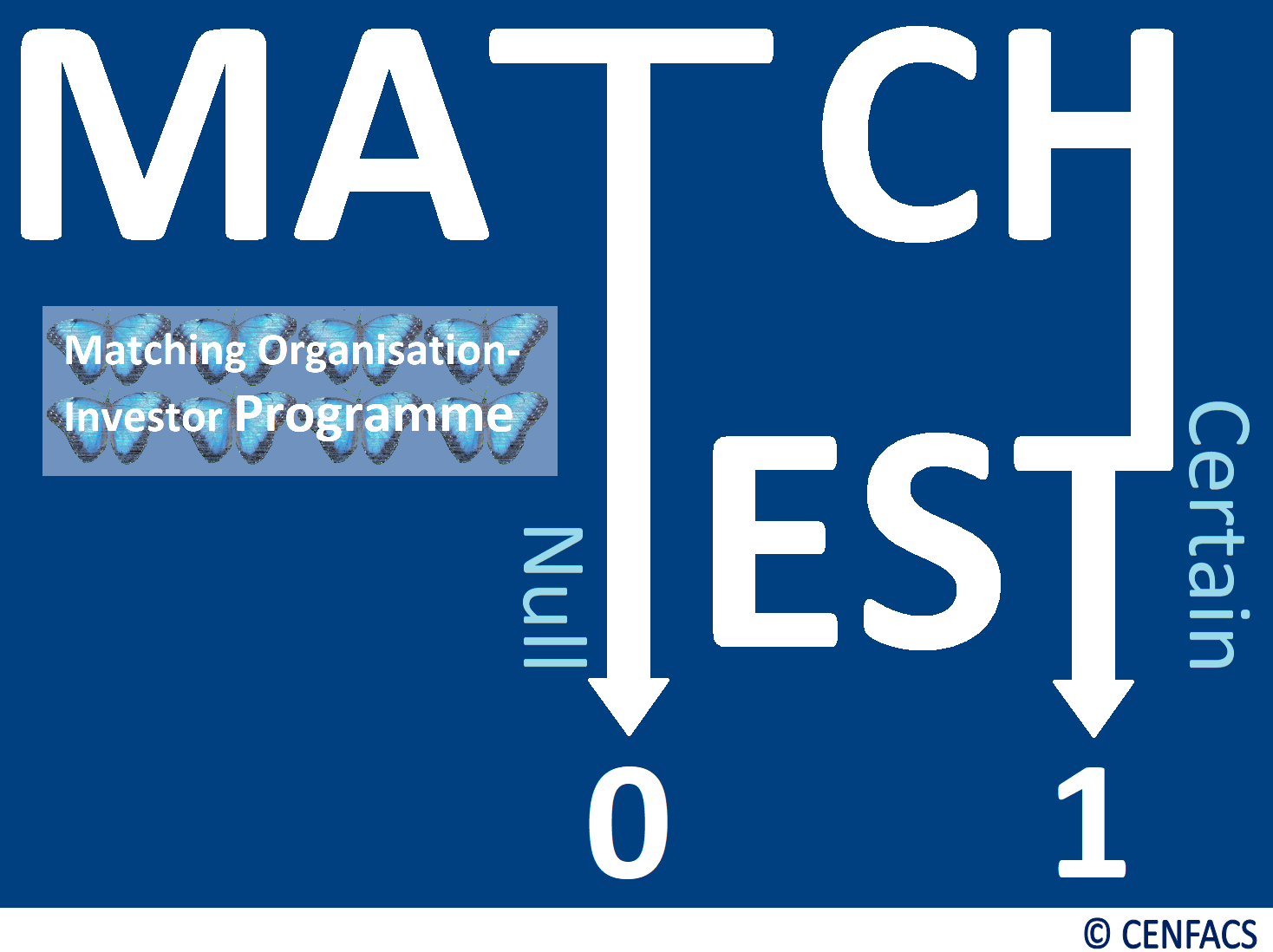
• • The Match or Fit Test Service
As part of the match or fit test, the contents of ASCO’s VP&PD Stage must be matched with NFP Impact Investor’s view on SM&AVC. The match test (or matched sampling) will help to increase the accuracy and statistical efficiency of the study of the HWTP by carefully selecting subjects for comparison. The purpose here will be to increase the statistical efficiency of the study on HWTP by controlling for confounding variables when forming a sample.
The fit test will assist in determining how well the observed sample data matches a specified theoretical distribution. The fit test will check if the data collected fits a model or an assumed population distribution. So, the purpose of the fit test is to validate or invalidate the statistical model by checking if the sample data follows an expected distribution.
The match can be perfect or close (that is, when every unit is paired with an equivalent unit) in order to reach an agreement. If there is a huge or glaring difference between the two (i.e., between what the NFP Impact Investor’s approach to VP&PD Stage and what ACI/ASCOC is saying about its VP&PD Stage, between what the investor would like the VP&PD Stage to indicate and what ASCO’s VP&PD Stage is really saying), the probability or chance of having an agreement at this first round of negotiations could be null or uncertain.
• • • Impact Advice to ASCO and Guidance to NFP Impact Investor
Where there could be a disagreement, CENFACS can impact advise ACI/ASCO to improve the contents of its VP&PD Stage. CENFACS can as well guide NFP Impact Investors to work out their expectations in terms of SM&AVC Phase to a format that can be agreeable by potential ASCOs.
CENFACS’ impact advice for ASCOs and guidance on impact investing for NFP Impact Investor, which are impartial, will help each of them (i.e., investee and investor) to make informed decisions and to reduce or avoid the likelihood of any significant losses or misunderstandings or mismatches.
• • • The Rule of the Matching Game
The rule of the game is the more impact investors are attracted by ACI’s or ASCOs’ VP&PD Stage the better for ACIs or ASCOs. It means that ACI’s or ASCOs’ process must pass the attractiveness test (that is, the evaluation of market’s appeal). Likewise, the more ACIs or ASCOs can successfully respond to impact investors’ level of enquiries and queries about the HWTP the better for investors. In this respect, the matching game needs to be a win-win one to benefit both players (i.e., investee and investor).
The above is the First Activity of the Matching Organisation-Investor via HWTP.
Those potential organisations seeking investment to set up a HWTP and NFP Impact Investors looking for organisations that are interested in their giving, they can contact CENFACS to be their matchmaker to find their perfect investee or investor.
• • • CENFACS as a Matchmaker
As a Matchmaker, CENFACS can streamline your search process, save time, money and resources to help you find the perfect match in the world of impact investing.
CENFACS platform will help facilitate the matching process between investees and investors. By leveraging the power of AI tools, CENFACS’ Matching Organisation-Investor Programme can streamline the search process for funding opportunities, connecting African charities and impact investors/funders.
Briefly speaking, CENFACS can work with matching applicants and use AI to match organizations with the right impact investors, filtering profiles based on development stages, sectors, and aims.
In this matching process, CENFACS can arrange the match or fit test for them. They can have their fit test carried out by CENFACS’ Hub for Testing Hypotheses.
• • • CENFACS’ Hub for Testing Hypotheses
The Hub can help use analysis tools to test assumptions and determine how likely something is within a given standard of accuracy. The Hub, which can serve as a learning or reference place for those who would like to understand and apply statistical hypothesis testing, can assist to
√ clean, merge and prepare micro-data sources for testing, modelling and analysis
√ conduct data management and administration
√ carry out regression analysis, estimate and test hypotheses
√ interpret and analyse patterns or trends or insights in data or results.
In this respect, CENFACS’ H-tests Hub is knowledge repository designed to demystify the process of using data to make informed decisions and move beyond intuition and guesswork.
In the current case of Matching Organisation’s Value Proposition and Product Development with Not-for-profit Impact Investor’s Social Mission and Artisan Value Chain, there are several hypotheses depending on the focus. One of the hypotheses could be socio-economic and gender empowerment whereby a theory can stipulate that revitalising traditional weaving directly improves livelihoods. Another hypothesis could be on sustainability and supply chain, which can be formulated as environmental and fashion-industry projects focus on the ecological benefits of indigenous production methods. These two hypotheses can be tested.
Those who would like to apply hypothesis testing in fields of economic development or to deal with poverty reduction, they are welcome to use CENFACS’ H-tests Hub.
For any queries and/or enquiries about this First Stage (or Phase) Activity of Matching Organisation-Investor via HWTP, please do not hesitate to contact CENFACS.
_________
• References
(1) https://corporatefinanceinstitute.com/resources/economics/market-failure (accessed in November 2026)
(2) https://edexceleconomics.com/home/theme-1-introduction-to-make-and-market-failure/information-gaps (accessed in November 2026)
(3) https://www.tutor2u.net/economics/topics/information-gaps (accessed in November 2026)
(4) https://posts.tearbox.com/hub/what-is-social-contracting-and-how-does-it-work-in-practice (accessed in November 2026)
(5) https://esg.sustainability-directory.com/term/expectation-management/ (accessed in November 2026)
(6) https://www.hostinger.com/tutorials/what-is-prompt-in-ai/ (accessed in November 2026)
(7) https://www.ibm.com/think/topics/generative-ai (accessed in November 2026)
(8) https://radicalweavers.org/blogs/radical-weavers-blog-2/handmade-vs-handoven-what-is-the-difference-and-why-it-matters (accessed in November 2026)
(9) https://online.hbs.edu/blog/post/creating-a-value-proposition (accessed in November 2026)
(10) https://www.ibm.com/think/topics/product-development (accessed in November 2026)
(11) https://www.salesforce.com/uk/sales/value-chain/ (accessed in November 2026)
_________
• Help CENFACS Keep the Poverty Relief Work Going This Year
We do our work on a very small budget and on a voluntary basis. Making a donation will show us you value our work and support CENFACS’ work, which is currently offered as a free service.
One could also consider a recurring donation to CENFACS in the future.
Additionally, we would like to inform you that planned gifting is always an option for giving at CENFACS. Likewise, CENFACS accepts matching gifts from companies running a gift-matching programme.
Donate to support CENFACS!
FOR ONLY £1, YOU CAN SUPPORT CENFACS AND CENFACS’ NOBLE AND BEAUTIFUL CAUSES OF POVERTY REDUCTION.
JUST GO TO: Support Causes – (cenfacs.org.uk)
Thank you for visiting CENFACS website and reading this post.
Thank you as well to those who made or make comments about our weekly posts.
We look forward to receiving your regular visits and continuing support until the end of 2026 and beyond.
With many thanks.