Welcome to CENFACS’ Online Diary!
18 March 2026
Post No. 448

The Week’s Contents
• Easter 2026 Alternative Income Sources and Projects
• Tacking Climate Protection and Stake for African Children at the Implementation Level with Full Implementation Sub-phase (Phase 3.4): Stocktaking Activity on COP30 and Preparation to Follow up COP31
• Climate Action 3 – In Focus from 16 to 22/03/2026: Engage in Grassroots Climate Science Activism and the Reduction of Climate Poverty
… And much more!
Key Messages
• Easter 2026 Alternative Income Sources and Projects (E2026AIS&Ps)
E2026AIS&P is a similar support to the Festive Income Booster we provide in around December 0f every year. E2026AIS&P is a new short version or cycle to support low-income poor Children, Young People and Families (CYPFs), giving them some information, guidance and advice to generate some little extra income to cover Easter Season’s expenses, especially at this uneasy time of the high costs of living.
Since we are in a dedicated Year of Alternatives within CENFACS, E2026AIS&P focuses on Alternative Income Sources and Projects for Easter. These sources and projects involve leveraging the relatively high consumer demand for themed activities, crafts and food, ranging from active side hustles to community fundraising initiatives.
To generate or diversify their income, CYPFs need a project or idea that can be turned into a real income-generating activity or occupation. This activity or occupation is their income project, while the resultant stream of money is their income source. In other words, their Easter Alternative Income Project would be a specific organized activity or event that employs a specific method of generating earnings for Easter Season, with a clear start and end date. Their Easter Alternative Income Source would be a general category of earning income, that generates earnings or revenue, and that can be ongoing seasonal or passive.
Easter Alternative Income Sources, which are numerous, include selling themed goods and decor, offering special services, and participating in seasonal events. With themes of Spring, rebirth, and celebration, Easter holiday offers a variety of opportunities for earning extra income. These activities not only provide an extra income during the Easter Season but also allow people to express their creativity and contribute to the holiday spirit.
Because E2026AIS&P is about an extra income during the Easter Season, those who undertake these activities need to have some metrics to check if a particular chosen source is generating income they need or not. It means they can check the strengths of their income generation model via key performance metrics for E2026AIS&P, such as financial metrics (return on investment), operational metrics (like budget adherence), and brand metrics (such as brand awareness).
E2026AIS&P as a resource provides some methodology and techniques on how to create an easterly alternative income source that meets your need or the need of CENFACS’ users and beneficiaries of reducing poverty, particularly but not exclusively income poverty, during the Easter Period and beyond.
We have given key highlights about E2026AIS&Ps under the Main Development section of this post.

• Tacking Climate Protection and Stake for African Children at the Implementation Level with Full Implementation Sub-phase (Phase 3.4): Stocktaking Activity on COP30 and Preparation to Follow up COP31
We are continuing to work on the outcomes of COP30 (1) and how they can fit into CENFACS’ Taking Climate Protection and Stake for African Children at the Implementation (TCPSACI) and its sub-phase 3.4, as well as how they can help us prepare for COP31 (2) which will be convened in Antalya, Türkiye.
The following points help understand how we are continuing our climate talks follow-up and how we are preparing for the next climate talks:
~ Stocktaking activity on COP30
~ Preparation to follow COP31
~ Giving African children a stake in global climate talks
~ CENFACS slogan for following up COP31.
Let us briefly explain these points.
• • Stocktaking Activity on COP30
This week, we are having a stocktaking activity of looking at the key achievements of COP 30, held at Belém, Brazil. It emerges from World Resources Institute (3) that the key agreements and initiatives include the following ones:
σ Mutirão Decision and Implementation Focus (meaning actions to combat climate change to be in line with the Paris Agreement)
σ Triple adaptation finance by 2035 (i.e., Reaffirmation of the pathway to mobilize at least $300 billion annually for developing countries by 2035, with a goal of $1.3 trillion per year from public and private sources, and $9 billion for Brazil’s Tropical Forests Facility)
σ Voluntary plan to curb fossil fuels and roadmaps (e.g., Global Implementation Accelerator and the Belem Mission to 1.5)
σ Nature and indigenous recognition (e.g., Land rights for indigenous and traditional communities were secured)
σ Sectoral and technological action (e.g., Expanding renewable energy capacity, deploying electronic vehicles, and investing in carbon removal technologies)
Etc.
We are as well discussing shortcomings and challenges resulted from COP30 like the ones below:
σ No formal commitment to phase out fossil fuels (as part of fossil fuel transition)
σ Emissions gap between global emitters and others
σ Logistical and political challenges
σ and other issues surrounding adaptation and finance technology.
Besides this stocktaking exercise, we are preparing ourselves to follow up COP31.
• • Preparation to Follow up COP31
The website ‘cop31.co.uk’ (4) notes that
” The primary function of COP31 will be to operationalise the outcomes derived from preceding conferences, particularly focusing on the post-2025 financial architecture and the synthesis of the collective response to the Global Stocktake”.
Similarly, the website ‘earth.ac.uk’ (5) mentions the following considerations which are bound to prove critical along the road to Antalya:
“σ The integrity of the new generation of Nationally Determined Contributions
σ A decisive pivot from climate finance negotiations to climate finance delivery
σ Rebuilding trust in multilateral climate governance
σ Accountability and transparency mechanisms
σ Advancing a just energy transition
σ Adaptation and loss and implementation
σ Strengthening environmental democracy and public participation
σ Technology transfer and capacity building
σ Alignment between climate action and development goals”.
Our preparation is about looking into the above-mentioned points. It also includes the following:
σ Learning and sharing knowledge about climate issues (e.g., climate finance, deforestation, and adaptation)
σ Re-educating the community and the public about climate issues
σ Taking action to reduce our own climate footprint
σ Engaging in advocacy and campaigns via TCPSACI
σ Staying informed by following COP31 news
σ Running pre-COP31 events
σ Participating in climate webinars and local actions
Etc.
One can hope that COP31 will provide opportunity to children to have their rights, voices, and futures embedded into international climate policy.
• • Giving African Children a Stake in Climate Talks
Our request remains the same: “Giving African children a stake“; African children being representative of all other children. This is because the stake for African children is exceptionally high, encompassing their survival, health, education, and future, with many of them facing high or extremely high climate risk and impact. Therefore, what is at stake for African children is their health, survival, education disruption, protection and safety, and future prospects.
African children can be given a stake in climate talks by establishing formal platforms like an African Children’s Climate Council, integrating youth climate negotiators into official delegations, and prioritizing child-specific vulnerabilities in climate policies, etc.
• • CENFACS Slogan for Following up COP31
Without anticipating what may happen at the global climate talks in Antalya, let us inform our supporters that the slogan for this follow-up is: Antalya Prioritizes Children!
Antalya Prioritizes Children! refers to the recognition of children as a priority group in climate finance and policy. This slogan will help us in our efforts to meet the “triple bottom value” (that is, People, Planet, Prosperity). It will as well assist in meeting the needs of our climate stakeholders (that is, African children) who are adversely impacted but have no thing or little to do with climate change and have an interest in climate action.
To enquire about the above-mentioned pre-COP31 follow-up activity within CENFACS and to support CENFACS’ TCPSACI and its sub-phase 3.4, please contact CENFACS.

• Climate Action 3 – In Focus from 16 to 22/03/2026: Engage in Grassroots Climate Science Activism and the Reduction of Climate Poverty
The Third Climate Action is Engage in Grassroots Climate Science Activism and the Reduction of Climate Poverty. In order to take this action, we are going to cover the following points:
σ What is a climate activist?
σ Meaning of ‘Engage in Grassroots Climate Science Activism’
σ Components of Grassroots Climate Science Activism
σ The links between Grassroots Climate Science Activism and Climate Poverty Reduction
σ Working with CENFACS Community members to Engage in Grassroots Climate Science Activism.
Let us unwrap each of these points.
• • What Is a Climate Activist?
According to ‘scienceinsights.org’ (6),
“A climate activist is someone who takes deliberate action to push governments, corporations, and the public towards reducing greenhouse gas emissions and addressing the effects of climate change. This action can range from marching in the streets to filing lawsuits against national governments. Climate activists focus on systemic change aiming to shift policies, economic structures, and public behaviour rather than just individual habits”.
Climate activists can organise, protest and push for systemic change. They act based on climate science and scientific evidence.
• • Meaning of Engage in Grassroots Climate Science Activism
The literature on grassroots activism reveals that engaging in grassroots activism in terms of climate science means using localised, evidence-based data and scientific understanding to drive community-led action for climate mitigation and adaptation. It moves beyond abstract, global climate discussions to focus on tangible, local impacts – such as air pollution, water contamination, or land degradation – and advocates for solutions that align with scientific recommendations such as from the International Panel for Climate Change.
To act for or stand with climate science, one can use bottom-up approaches, evidence-based advocacy, connecting local to global, and actionable sustainability.
• • Components of Grassroots Climate Science Activism
There are elements that one needs to consider in order to Engage in Grassroots Climate Science Activism. Among them, it is worth mentioning the following:
σ Translating scientific knowledge: Making complex climate data accessible and relevant to the local community to spur action
σ Citizen science: Involving community members in collecting data, such as monitoring air quality or tracking biodiversity loss to challenge developers or policy decisions
σ Fighting injustice: Addressing the unequal and dissymmetric distribution of climate impacts, often focusing on how environmental degradation affects marginalised communities
σ Targeted policy pressure: Using data to lobby for local policy changes, such as demanding better public transportation, renewable energy, or opposing new fossil fuel infrastructure
σ Direct action: Utilising protests, petitions, and in some cases, civil disobedience to create urgency around scientific warnings.
This approach helps foster a sense of agency and deals with climate issues that affect the community as whole.
• • The Links between Grassroots Climate Science Activism and Climate Poverty Reduction
There could be some relationships between grassroots science activism and the reduction of poverty induced by climate change. Indeed, poor people and households have limited capacity to manage climate risks and crises. This limited capacity can be exacerbated with their limited access to formal insurance, low incomes and meager assets. Yet, they have to deal with climate-related shocks, sometimes under severe constrained conditions and circumstances.
Using evidence data and evidence in the way climate change affects them can drive community-led action to mitigate climate effects on their behalf. This will help address the unequal and dissymmetrical distribution of the adverse climate impacts on them.
• • Working with the Community on Ways of Engaging in Grassroots Climate Science Activism
The all-purpose of writing this note is to guide our action. In other words, what is key here is to take action. The note is only a guided principle.
Working with our members to engage in grassroots climate science activism can be done by helping to understand climate data and vulgarizing complex climate scientific knowledge, fighting climate injustice, lobbying in those who are in a position to change the factors adversely changing climate, encouraging to join sensible grassroots climate science activism where they live, etc.
We can work together with them to transform their passive support into active, informed and effective activism that drives both community-level and structural climate action.
Those members of our community in the UK and Africa-based Sister Organisations willing to work with CENFACS on Engaging in Grassroots Climate Science Activism as well as on Climate Poverty Reduction; they can take climate actions with us.
For any queries or enquiries about Climate Action 3 and Climate Actions Month, please do not hesitate to contact CENFACS.

Extra Messages
• AI-powered Financial Tracking, Monitoring and Controls for Households’ Financial Capacity and Capability Building Experiences – In Focus on Wednesday 18/03/2026: Impact Measurement
• Matching Organisation-Investor via a Sustainable Water Project – Activity 4 (from 18 to 24/03/2026): Matching Organisation’s Physical Project Implementation with Not-for-profit Impact Investor’s Project Implementation and Installation
• All-Year-Round Projects Lifecycle – Step/Workshop 5: Negotiating and Agreeing Your Play, Run and Vote Projects; and Integrating Triple Value Initiatives into Your All-Year-Round Projects Negotiated Agreement

• AI-powered Financial Tracking, Monitoring and Controls for Households’ Financial Capacity and Capability Building Experiences – In Focus on Wednesday 18/03/2026: Impact Measurement
The fourth AI-powered financial tracking, monitoring and control tool of our work with households making the CENFACS Community is on Impact Measurement. To deal with this fourth tool, we are going to explain the following:
σ The meaning of Impact Measurement, including it in the context of AI-powered Financial Tracking, Monitoring and Controls for Households
σ Key dimensions of impact in household AI finance
σ Key metrics for measuring impact
σ The role of AI in measurement
σ How CENFACS can work with households on impact measurement.
Let us cover each of these points.
• • What Is Impact Measurement?
The definition retained here for Impact Measurement comes from ‘nvpc.org’ (7) which argues that
“Impact measurement is the process to measure and attribute change created through a programme” (p. 6)
The same ‘nvpc.org’ adds that
“The impact measurement includes outcome evaluation and impact evaluation. An outcome evaluation assesses short- and medium-term effects of a programme. An impact evaluation assesses longer term effects of a programme”.
Impact measurement can be applied in the context of AI-powered Financial Tracking, Monitoring and Controls for Households.
• • What Is Impact Measurement in the Context of AI-powered Financial Tracking, Monitoring and Controls for Households?
It emerges from within the literature on AI that an Impact Measurement in the Context of AI-powered Financial Tracking, Monitoring and Controls for Households refers to the quantifiable assessment of how AI-driven tools alter, improve, and manage a household’s financial health, behavioural habits, and economic security. It moves beyond merely tracking spending to determining the actual value created – such as increased savings, reduced debt, or better adherence to budgets – enabled by AI insights and automated controls.
In this context, impact measurement acts as a feedback mechanism that tracks ‘how much’ change is occurring (depth, duration, and scale) in a household’s financial situation.
• • Key Dimensions of Impact in Household AI Finance
Impact Measurement (IM) in this area breaks down into three main categories, which are financial outcomes, behavioural changes and risk mitigation.
~ Financial outcomes (or the ‘what’): The IM will be about quantifiable improvement in a household’s balance sheet. Examples of IM in this area include Savings Rate Increase, Debt Reduction and Budget Adherence.
~ Behavioural changes (the ‘how’): The IM will involve shifts in habits driven by AI insights. Examples in this case include Reduced Discretionary Spending, Improved Financial Literacy or Awareness, and Reduced Cognitive Load.
~ Risk mitigation (the ‘safety’): The IM will look at enhanced security and stability. Examples in this circumstance could be Fraud Detection and Cash Flow Forecasting.
• • Core Metrics for Measuring Impact
To quantify these effects, AI-powered tools track specific Key Performance Indicators (KPIs). Among these KPIs are Variance Analytics, Automated Savings Volume, Subscription Savings, Cash Flow Buffer, and Automate Insights Adoption Rate.
All these metrics can used for Impact Measurement in the Context of AI-powered Financial Tracking, Monitoring and Controls for Households.
• • The Role of AI in Measurement
AI does not just track data, it provides the analysis of the impact, transforming raw data into actionable insights. This involves the following:
~ Pattern Recognition: Identifying recurring spending habits that impact long-term financial goals
~ Predictive Modeling: Forecasting future cash flow issues to prevent them, rather than just reporting on them after they occur
~ Personalisation: Tailoring financial advice and goals to the specific demographic and financial situation of the household.
In short, IM in household AI finance is about proving that the technology is driving better household financial decisions, increased security, and improved financial well-being.
• • Working with Households on Impact Measurement in Financial Tracking, Monitoring and Controls with AI-powered Tools
CENFACS is not a bank or building society or a financial institution that can provide facilities to its members to measure the impact from the use of AI-powered tools. However, CENFACS can – under some circumstances – work with households through the integration of AI-powered tools to measure impact in the financial tracking, monitoring and controls of their accounts.
CENFACS can work together with them to enhance the financial management of their accounts, providing them with the necessary support to navigate their financial challenges and achieve their financial goals.
CENFACS can work with them to measure and attribute change created through the use of AI-powered tools.
CENFACS can help them to quantifiably assess how AI-driven tools can alter, improve, and manage their financial health, behavioural habits, and economic security.
CENFACS can as well encourage them to use these AI-powered and life-saving financial tools, to move beyond passive budgeting spreadsheets to actively monitoring their financial transactions, to measure impact, to interact with them to prevent overspending and theft, manage debt and optimize savings to reduce poverty as the lack of knowledge about AI-powered tools and capabilities.
For any queries and/or enquiries about Impact Measurement in Financial Tracking, Monitoring and Controls with AI-powered Tools, please do not hesitate to contact CENFACS.
Likewise, those who want further information or clarification about AI-powered Financial Tracking, Monitoring and Controls for Households’ Financial Capacity and Capability Building Experiences; they are welcome to communicate with CENFACS.
In addition, for those who have financial planning problems, they can speak to CENFACS so that we can work together on their financial planning needs, and help them overcome these problems and stay financially stronger.

• Matching Organisation-Investor via a Sustainable Water Project – Activity 4 (from 18 to 24/03/2026): Matching Organisation’s Physical Project Implementation with Not-for-profit Impact Investor’s Project Implementation and Installation
Both parties (i.e., Africa-based Sister Charitable Organisation and Not-for-profit Impact Investor) have worked hard in every step of the way of the serialisation and fragmentation of this Project. They have so far made noticeable progress, as they have continued to score points. These scored points are enough to enable them to enter the fourth stage of the matching talks.
In this fourth episode of our 5-week Matching Organisation-Investor via a Sustainable Water Project, ACI/ASCO (African Charity Investee/African-based Sister Organisation) will present its plan for the Physical Implementation of the Sustainable Water Project (SWP) – including resource procurement and construction -, while the Not-for-profit (NFP) Impact Investor will be re-entering the matching negotiations with its Project Implementation and Installation. They are both speaking about project implementation, with a slight difference that the NFP Impact Investor is adding to it installation.
To continue these matching talks, we have summarized them around the following points:
σ Activity 4 Matching Concepts
σ Negotiation between ASCO and Not-for-profit Impact Investor
σ Reaching a Negotiated Agreement
σ The Match or Fit Test.
Let us provide some highlights about each of these points.
• • Activity 4 Matching Concepts
There are two concepts that need some clarification, concepts which are implementation and installation.
• • • What are project implementation and installation?
Project implementation is, according to ‘projectmanagertemplate.com’ (8),
“The structured process of executing planned activities to achieve a project’s objectives. This phase involves mobilizing resources, coordinating tasks, monitoring progress, and ensuring deliverables are completed on time, within budget, and according to quality standards”.
However, project implementation has to be differentiated from project installation. In other words, project installation means the system functions, whereas project implementation signifies that the system optimization is achieved.
Because of this difference between the two (i.e., implementation and installation), ACI/ASCO needs to explain how it will integrate the human element with the technology to avoid any failure to adequately invest in the people making the SWP. It is also about how ACI/ASCO will link technology development cycle (installation) and human development cycle (implementation). This matter can be settled during the negotiation.
• • Negotiation between ASCO and Not-for-profit Impact Investor
Before the negotiation begins, both parties need to aware that implementing sustainable water projects involves a comprehensive approach that includes planning, financing, and community engagement.
From the perspective of ACI/ASCO, physical implementation of the SWP will include resource procurement and construction.
For the NFP Impact Investor, the construction phase will involve building the infrastructure, such as drilling wells, installing pipes or building sand filters. This stage will also include training local people and technicians to manage the SWP, fostering a sense of responsibility for the local community.
Both parties need to negotiate their individual perception of implementation and close the gap if there is any. They have to bridge the gap between grant-based, mission-driven work and market-based financial sustainability, as argued in the previous notes.
For instance, regarding the investment in local capacity and governance, the focus would be on sustainability and local empowerment. The NFP Impact Investor could provide funding for training local staff, which would increase the technical capability of ACI/ASCO to run the SWP. Likewise, incorporating training programmes that will connect ACI/ASCO with other successful water projects or experiences will be helpful. Furthermore, ensuring that ACI/ASCO will have skillful board members who will manage the aspects relating to SWP installation and implementation will be very welcome by the NFP Impact Investor.
• • Reaching a Negotiated Agreement
The two sides (ASCO and the NFP Impact Investor) need to reach a negotiated agreement on the contents of Physical Project Implementation (PPI) for the former and Project Implementation and Installation (PI&I) for the latter. It means they need to align their positions. This alignment requires active ongoing collaboration that merges ACI’s/ASCO’s mission-driven expertise with the NFP Impact Investor‘s requirement for measurable impact and financial stewardship, This can be achieved through structured planning, clear impact mapping (Theory of Change), agreed Key Performance Indicators and active support.
If there is a disagreement between ASCO and NFP Impact Investor, this could open up the possibility for a match/fit test. The match/fit test can be carried out to try to help the two sides of the matching process. The match/fit test can also be undertaken if there is a disagreement on any of aspects of SWP.
• • The Match or Fit Test Service
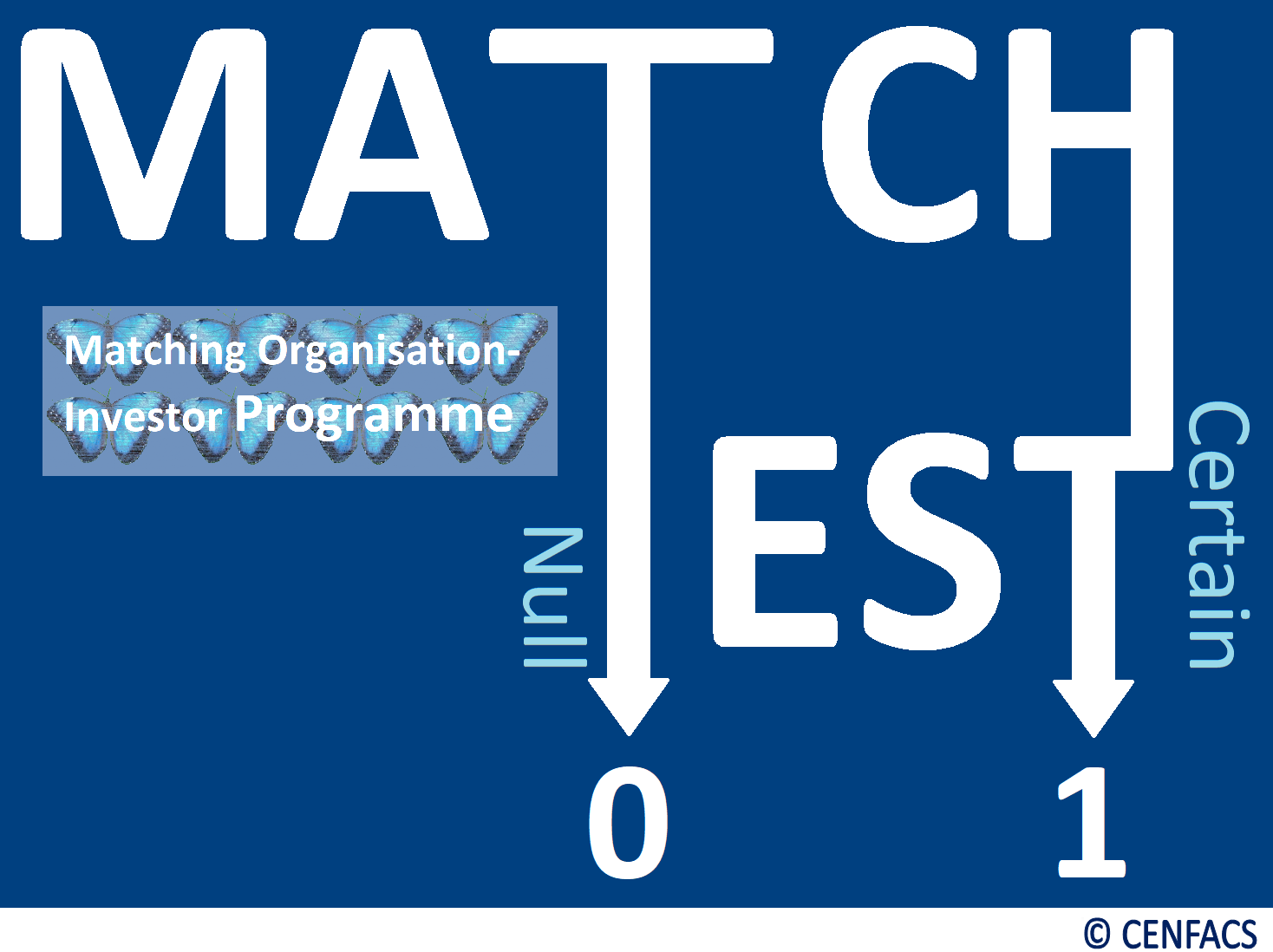
As part of the match or fit test, the contents of ASCO’s PPI Stage must be matched with NFP Impact Investor’s view on PI & I. The match test (or matched sampling) will help to increase the accuracy and statistical efficiency of the study of the SWP by carefully selecting subjects for comparison. The purpose here will be to increase the statistical efficiency of the study on SWP by controlling for confounding variables when forming a sample.
The fit test will assist in determining how well the observed sample data matches a specified theoretical distribution. The fit test will check if the data collected fits a model or an assumed population distribution. So, the purpose of the fit test is to validate or invalidate the statistical model by checking if the sample data follows an expected distribution.
The match can be perfect or close (that is, when every unit is paired with an equivalent unit) in order to reach an agreement. If there is a huge or glaring difference between the two (i.e., between what the NFP Impact Investor’s approach to PI&I Stage and what ACI/ASCOC is saying about its PPI Stage, between what the investor would like the PPI Stage to indicate and what ASCO’s PPI Stage is really saying), the probability or chance of having an agreement at this Fourth round of negotiations could be null or uncertain.
• • • Impact Advice to ASCO and Guidance to NFP Impact Investor
Where there could be a disagreement, CENFACS can impact advise ACI/ASCO to improve the contents of its PPI Stage. CENFACS can as well guide NFP Impact Investors to work out their expectations in terms of PI & I Phase to a format that can be agreeable by potential ASCOs.
CENFACS’ impact advice for ASCOs and guidance on impact investing for NFP Impact Investor, which are impartial, will help each of them (i.e., investee and investor) to make informed decisions and to reduce or avoid the likelihood of any significant losses or misunderstandings or mismatches.
• • • The Rule of the Matching Game
The rule of the game is the more impact investors are attracted by ACI’s or ASCOs’ PPI Stage the better for ACIs or ASCOs. It means that ACI’s or ASCOs’ process must pass the attractiveness test (that is, the evaluation of market’s appeal). Likewise, the more ACIs or ASCOs can successfully respond to impact investors’ level of enquiries and queries about the SWP the better for investors. In this respect, the matching game needs to be a win-win one to benefit both players (i.e., investee and investor).
The above is the Fourth Activity of the Matching Organisation-Investor via SWP.
Those potential organisations seeking investment to set up a SWP and NFP Impact Investors looking for organisations that are interested in their giving, they can contact CENFACS to be their matchmaker to find their perfect investee or investor.
• • • CENFACS as a Matchmaker
As a Matchmaker, CENFACS can streamline your search process, save time, money and resources to help you find the perfect match in the world of impact investing.
CENFACS platform will help facilitate the matching process between investees and investors. By leveraging the power of AI tools, CENFACS’ Matching Organisation-Investor Programme can streamline the search process for funding opportunities, connecting African charities and impact investors/funders.
Briefly speaking, CENFACS can work with matching applicants and use AI to match organizations with the right impact investors, filtering profiles based on development stages, sectors, and aims.
In this matching process, CENFACS can arrange the match or fit test for them. They can have their fit test carried out by CENFACS’ Hub for Testing Hypotheses.
• • • CENFACS’ Hub for Testing Hypotheses
The Hub can help use analysis tools to test assumptions and determine how likely something is within a given standard of accuracy. The Hub, which can serve as a learning or reference place for those who would like to understand and apply statistical hypothesis testing, can assist to
√ clean, merge and prepare micro-data sources for testing, modelling and analysis
√ conduct data management and administration
√ carry out regression analysis, estimate and test hypotheses
√ interpret and analyse patterns or trends or insights in data or results.
In this respect, CENFACS’ H-tests Hub is knowledge repository designed to demystify the process of using data to make informed decisions and move beyond intuition and guesswork.
Those who would like to apply hypothesis testing in fields of economic development or to deal with poverty reduction, they are welcome to use CENFACS’ H-tests Hub.
For any queries and/or enquiries about this Fourth stage (or phase) activity of Matching Organisation-Investor via SWP, please do not hesitate to contact CENFACS.

• All-Year-Round Projects Lifecycle –
Step/Workshop 5: Negotiating and Agreeing Your Play, Run and Vote Projects; and Integrating Triple Value Initiatives into Your All-Year-Round Projects Negotiated Agreement
• • Negotiating and Agreeing Your Play, Run and Vote Projects (5.1)
Step/Workshop 5 contains two tasks: negotiations and agreement.
• • • What Is Negotiation?
Negotiation is part of humans’ everyday life. To explain it, we are going to refer to what ‘pmi.org’ states about it. The website ‘pmi.org’ (9) provides three features about negotiation, which are
“[a] Communication back and forth for the purpose of making a joint decision
[b] A way of finding a mutually acceptable solution to a shared problem
[c] Achieving an ideal outcome: a wise decision, efficiently and amicably agreed upon”.
Negotiation can be hard, soft and principled. As an all-year-round project (AYRP) user, your negotiation needs to end with negotiated agreement to put your all-year-round project into action, whereby there could be a win-win outcome for you and those engaged with you in the negotiation. Negotiation can lead to an agreement.
• • • What Is an Agreement?
An agreement is simply a joint decision after negotiation or discussion, and can be translated into a contract or promise to carry out what has been negotiated or discussed. The agreement helps to outline the terms and conditions between all-year-round project user and the other party.
Knowing what negotiation and agreement are, we can now deal with an AYRP Negotiation and integrate Triple Value Initiatives (TVIs) into an AYRP Negotiated Agreement.
• • • AYRP Negotiation
What is an AYRP negotiation?
The literature provided on this matter says that an AYRP negotiation refers to the continuous, ongoing process of negotiation that occurs throughout the entire project lifecycle, rather than just during the initial contract signing or major project milestones.
Because projects are dynamic and involve diverse stakeholders, negotiation is considered a fundamental, day-to-day skill for AYRP managers, essential for managing scope, time, cost, and team resources.
There are key characteristics of ongoing project negotiation that an AYRP manager needs to be aware. These characteristics are continuous progress (negotiation from project initiation to closure), formal contract negotiations and informal bargaining, triple constraint (managing the balance between scope, budget and time, and relationship management with stakeholders).
Therefore, an AYRP negotiator will follow the 5-step structured approach to ongoing negotiation to successfully manage the ongoing process which includes
a) Understanding the need
b) Plan the strategy
c) Bargain or negotiate
d) Agree or close
e) Review.
An effective AYRP negotiator will prioritize active listening, maintain a win-win mindset, and understand that negotiation is about building consensus, not just winning.
Knowing what an AYRP negotiation is, let us provide an example of negotiated agreement.
• • • Example of Negotiated Agreement: Your Project about Playing the CENFACS’ League of Poverty Reduction
Let say you want to run a tournament over this coming Easter season with friends or relatives in order to find which African country is making commendable progress in terms of poverty reduction. You need to negotiate with friends and/or relatives the terms and conditions of this tournament.
• • • • What to include into your negotiated agreement
Your negotiation could revolve around the following:
~ the number of African countries making your Easter tournament
~ the criteria or metrics to rate them in terms of performance relating to poverty reduction
~ the analytical period you would like to consider (e.g., 01/01/2026 to 31/03/2026 or first quarter of 2026)
~ the roles each of the participants to the game would like to play
~ the length of the tournament
~ the time and day of the Easter holiday to play
~ the way of recording and communicating your results
etc.
You can think whether or not to insert a fundraising element (such as crowdfunding) into your tournament.
• • • • Crowdfunding your tournament
You can start crowdfunding for the tournament so that any money donated by friends and relatives go to good causes such as CENFACS’ noble and beautiful ones. You can set up a minimum or maximum amount as target to raise as money and share crowdfunding tasks to achieve this target.
• • • What Will Happen after Negotiation
After negotiation, you need to agree on certain terms, conditions and rules to follow during the play. Depending on your skills, knowledge, experience and resources; you may decide to turn your game into a play station or use a game theory to solve some of the hurdles you may encounter.
For those who would like to dive deeper into the negotiation and agreement relating to their Play or Run or Vote project, they should not hesitate to contact CENFACS.
Those who would like to integrate TVIs into their negotiation and agreement, they can also communicate to CENFACS. CENFACS can assist them on integration matter as well as make them to realise how their Play or Run or Vote project will be meaningful if they add a TVI dimension in it.
• • Integrating Triple Value Initiatives into Your All-Year-Round Projects Negotiated Agreement (5.2)
Integrating a triple value initiative (often referring to the ‘Triple Bottom Line’ of social, environmental, and economic value, or ‘Triple Value Impact’ of outcomes, experiences, and efficiency) into a project negotiated agreement requires shifting from cost-only procurement to outcome-based, collaborative contracting. To achieve this integration, there are strategies and ways of doing it.
• • • Key strategies for integrating TVIs
Key strategies include defining broader value metrics in the planning phase, using collaborative deal design, and embedding sustainability/social goals as as contractual obligations.
• • • Ways of integrating TVIs
Ways of integrating these initiatives into the diferent phases of your AYRP negotiated agreement include the following:
a) Preparation Phase (Define and Measure Triple Value)
In this phase, you need to define or establish value metrics beyond cost, set measurable targets, and adopt a ‘Triple Value’ mindset.
b) Negotiation Phase (Collaborative Deal Design)
This is the phase during which you can negotiate multiple issues simultaneously, shift to outcome-based procurement, and use ‘Make Three Offers Simultaneously’.
c) Contractual Integration (The Agreement)
This phase involves embedding into key clauses, utilizing collaborative contracting modeling, and alignment with legal frameworks.
d) Implementation (Governance and Monitoring)
It is the phase of establishing a dedicated joint board (e.g., an AYRP steering committee), undertaking continuous reporting and auditing (e.g., integrating social and environmental progress into regular performance tracking), and incentivizing long-term value (e.g., reward participants to your AYRP at its closure based on the value they created to the project).
By following these steps, an AYRP user will show that they are taking sustainability seriously in the negotiation and agreement of their projects.
• • Working with AYRP Users on TVI integration
CENFACS can work with AYRP users to integrate these initiatives into their project tools and lifecycle thinking processes. This will stop these TVIs being ‘add-on’ and enable them become part of the negotiated agreement of their AYRP success.
For those who are not familiar with project negotiated agreement and the integration of Triple Value Model into their AYR project, they should not hesitate to contact CENFACS if they need support.
They can contact CENFACS by
phoning, texting, e-mailing and completing the contact form on this website.
We can together discuss in detail your/their proposals about either your/their Run or Play or Vote projects, as well as the integration of TVIs into these projects.
For any queries and/or enquiries about All-Year-Round Projects Lifecycle and Negotiated Agreement as well as about the Integration of Triple Value Initiatives into Project Negotiated Agreement, please contact CENFACS.

Message in French (Message en français)
• Ressources du Programme de Développement des Capacités Individuelles (PDCI): Vacances Reposantes –
À la Une du Numéro du Printemps 2026: Des Vacances avec des Activités Alternatives
Comment profiter de vos vacances pour renforcer les liens, acquérir de nouvelles compétences et créer des souvenirs inoubliables
Le numéro actuel de notre ressource PDCI, intitulé « Des Vacances Reposantes », est consacré aux vacances proposant des activités alternatives. Ce numéro fait écho à l’engagement de CENFACS pour l’année 2026, placée sous le signe des alternatives. Il arrive à point nommé, à l’approche de la campagne de printemps 2026 de CENFACS, période de reconstruction et de renouveau des vies, des infrastructures et des institutions. Des vacances actives peuvent contribuer à cette reconstruction et à ce renouveau.Pour mieux présenter ce sujet, définissons ce que signifie « Vacances avec Activités Alternatives ». Il s’agit de vacances en famille proposant des expériences et des activités uniques, en dehors des plages traditionnelles ou des parcs d’attractions. Ces vacances peuvent inclure des séjours d’aventure, des expériences éducatives et des excursions locales adaptées à différents intérêts et groupes d’âge. Elles offrent aux familles l’occasion de renforcer leurs liens, d’acquérir de nouvelles compétences et de créer des souvenirs inoubliables de manière plus enrichissante et instructive.Un séjour de vacances avec activités alternatives est un voyage axé sur des activités spécifiques et organisées – comme le sport, l’aventure ou l’apprentissage de nouvelles compétences – plutôt que sur la simple détente. Ces séjours, tels que les retraites de yoga, la voile ou la randonnée, proposent un mélange de bien-être, d’aventure et de découverte de la culture locale, offrant souvent une expérience plus active et immersive.
Le numéro du printemps 2026 de notre guide PDCI est consacré à ces séjours. Il contient des outils pour planifier et budgétiser des vacances avec activités alternatives, ainsi que des conseils pour organiser un séjour axé sur ces activités. Il mentionne également les organismes qui proposent ce type de séjours.
Ce numéro, destiné aux personnes dans le besoin, propose des stratégies pour faire face à la pauvreté liée au manque d’activités de vacances alternatives ou de moyens d’y accéder et d’en profiter. Il aborde également la diversité des activités évoquées et en donne des exemples.
Vous pouvez demander à CENFACS les points saillants ou un résumé du contenu du numéro 2026 de « Vacances Reposantes ».

Main Development
• Easter 2026 Alternative Income Sources and Projects
The following contents provide the essential aspects for Easter 2026 Alternative Income Sources and Projects (E2026AIS&Ps):
∝ What is the aim of E2026AIS&P?
∝ Who E2026AIS&Ps are for
∝ Key terms
∝ Easter Alternative Income Sources (EAIS)
∝ Easter Alternative Income Project (EAIP)
∝ Key performance metrics for Easter Alternative Income Sources and Projects
∝ Monitoring and evaluating your project to create an alternative income source
∝ Contacting CENFACS for this Easter/Spring Support.
Let us now highlight these contents.
• • What Is the Aim of E2026AIS&P?
The main aim of E2026AIS&P is to build financial resilience, reduce economic strain, and provide opportunities for income generation for poor households and families during the Easter period and school holidays.
E2026AIS&Ps – which include small-scale entrepreneurship, craft sales, and community projects – are designed to help low-income families and households manage higher living costs and seasonal expenses.
E2026AIS&Ps also include a variety of aims like
σ Maximising income
σ Reducing financial strain
σ Building financial literacy and carbon literacy skills as well as resilience
σ Turning hobbies into income
σ Supporting vulnerable households
σ Promoting sustainable alternatives
Etc.
Those low-income or income poor families and households wanting to set an Easter Alternative Income Project can select the aim (like the ones provided above) that suits the model of their Easter Alternative Income Sources.

• • Who E2026AIS&Ps Are for
The beneficiaries of Easter-themed Alternative Income Sources and Projects are primarily and mostly households facing high financial pressure during Easter and school holidays. Amongst them are the following potential beneficiaries:
√ Those relying on free school meals
√ Lower-income families needing alternative income sources
√ Children and young people
√ CENFACS Community members looking to set up an Easter Alternative Income Project
Etc.
E2026AIS&P Resource can also be useful for the following target audiences or end-users:
√ Local artisans and crafters
√ Event planners and venues
√ Community organisations and charities
√ Visitors and parishioners
√ Photographers
Etc.
E2026AIS&P can help reduce the ‘poverty premium’ (that is, the extra cost that low-income families and households face) by alleviating the added financial stress of holiday expenses (like Easter celebrations).
• • Key Terms
There are two main terms, which are: Alternative Income Source and Alternative Income Project. Let us explain them.
An Alternative Income Source (AIS) is a general category for various ways to generate money outside of primary job, especially around the Easter season. For instance, Easter AIS is a general category of earning income during the Easter season, that is seasonal or passive. Selling crafts can be classified as AIS.
An Alternative Income Project (AIP) is a specific and organised activity, often a fundraising event used to create on these income streams. For example, Easter AIP is a specific and organised activity or event that uses a specific method to generate earnings on a temporary basis, with a clear start and end dates. Easter raffle can be an AIP.
The distinction between AIS and AIP is one of scope. AIP is the specific method, and the income it generates is AIS.
Knowing what AIS and AIP are, it is possible to look at them in details.

• • Easter Alternative Income Sources (EAIS)
There are many alternative income sources around Easter, including selling themed goods and decors, offering special services and participating in seasonal events. With themes of Spring, rebirth, and celebration, the holiday offers a variety of opportunities for earning an extra income.
Among EAIS, there are four main categories we would like to consider here:
a) Seasonal Goods and Crafts
b) Event-based Services
c) General Services
d) Online and Digital Services.
Let us provide some highlights about each of them.
• • • Seasonal Goods and Crafts (SGCs)
SGCs are items and projects that are primarily available or relevant during specific times of the year. These items often align with holidays, weather patterns, agricultural cycles, or cultural events. Seasonal goods can include seasonal produce, crafts, and decorations that reflect the changing seasons.
For instance, the website ‘lifeinlilac.co.uk’ (10) provides a Guide to Seasonal Finds and Handmade Crafts.
Briefly speaking, SGCs include the following items:
~ Easter-themed baked goods (e.g., Selling special treats like decorate cupcakes)
~ Handmade decorations (e.g., Creating and selling personalised wooden eggs)
~ Custom Easter baskets (e.g., Selling custom-filled Easter baskets)
~ Eco-friendly goods (e.g., Standing out and creating sustainable crafts)
~ Floral arrangement (e.g., Becoming a freelance florist to create Easter-themed bouquets).
• • • Event-based Services (EbS)
EbS refer to the range of services that help event organizers execute their plans effectively. These services can include logistical help, technical assistance, staffing, and vendor management. Easter EbS encompass a variety of activities and entertainment options designed to create memorable experiences for attendees.
Among EbS, it can be noted the following ones:
~ Organize egg hunts (e.g., You can charge admission to host a community egg hunt at a local park)
~ Event planning (e.g., You can offer event planning services for Easter festivals)
~ Easter bunny performer (e.g., You can dress up as Easter Bunny for meet-and-greets at community events)
~ Easter photography (e.g., You can offer themed photography sessions for families).
• • • General Services (GS)
GS means, according to ‘lawinsider.com’ (11),
“Those services that are not Professional Services. GS include, but are not limited to, janitorial, security guard, pest control, parking lot management, and landscaping services”.
Among the GS that one can think of include the following:
~ Spring cleaning services (e.g., One can offer gardening services to help people freshen up their homes and gardens)
~ Lawn care and landscaping (e.g., Offering general gardening maintenance)
~ Childcare and pet-sitting (e.g., Providing babysitting or pet-sitting services).
• • • Online and Digital Products (ODPs)
Online products are those goods and services bought or sold on the internet using a computer, smartphone, or other connected device. This definition stems from that of ‘online shopping’ as given by ‘fabbuikdre.com’ (12).
A digital product is defined by ‘omnisend.com’ (13) as
“Downloadable or viewable content that you sell or use on a desktop or handheld device, such as a PDF download or a video course locked behind a membership site”.
The website ‘omnisend.com’ adds that
“Digital products are items you sell online that customers download or access through the internet. Ebooks, course videos, Lightroom presets, Notion templates, printable planners – anything delivered electronically rather than shipped a box”.
Similarly, ‘shopify.com’ (14) argues that
“Digital products are goods that exist in a digital format. These include ebooks, music, video, digital art, software, online course, NFTs (Non-fungible tokens), AI-generated content, and virtual goods sold inside video games, like Roblox, or metaverse platforms”.
Based on the above-given definitions of ODPs, we can mention the following products:
~ Downloadable printables (e.g., You can create and sell digital Easter-themed printable assets)
~ Affiliate marketing (e.g., You can earn commission by promoting Easter-related products)
~ Online courses (e.g., You can create an online course on a particular platform to teach people how to make Easter decorations).
As the above information shows, there are many sources of alternative income that one can try to generate or earn a little extra income during Easter season and beyond. However, to do it one may need to have a project, an AIP.
• • Easter Alternative Income Project (EAIP)
EAIP is a SMART (that is, specific, measurable, attainable, relevant and time-bound) and detailed undertaking or plan you create to implement your income source (that is, a specific method or activity to be used to generate additional income during the holiday/Easter season). EAIP has a defined start and end date, usually within the Easter period (e.g., the two weeks Easter Holiday).
EAIP is also temporary income-generating initiative or side hustle that leverages the increased consumer demand and celebratory mood of the Easter holiday season to generate extra cash for those who see it as a business opportunity.
EAIP – which is a temporary, a defined mechanism, a specific undertaking designed to create a one-time or limited-duration income stream – can become a new source of income (that is, a permanent category that describes the origin of a person’s regular earnings).
However, whether it is about EAIS or EAIP, one needs to plan to measure their performance as a result of investing in them.
• • Key Performance Metrics for Easter Alternative Income Sources and Projects
One thing is to identify a possible source for Easter alternative income or to translate this source into a project. Another is to have quantifiable, numerical measures to track, compare, and assess the performance, status or quality of that source or project. To do that, those who would like to engage with E2026AIS&P need to use metrics. There are metrics for measuring Easter Alternative Income Sources and Projects.
• • • Metrics for measuring Easter Alternative Income Sources
Metrics for measuring Easter Alternative Income Sources (for households) focus on evaluating the profitability, efficiency, and time investment of seasonal, short-term economic activities compared to regular income. These metrics help determine if activities like Spring cleaning services, crafting, or hosting Easter events are financially beneficial.
Key metrics for Easter Income Streams will include the following:
σ Net Income per Activity
σ Return on Time Invested (ROTI)
σ Cost of Goods Sold (COGS) Efficiency
σ Percentage of Monthly Income
σ Customer Acquisition Cost
Etc.
For instance, one can measure Spring services like gardening, window cleaning, or lawn mowing.
There are also Performance Indicators for Household Financial Health that are quite useful. Among them are
σ Savings Ratio Increase
σ Seasonal Budget Variance
σ Cash Flow Timing
Etc.
The above-mentioned metrics are necessary to evaluate whether one’s chosen Easter income-generating activities provide meaningful income or merely cover seasonal costs, and whether they are worth repeating them in future seasons or not.
• • • Metrics for measuring Easter Alternative Income Projects
Metrics for measuring Easter Alternative Income Projects (for households) cover financial gains, operational efficiency, and social impact.
Key Performance Indicators (KPIs) include net income generated, return on investment and the number of beneficiaries reached.
However, metrics can be of various kinds depending on what a particular household wants to measure. They can be financial, operational, social and impact, or simply Easter-specific performance.
a) Financial Metrics
They are related to income generation and profitability. Among them are the following ones:
σ Net Household Income
σ Return on Investment
σ Gross Profit Margin
σ Increase in Household Disposable Income
σ Average Income per Participant.
b) Operational Metrics
Operational metrics, which are for EAIP performance and efficiency, include the following:
σ Cost per Beneficiary
σ Rate of Project Completion/Attendance
σ Sales Conversion Rate
σ Inventory Turnover.
c) Social and Impact Metrics
They include
σ Number of Households Participating
σ Percentage of Participants Reporting
σ Skill Acquisition Rate
σ Gender Balance of Participants
σ Sustainability Score.
d) Easter-specific Performance Metrics
They consist of
σ Volume of Easter Products Sold
σ Peak Sales Time
σ Customer Satisfaction Score.
Those who would like to set an EAIP, they need to plan to collect both quantitative and qualitative data about their projects. This double collection will enable them to carry out effective monitoring and evaluation of their EAIP.
• • Monitoring and Evaluating Your Project to Create an Alternative Income Source
• • • What do Monitoring and Evaluation track?
Monitoring and Evaluation (M&E) for your project (e.g., selling handmade Easter crafts, seasonal baking, etc.) to create an alternative income source tracks progress (monitoring) and assesses effectiveness (evaluation) to ensure your financial goals are met.
Monitoring tracks daily sales, participation adoption rates, and income generation against planned goals. M&E helps ensure efficiency and impact by measuring progress and, if necessary, making in-flight adjustments.
• • • Types of monitoring
Monitoring can be on results, process, finance, participation, or survey methods.
• • • What are the key methods for Monitoring and Evaluation?
Key M&E methods to use include attendance records, questionnaires, budget trackers, surveys, and focus group discussions to gauge the livelihood improvement.
For E2026AISP, there will be tracking of KPIs, checking of attendance and participation records, using case studies and focus groups, monitoring inputs (i.e., resources), and reviewing budgets.
• • • Planning for Monitoring and Evaluation
As part of the M&E plan, project owners need to use KPIs, collect data and report on project performance against aims. They can use M&E metrics to track economic gains and social impact. There are metrics linked to inputs (resources), output (immediate results), outcome (changes in behaviour or conditions), and impact (long-term changes).
For instance, these metrics could be increased household income, number of new products created, training attendance, participant profit margins, and adoption of new skills.
In short, M&E helps to know if E2026AIS&P is financially viable and the alternative income source is effective, allowing for adjustments to be made to increase success.
The above information only provides the essential aspects of E2026AIS&P. For those who would like the full coverage of E2026AIS&P, they can ask to CENFACS about it.
• • Contacting CENFACS for This Easter/Spring Support
Those who have an Easter Alternative Income Source and would like to transform it into an Easter Alternative Income Project, they should not hesitate to contact CENFACS. We can as well look at their project proposals if they have already got any.
We can work together with them to make their Easter income dreams come true.
For further details about E2026AIS&Ps; please do not hesitate to contact CENFACS.
_________
• References
(1) https://www.weforum.org/stories/2025/12/what-happened-cop30-whats-next/ (accessed in March 2026)
(2) https://unfccc.int/cop31 (accessed in March 2026)
(3) https://www.wri.org/insights/cop30-outcomes-next-steps (accessed in March 2026)
(4) https://cop31.co.uk (accessed in March 2026)
(5) https://earth.ac.uk/the-road-to-antalya-reflection-on-the-outcomes-of-cop30-and-key-considerations-for-cop31/ (accessed in March 2026)
(6) https://scienceinsights.org/what-is-a-climate-activist-and-what-do-they-do (6)
(7) https://nvpc.org.sg’/wp-content/uploads/2026/02/Guide-To-Impact-Measurement.pdf (accessed in March 2026)
(8) https://www.projectmanagertemplate.com/post/what-is-project-implementation-a-complete-guide (accessed in March 2026)
(9) https://www.pmi.org/learning/library/negotiating-project-outcomes-develop-skills-6781 (Accessed in March 2023)
(10) https://www.lifeinlilac.co.uk/winter-markets-uk-a-guide-to-seasonal-finds-and-handmade-crafts (accessed in March 2026)
(11) https://www.lawinsider.com/dictionary/general-services (accessed in March 2026)
(12) https://fabbuikdre.com/blogs/what-is-online-store-and-types/ (accessed in March 2026)
(13) https://www.omnisend.com/blog/what-is-digital-product/ (accessed in March 2026)
(14) https://www.shopify.com/blog/digital-products (accessed in March 2026)
_________
• Help CENFACS Keep the Poverty Relief Work Going This Year
We do our work on a very small budget and on a voluntary basis. Making a donation will show us you value our work and support CENFACS’ work, which is currently offered as a free service.
One could also consider a recurring donation to CENFACS in the future.
Additionally, we would like to inform you that planned gifting is always an option for giving at CENFACS. Likewise, CENFACS accepts matching gifts from companies running a gift-matching programme.
Donate to support CENFACS!
FOR ONLY £1, YOU CAN SUPPORT CENFACS AND CENFACS’ NOBLE AND BEAUTIFUL CAUSES OF POVERTY REDUCTION.
JUST GO TO: Support Causes – (cenfacs.org.uk)
Thank you for visiting CENFACS website and reading this post.
Thank you as well to those who made or make comments about our weekly posts.
We look forward to receiving your regular visits and continuing support until the end of 2026 and beyond.
With many thanks.