Welcome to CENFACS’ Online Diary!
04 March 2026
Post No. 446

The Week’s Contents
• Climate Actions 2026 – Theme: Standing with Climate Science and Poverty Reduction
• Activity 2 of Matching Organisation-Investor via a Sustainable Water Project: Matching Organisation’s Conceptual Designs and Feasibility Studies with Not-for-profit Impact Investor’s Feasibility Study and Technical Design
• AI-powered Financial Tracking, Monitoring and Controls for Households’ Financial Capacity and Capability Building Experiences – In Focus on Wednesday 04/03/2026: Automated Communication
… And much more!

Key Messages
• Climate Actions 2026 –
Theme: Standing with Climate Science and Poverty Reduction
Climate Actions 2026 within CENFACS will be about Standing with Climate Science and Poverty Reduction. It is also the theme for this month of March 2026. The theme of Standing with Climate Science and Poverty Reduction revolves around the importance of science in addressing the climate crisis and climate poverty, as well as advocating for effective climate and poverty reduction actions. It emphasizes the need to stay grounded in science, advocate for evidence-based solutions, and freely share findings to ensure that the world benefits from the best solutions available.
However, what do we mean by Standing with Climate Science and Poverty Reduction?
Standing with Climate Science means adopting a positive or taking actions that are fundamentally aligned with the overwhelming scientific consensus regarding the reality, causes, and urgency of climate change. It involves basing actions, policies, and behaviours on evidence-based research rather than opinion or denial.
However, to Stand with Climate Science, one needs to know what Climate Science is.
• • What Is Climate Science?
Findings from research about the definition of Climate Change are many. According to ‘acs.org’ (1),
“Climate science is the effort by humans to understand the natural forces that control the climate”.
In Stanford Encyclopedia of Philosophy (2), it is stated that
“Climate science investigates the structure and dynamics of earth’s climate systems. It seeks to understand how global, regional and local climates are maintained as well as the processes by which they change over time. In doing so, it employs observations and theory from a variety of domains, including meteorology, oceanography, physics, chemistry and more”.
These definitions of climate science will help in understanding of Standing with Climate Science.
We also need to stand with Climate Poverty Reduction. Standing with Climate Poverty Reduction is about expressing active solidarity, support, and alignment with strategies that simultaneously fight climate change and alleviate poverty. It signifies an understanding that climate action and poverty eradication are deeply interconnected, and that solutions to one often hinge on the other.
Indeed, climate change and poverty reduction are inseparable. Failure to align the reduction of adverse climate change and poverty reduction can cause climate policies to hurt the poor or poverty to accelerate climate change. In other words, efforts have to be made to achieve net-zero emissions while simultaneously lifting people out of poverty.
This standing with Climate Poverty Reduction will help undertake “triple win” actions – that is, actions that provide immediate development benefits (like climate poverty reduction), enhance resilience to climate shocks (i.e., adaptation), and lower emissions (i.e., mitigation).
This March 2026, we will be dealing with what we need to do to Stand with Climate Science and Poverty Reduction linked to climate change. This involves the following:
a) Actively adopting sustainable habits
b) Advocating for science-based policies
c) Communicating the urgency 0f evidence-based, human-caused climate change
d) Engaging in grassroots activism
e) Sharing reputable information.
These above-mentioned actions will make up four key notes for our theme (of Standing with Climate Science and Poverty Reduction) every Monday of March 2026 starting from 02 March 2026. However, these notes will be released or published every Wednesday of March 2026 through our weekly posts. The stated notes will be on our ‘standing’ on both climate science and climate poverty reduction. They are:
a) Actively adopting sustainable habits
b) Advocating for science-based policies
c) Communicating the urgency 0f evidence-based, human-caused climate change and sharing reputable information.
d) Engaging in grassroots activism.
Additionally, during this year’s Month of Climate Actions we will broadly look at the outcomes from the 30th session of the Conference of the Parties (COP30) to the United Nations Framework Convention on Climate Change (3). In particular, we shall discuss how these outcomes will contribute to our climate ask, which is ‘giving poor children a climate stake’.
For those who would like to get more informed about this first key message, they can read under the Main Development section of this post.

• Activity 2 of Matching Organisation-Investor via a Sustainable Water Project: Matching Organisation’s Conceptual Designs and Feasibility Studies with Not-for-profit Impact Investor’s Feasibility Study and Technical Design
The second activity or episode of our 5-week Autumn Matching Organisation-Investor via Sustainable Water Project (SWP) is about Matching Organisation’s Conceptual Designs and Feasibility Studies with Not-for-profit Impact Investor’s Feasibility Study and Technical Design.
Both African Charity Investee (ACI)/Africa-based Sister Charitable Organisation (ASCO) and Not-for-profit (NFP) Impact Investor have decided to move forward with the matching talks as they scored points each of them during Activity 1. They agreed to move to Activity 2 of the matching process while finalising the little bits remaining from Activity 1 of the matching negotiations.
In this Activity 2, both parties will use the same concept, which is Feasibility Study. However, their approaches differ when it comes to design or the design of SWP. ASCO prefers to use the term ‘Conceptual Design‘, whereas NFP Impact Investor utilises the concept of ‘Technical Design‘. To summarise what is going to happen at the level of this Activity 2, we have organised our notes around the following headings:
σ Activity 2 Matching Concepts
σ Africa-based Sister Charitable Organisation’s Conceptual Designs and Feasibility Studies (CD & FS)
σ Not-for-profit Impact Investor’s Feasibility Study and Technical Design (FS & TD)
σ Reaching an Agreement
σ The Match or Fit Test.
Let us look at each of these headings.
• • Activity 2 Matching Concepts
There are three concepts making this Activity 2. The first concept is feasibility study which both of them are using from their perspectives (ASCO’s/Investee’s perspective and the NFP Impact Investor‘s point of view). The second one is design. Because ASCO speaks about conceptual design and NFP Impact Investor prefers the term ‘technical design‘, this second concept can be split into second and third concepts.
Let us explain these concepts.
• • • Feasibility Study
Feasibility study is, according to ‘projectmanager.com’ (4),
“An assessment of the practicality of a proposed project plan or method. This is done by analyzing technical, economic, legal, operational and time feasibility factors. Just as the name implies, you are asking: Is this feasible?”.
The website ‘projectmanager.com’ adds the following:
“The main purpose of a feasibility study is to determine whether the project can be not only viable but also beneficial from a technical, financial, legal and market standpoint”.
For instance, the findings from ACI’s SWP feasibility study will be compiled in a feasibility report, which will include the following elements:
Executive Summary, Description of product/service (e.g., water), Technology considerations, Product/service marketplace, Marketing strategy, Organisation/staffing, Schedule, Financial projections, Findings and recommendations.
• • • Project design
Project design can be defined in many ways. One way of defining it comes from ‘asana.com’ (5), which argues that
“Project design is an early phase of the project lifecycle where ideas, processes, resources, and deliverables are planned out. A project design comes before a project plan, as it is a broad overview whereas a project plan includes more detailed information”.
Knowing project design, it is possible to explain conceptual design and technical design.
• • • • Conceptual design
It is stated on the website ‘designrush.com’ (6) that
“Conceptual design is the discipline exploration of what a product could be and why it should exist before you commit to detailed specs, tooling, or code”.
Another perception of conceptual design comes from ‘ester.co’ (7) which argues that
“Conceptual design is the bedrock of any design project. It combines intangible, theoretical, and visual representations of an idea, while keeping the end goal in mind throughout the design process. Rather than delving into specific details, conceptual design focuses on key design choices that provide a clear vision that can be integrated into other components of the project”.
As said earlier, ACI uses the term of conceptual design, whereas the NFP Impact Investor employs the concept of technical design in this Activity 2.
• • • • Technical design
The definition of technical design retained here comes from ‘fastercapital.com’ (8) which explains that
“Technical design is the process of planning, creating, and testing solutions that address a specific problem or goal… Technical design is important because it helps to ensure that the solutions are feasible, efficient, effective, and user-friendly. It also helps to communicate the vision and requirements of the project to other stakeholders, such as clients, users, developers, and testers”.
There are differences and similarities between conceptual design and technical design.
• • • • Conceptual design vs technical design
The literature surveyed on the two terms indicates that conceptual design focuses on the initial high-level, “what” of a project (function, user experience, and vision), while technical design defines the detailed “how” (exact materials, specific dimensions, and engineering specifications). Conceptual design defines the project’s goal through sketches and brainstorming, whereas technical design translates these into manufacturable, functional, and precise blueprints.
The differences between the two concepts also constitute the sticking points in the matching talks between ACI/ASCO and NFP Impact Investor.
In these negotiations, ASCO needs to demonstrate that it has properly designed its project and professionally planned its ideas, processes, resources and deliverables about the SWP.
• • Africa-based Sister Charitable Organisation’s Conceptual Designs and Feasibility Studies (CD & FS)
Concerning feasibility study, ACI needs to demonstrate that it follows the appropriate steps relating to it. For instance, it can provide evidence it has professionally handled the 7 feasibility study steps – as indicated by ‘projectmanager.com’ (op. cit.) – which are:
1] Conduct a preliminary analysis
2] Prepare a projected income statement
3] Conduct a market survey or preform market research
4] Plan business organisation and operations
5] Prepare in opening day balance sheet
6] Review and analyse all data
7] Make a go/no-go decision.
Regarding conceptual design, ACI is also expected to show that it has followed the required stages in this conceptual design process. For example, it needs to prove in its conceptual design that it has applied the four essential stages, as proposed by ‘designrush.com’ (op. cit.), which are:
a) Definition (Identification of the problem and goals)
b) Research (Gathering information and context)
c) Verbal ideation (Shaping the concept)
d) Visual ideation (Concrete visual interpretation).
ASCO should bring some clarity regarding both its conceptual designs and feasibility studies if it wants these negotiations to progress to the next phase.
• • Not-for-profit Investor’s Feasibility Study and Technical Design (FS & TD)
As far as feasibility study is concerned, the NFP Impact Investor will refer to its understanding of this study as well as what the theory says about it to check if ACI/ASCO has conducted its study accordingly. He/she examines the contents of ACI’s feasibility report to see if there are any missing elements and if these elements stick together or speak to each other.
With regards to project design, he/she prefers technical design instead of conceptual one. This is because technical design defines the system’s data structure and coding logic. It focuses on building simulation and finalizing technical specifications. It also provides detailed documentation suitable for production or constructions.
ACI/ASCO can highly speak about the merits of conceptual design. In particular, it can explain the conceptual design defines the user’s needs and system behaviour. It involves brainstorming and exploration, as well as ends with an approved high-level design.
ACI/ASCO has to demonstrate that it has done all it can to bridge the gap between its conceptual design of the SWP and the NFP Impact Investor’s technical design.
• • Reaching an Agreement
The two sides (ASCO and the NFP Impact Investor) need to reach an agreement on the contents of CD & FS for the former and FS & TD for the latter. If there is a disagreement between ASCO and NFP Impact Investor, this could open up the possibility for a match/fit test. The match/fit test can be carried out to try to help the two sides of the matching process. The match/fit test can also be undertaken if there is a disagreement on any of aspects of SWP.
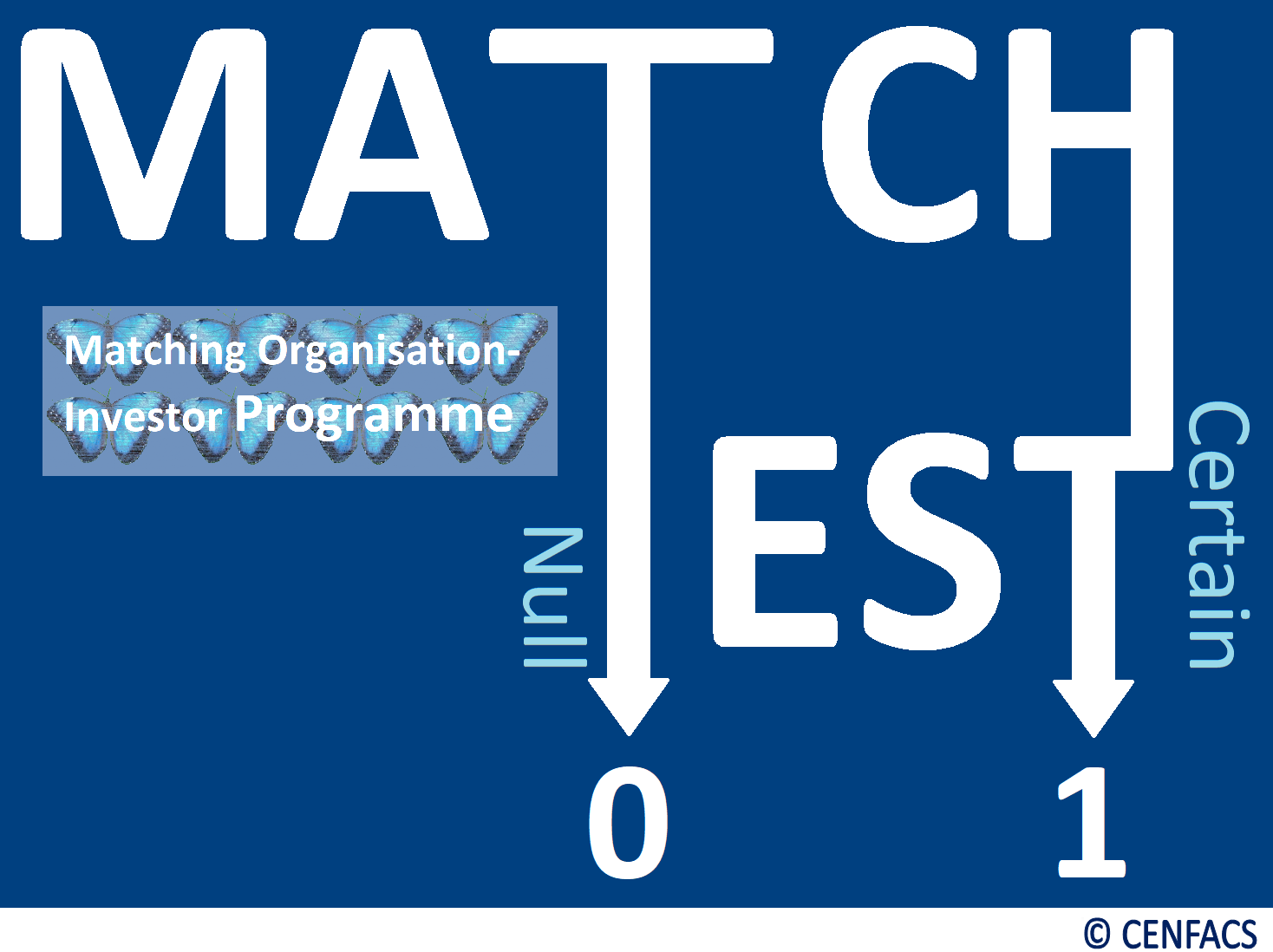
• • The Match or Fit Test Service
As part of the match or fit test, the contents of ASCO’s CD & FS Stage must be matched with NFP Impact Investor’s view on FS & TD. The match test (or matched sampling) will help to increase the accuracy and statistical efficiency of the study of the SWP by carefully selecting subjects for comparison. The purpose here will be to increase the statistical efficiency of the study on SWP by controlling for confounding variables when forming a sample.
The fit test will assist in determining how well the observed sample data matches a specified theoretical distribution. The fit test will check if the data collected fits a model or an assumed population distribution. So, the purpose of the fit test is to validate or invalidate the statistical model by checking if the sample data follows an expected distribution.
The match can be perfect or close (that is, when every unit is paired with an equivalent unit) in order to reach an agreement. If there is a huge or glaring difference between the two (i.e., between what the NFP Impact Investor’s approach to FS & TD Stage and what ACI/ASCOC is saying about its CD & FS Stage, between what the investor would like the CD & FS Stage to indicate and what ASCO’s CD & FS Stage is really saying), the probability or chance of having an agreement at this Second round of negotiations could be null or uncertain.
• • • Impact Advice to ASCO and Guidance to NFP Impact Investor
Where there could be a disagreement, CENFACS can impact advise ACI/ASCO to improve the contents of its CD & FS Stage. CENFACS can as well guide NFP Impact Investors with impact to work out their expectations in terms of FS & TD Phase to a format that can be agreeable by potential ASCOs.
CENFACS’ impact advice for ASCOs and guidance on impact investing for NFP Impact Investor, which are impartial, will help each of them (i.e., investee and investor) to make informed decisions and to reduce or avoid the likelihood of any significant losses or misunderstandings or mismatches.
• • • The Rule of the Matching Game
The rule of the game is the more impact investors are attracted by ACI’s or ASCOs’ CD & FS Stage the better for ACIs or ASCOs. It means that ACI’s or ASCOs’ process must pass the attractiveness test (that is, the evaluation of market’s appeal). Likewise, the more ACIs or ASCOs can successfully respond to impact investors’ level of enquiries and queries about the SWP the better for investors. In this respect, the matching game needs to be a win-win one to benefit both players (i.e., investee and investor).
The above is the second Activity of the Matching Organisation-Investor via SWP.
Those potential organisations seeking investment to set up a SWP and NFP Impact Investors looking for organisations that are interested in their giving, they can contact CENFACS to be their matchmaker to find their perfect investee or investor.
• • • CENFACS as a Matchmaker
As a Matchmaker, CENFACS can streamline your search process, save time, money and resources to help you find the perfect match in the world of impact investing.
CENFACS platform will help facilitate the matching process between investees and investors. By leveraging the power of AI tools, CENFACS’ Matching Organisation-Investor Programme can streamline the search process for funding opportunities, connecting African charities and impact investors/funders.
Briefly speaking, CENFACS can work with matching applicants and use AI to match organizations with the right impact investors, filtering profiles based on development stages, sectors, and aims.
In this matching process, CENFACS can arrange the match or fit test for them. They can have their fit test carried out by CENFACS’ Hub for Testing Hypotheses.
• • • CENFACS’ Hub for Testing Hypotheses
The Hub can help use analysis tools to test assumptions and determine how likely something is within a given standard of accuracy. The Hub, which can serve as a learning or reference place for those who would like to understand and apply statistical hypothesis testing, can assist to
√ clean, merge and prepare micro-data sources for testing, modelling and analysis
√ conduct data management and administration
√ carry out regression analysis, estimate and test hypotheses
√ interpret and analyse patterns or trends or insights in data or results.
In this respect, CENFACS’ H-tests Hub is knowledge repository designed to demystify the process of using data to make informed decisions and move beyond intuition and guesswork.
Those who would like to apply hypothesis testing in fields of economic development or to deal with poverty reduction, they are welcome to use CENFACS’ H-tests Hub.
For any queries and/or enquiries about this second stage (or phase) activity of Matching Organisation-Investor via SWP, please do not hesitate to contact CENFACS.

• AI-powered Financial Tracking, Monitoring and Controls for Households’ Financial Capacity and Capability Building Experiences – In Focus on Wednesday 04/03/2026: Automated Communication
The second AI-powered financial tracking, monitoring and control tool of our work with households making the CENFACS Community is on Automated Communication. To start with Automated Communication, let us first provide its meaning and explain how AI-powered tools can intervene as part of automation of communications and how CENFACS can work with households on it.
• • What Is Automated Communication?
There are many definitions to explain it. One of them comes from ‘partnerstack.com’ (9) which contends that
“Automated communication refers to the strategic use of technology to streamline and optimize various forms of communication between internal teams, external partners and consumers”.
Although, this definition relates to the business environment, it can however be used in the context of households. Indeed, households can use technology to control and manage various household functions through interconnected smart devices. They can use AI-powered communication tools to track, monitor and control their finances.
• • AI-powered Financial Tracking, Monitoring and Controls for Households
Households can leverage automated communication to transform financial management from a tedious, manual task into a real-time, proactive system. By connecting bank accounts to smart apps, using chatbots, and setting up instant notifications, households can automate expense tracking, budget monitoring and financial controls. They can use automated communication in financial tracking, monitoring and controls as the following ways explain it.
a) Automated financial tracking
Automation eliminates manual data entry, providing an up-to-date view of finances. This can be done via
# Bank and credit card syncing (with tools like YNAB, Monarch Money and PocketGuard)
# Digital receipt management (with Apps that can automatically read digital receipts)
# Automated savings and round-ups (Apps such as Plum or Qapital can calculate affordable savings amounts using AI).
b) Real-time monitoring and alerts
Automated communication can act as a proactive ‘always-on’ monitoring system.
This can be achieved through
# Instant transaction notifications that can set up SMS or push notifications for every purchase
# Budget calling alerts which allow households to receive automated warnings when spending in a specific category (e.g., groceries) approaches or exceeds a set threshold
# Low balance warnings which enable households to receive alerts when bank accounts hit a certain minimum
# Subscription renewal notifications to notify households before an annual subscription renews
# Cash flow forecasting which involves AI-powered apps that analyze historical data to predict future cash flow and warn if a future payment might cause a deficit.
c) Financial controls and guardrails
These systems proactively limit overspending and enforce budgetary discipline. This discipline can be materialised by
# Virtual envelope system controls whereby notifications can stop further discretionary spending for categories with monthly spending limits once the virtual envelope is empty
# Automated bills pay which schedules all regular utilities, rent and subscriptions to be automatically paid on specific dates
# Pre-paid card restrictions under which parents can set up family banking apps that allow children to use cards with strict and automated spending limits that notify parents in real-time
# Proactive spending intervention if households are nearing their budget limit.
The above illustrates that households can transition from manual accounting to a proactive model by using the methods (like Bank API, Chatbot Logging, SMS alerts, etc.), technologies and tools (such as YNAB, Monarch, Banking apps, Bill payment apps, etc.) highlighted so far.
• • Working with Households on Automated Communication in Financial Tracking, Monitoring and Controls with AI-powered Tools
CENFACS can work with households through the integration of AI-powered tools into their automated communication in financial, tracking, monitoring and controls. This way of working together can enhance the financial management of households, providing them with the necessary support to navigate their financial challenges and achieve their goals.
CENFACS can work with them to encourage them to use these AI-powered tools, to move beyond passive budgeting spreadsheets to actively monitoring their financial transactions, to interact with them to prevent overspending, manage debt and optimize savings to reduce poverty as the lack of knowledge about AI-powered tools and capabilities.
For any queries and/or enquiries about Automated Communication in Financial Tracking, Monitoring and Controls for Households with AI-powered Tools, please do not hesitate to contact CENFACS.
Likewise, those who want further information or clarification about AI-powered Financial Tracking, Monitoring and Controls for Households’ Financial Capacity and Capability Building Experiences; they are welcome to communicate with CENFACS.
In addition, if you have financial planning problems, you can speak to CENFACS so that we can work together on your financial planning needs and help you stay financially stronger.

Extra Messages
• All-Year-Round Projects Lifecycle – Step/Workshop 3: Conducting a Feasibility Study on Your Play, Run and Vote Projects; and Integrating Triple Value Initiatives into Your Feasibility Study
• Wednesday 04/03/2026: Key Activity 3 of CENFACS Financial Capacity and Capability Campaign: Guidance on Building a Buffer to Withstand Financial Shocks
• Graduation and Livelihood Programme 4 – Under Consideration on Wednesday 04/03/2026: A Survey on Coaching and Mentoring within the Economic Inclusion Programme for Households

• All-Year-Round Projects Lifecycle – Step/Workshop 3: Conducting a Feasibility Study on Your Play, Run and Vote Projects; and Integrating Triple Value Initiatives into Your Feasibility Study
Let us first explain what a user of All-Year-Round Projects (AYRPs) can do in terms of feasibility study, then how they can integrate Triple Value Initiatives (TVIs) into their AYRPs.
• • Conducting a Feasibility Study on Your Play or Run or Vote Project
In this 3rd step or workshop, users will learn (for those users who are new to project planning) or revisit (for those who are familiar with project planning) the evaluation of the practicality of their chosen Play or Run or Vote project. In project planning terms, it means they need to conduct feasibility study. But, what is feasibility study?
• • Basic Understanding of Feasibility Study
Feasibility study is a ‘go/no-go’ decision time for any project planner. In other words, it is the time when an All-year-round project user will decide whether or not to continue with their proposed project.
As ‘simplilearn.com’ (10) puts it,
“A feasibility study is a comprehensive evaluation of a proposed project that evaluates all factors critical to its success in order to assess its likelihood of success”.
Referring to this definition or any suitable definition, All-year-round project users will look at the practicality of the Play, Run and Vote projects from the perspective of required cost and expected value. To proceed, they may outweigh different types of feasibility and select the ones that are affordable and suitable to their projects.
• • Types of Feasibility
Feasibility can cover many aspects of the project to be implemented; aspects like technical, economic, financial, operational, legal, etc. To simplify the matter, we are going to limit in this workshop to the technical and economic aspects of feasibility study; leaving to those who would like to dive deeper into feasibility study to let us know what other aspects of feasibility study they may be interested in.
The technical feasibility of your Play, Run and Vote projects will include the technical resources and capacities to convert your idea of playing, running and voting into a workable or working project. The economic feasibility will analyse the cost and benefit of the same projects.
• • Example of Feasibility Study: Your 2026 Vote for African Poverty Reduction and Development Manager
In order to conduct your feasibility study of your vote, you need to carry out the following tasks:
~ Evaluate if your Vote project is technically achievable by determining and steering the technical resources (like time, budget, technical skills, etc.) to be committed to drive you to the process of looking for your Poverty Reduction and Development Manager of the year and of voting him/her
~ Carry out a viability test in terms of the cost associated with your selection process and benefits linked with your Vote project
~ Financially work out the cost and benefit of your Vote project as you will do in the recruitment selection process of any personnel.
Feasibility study can be basic (simple) or complex depending on the type of your Vote project. In the above example, we have simplified the matter.
For those who would like to dive deeper into feasibility study, including the tools, metrics, examples, skills and steps in feasibility study of their Play or Run or Vote project; they should not hesitate to contact CENFACS.
However, your feasibility study will be incomplete unless you include TVIs into it.
• • Integration 3: Integrating Triple Value Initiatives (TVIs) into Your Feasibility Study
Integrating TVIs – or Triple Bottom Line (TBL) of People, Planet and Prosperity – into a project feasibility requires moving beyond purely financial analysis to assess the social, environmental, and economic impacts. This involves incorporating sustainability metrics early in your AYRP planning process to enhance long-term viability, meet stakeholder expectations, and identify new opportunities.
There are steps to follow in order to accomplish this integration, steps which are:
a) Define scope with ‘Triple Value’ lens: It means broaden your AYRP objectives by including social and environmental benefits alongside financial aspects, find stakeholders, and identify Triple Botton Line (People, Planet, Prosperity).
b) Conduct integrated feasibility assessments: It involves carrying out market/social feasibility by determining how your AYRP will improve local wellbeing, environmental impact analysis, economic analysis, and risk assessment.
c) Evaluate options and alternatives: It includes comparing alternatives based on their 3Ps (People, Planet, Prosperity) performance, leverage technology by investigate digital tools (e.g., AI) to optimize resource use.
d) Quantify and measure impact: It is about using standardized indicators, conducting a cost-benefit analysis by converting environmental and social impacts into economic terms, developing a monitor and report that attract.
e) Make a final decision and report: It encompasses making an integrated decision that reflects the go/no-go aspects and that takes into account the 3Ps, and that provides transparent reporting.
AYRP users who will integrate these TVIs will obviously generate positive value for themselves in terms of poverty reduction or wellbeing, the community and the environment.
• • Working with AYRP users on TVI integration
CENFACS can work with AYRP users to integrate these initiatives into their project tools and lifecycle thinking processes. This will stop these TVIs being ‘add-on’ and enable them become part of the feasibility study of their AYRP success.
For those who are not familiar with project feasibility study and the integration of Triple Value Model into their AYR project, they should not hesitate to contact CENFACS if they need support.
They can contact CENFACS by
phoning, texting, e-mailing and completing the contact form on this website.
We can together discuss in detail your/their proposals about either your/their Run or Play or Vote projects.
For any queries and/or enquiries about All-Year-Round Projects Lifecycle and Feasibility Study as well as about the Integration of Triple Value Initiatives into Project Feasibility Study, please contact CENFACS.

• Wednesday 04/03/2026: Key Activity 3 of CENFACS Financial Capacity and Capability Campaign: Guidance on Building a Buffer to Withstand Financial Shocks
Building a financial buffer – or an emergency fund or cash reserves – is a critical strategy to withstand unforeseen financial shocks like job loss, medical emergencies or any other life events. This strategy is part of this week’s Financial Capacity and Capability Campaign, which would be run in the form of guidance.
There are plenty resources or ways of building and maintaining a buffer. One way of doing it could include following the steps below:
a) Assess your financial position by
# defining your essential expenses (like rent/mortgage, utilities, food, insurance, debt payments, etc.)
# determining your buffer target (e.g., multiplying your essential monthly outgoings by 3 to 6)
# evaluating your current savings (i.e., determining the gap between your current savings and your buffer target).
b) Develop a strategy for building the buffer by starting small and setting up automatic and regular transfers to as a separate account.
c) Think of storage and accessibility in case of emergency and separate the buffer account.
d) Maintain the buffer by reviewing it regularly, defining emergency, and promptly replenishing your buffer if you dip into it.
Those may be interested in this Key Activity 3 and need some Guidance on Building a Buffer to Withstand Financial Shocks, they can contact CENFACS.
Those who have any queries and/or enquiries about 2026 Financial Capacity and Capability Campaign, they can also communicate with CENFACS.

• Graduation and Livelihood Programme 4 – Under Consideration on Wednesday 04/03/2026: A Survey on Coaching and Mentoring within the Economic Inclusion Programme for Households
Activity 4 is about a list of questions aimed for extracting specific data from the members of the CENFACS Community on Coaching and Mentoring within the Economic Inclusion Programme for Households.
To facilitate the understanding of this survey, let us explain coaching and mentoring and how they differ from each other.
• • What Are Coaching and Mentoring?
The website ‘highspeedtraining.co.uk’ (11) responds to this question in these terms:
“In the process of coaching, an individual is provided with guidance on their goals or objectives in order to help them reach their full potential in specific personal or career development areas. The coach helps the individual to come to their own conclusion and next steps by listening, questioning, and respectfully challenging their views… In mentoring, the mentor provides support to – and feedback on – the individual and shares their knowledge, skills, and/or experience to help them develop and grow, after taking the time to understand the individual and their personal challenges”.
The same ‘highspeedtraining.co.uk’ points out that there are differences and similarities between coaching and mentoring. Without speaking about all of them, let us focus on their respective outcome.
For ‘highspeedtraining.co.uk’, the outcome from coaching agreement is specific and measurable (e.g., improvement in a specific performance area). As to mentoring, the outcome may change over time – results do not need to be specific nor measurable, and the aim is the overall development of the mentee”.
Knowing these differences and similarities help to approach the Survey on Coaching and Mentoring in the Context of Economic Inclusion Programme for Households.
• • Survey on Coaching and Mentoring within the Economic Inclusion Programme for Households
A Survey on Coaching and Mentoring within an Economic Inclusion Programme for Households is a tool that can be used to measure the effectiveness, implementation process, and impact of personalized support provided to extremely poor or vulnerable households. These surveys meanly assess how coaches assist participants in building income-generating assets, developing business skills, managing finances, and improving social or health outcomes.
Such surveys are considered critical because coaching often acts as a major element in economic inclusion programmes (like Graduation models), providing the human support necessary to make other interventions (like cash transfers or training) effective.
The current survey will combine quantitative data (e.g., income levels) with qualitative data (for instance, in-depth interviews, focus group discussions) to understand the why behind the results. The survey will measure some indicators, like Increased Income/Assets. Like for any survey, there are questions in this one.
• • Questions Relating to the Survey
One of the questions making this survey is:
Did coaching help you as households diversify your income streams?
Those who took part in coaching or mentoring activity relating this question and who may be interested in the survey can directly answer the question to CENFACS.
Those members of the CENFACS Community who would like to get involved in the survey can contact CENFACS.
For any other queries and or enquiries about this survey on Coaching and Mentoring within an Economic Inclusion Programme for Households, please communicate with CENFACS.
Those members of the CENFACS Community who would like to be part of this survey they can get in touch with CENFACS.
For any other queries and or enquiries about this survey or Economic Inclusion Programme for Households, please also communicate with CENFACS.

Message in French (Message en français)
• Réduire de Moitié la Pauvreté pour et avec les Enfants Vulnérables en Afrique
Cet appel concerne les enfants vulnérables, c’est-à-dire les enfants et les jeunes qui ne reçoivent pas les soins, le soutien ou les mesures de sécurité nécessaires pour les protéger des préjudices, des abus, de la négligence ou de l’exploitation.
Ces enfants sont ceux que le système a abandonnés ou dont la protection est inexistante, les laissant ainsi exposés à des risques importants pour leur bien-être physique, émotionnel et social.
Ces enfants vulnérables peuvent être identifiés dans plusieurs situations : enfants exposés à un risque d’exploitation sexuelle, enfants en situation d’urgence humanitaire, enfants victimes de négligence, enfants dont les besoins ne sont pas diagnostiqués, enfants migrants non accompagnés, etc.
Leurs besoins essentiels comprennent :
σ Protection contre la violence, l’exploitation et les abus (notamment la protection contre les pratiques néfastes, le travail des enfants, les risques liés aux conflits, etc.)
σ Identité légale et prise en charge familiale (par exemple, enregistrement des naissances, regroupement familial et prise en charge alternative)
σ Services essentiels de survie et de santé (tels que l’alimentation nutritive, l’eau, le traitement de la malnutrition et les soins médicaux)
σ Soutien psychologique et éducation (par exemple, soutien en santé mentale, accès à l’éducation et réinsertion)
σ Soutien socio-économique (tel que les allocations familiales, les espaces sécurisés, etc.)
σ Prise en charge spécialisée pour les groupes d’enfants vulnérables (par exemple, les enfants handicapés, les enfants réfugiés et les enfants migrants).
Ces enfants ont besoin de votre aide humanitaire vitale pour survivre.
La plupart de ces enfants, âgés de moins de 18 ans, ont besoin de soutien.
Pouvez-vous leur proposer des solutions alternatives ?
Vous pouvez contribuer à réduire, voire à diviser par deux, le nombre d’enfants non protégés en Afrique.
Votre soutien précieux contribuera à
√ S’attaquer au problème des enfants non protégés
√ Prévenir les abus sexuels, le travail forcé, la traite, la toxicomanie et les problèmes de santé mentale dont sont victimes ces enfants
√ Inciter les parents à rechercher leurs enfants, notamment ceux qui en sont séparés pour diverses raisons
√ Renforcer la protection sociale de ces enfants
√ Réduire de moitié le nombre d’enfants non protégés vivant dans la pauvreté
√ Atténuer ou mettre fin aux privations liées au manque d’accès aux services essentiels, à la violence, aux abus, à la négligence, à l’exploitation et à d’autres formes de vulnérabilité.
Plus d’informations sur cet appel sont disponibles sur http://cenfacs.org.uk/supporting-us/

Main Development
• Climate Actions 2026 –
Theme: Standing with Climate Science and Poverty Reduction
The following items are the ones shaping the contents of our Climate Action Month and its theme:
a) Meaning of Climate Action Month
b) Direct and Indirect Climate Actions
c) What is Climate Action Month within CENFACS?
d) Key Terms for Climate Action 2026
e) Standing with Climate Science and Poverty Reduction
f) Work Plan for Climate Action March 2026
g) Action 1: Adopt Sustainable Habits and Climate Poverty Reduction.
Let us look at the contents of our Climate Action Month.
• • Contents of 2026 Climate Action Month
Before kicking off our action, let us precise the working definitions to be used for climate action.
• • • Meaning of Climate Action
According to ‘eur-lex.europa.eu’ (12),
“Climate action refers to efforts taken to combat climate change and its impacts”.
Climate action is an activity of engaging and putting ideas into practice to deal with any natural or induced change in the long term average weather conditions of a place, especially when this change adversely affects people’s and communities’ lives and livelihoods. In other words, it is any effort to mitigate the adverse effects of this change by reducing greenhouse gas emissions while strengthening capacities and resilience to climate-induced impacts.
Climate action is also the 13th Goal of the United Nations’ (13) 17 Sustainable Development Goals and 2030 Agenda.
In the context of CENFACS’ Climate Action Month for this year, climate action is about Standing with Climate Science and Poverty Reduction.
These climate actions or efforts could be direct or indirect.
• • • Direct and Indirect Climate Actions
Direct climate actions can directly lead to outcomes such as reductions of greenhouse gas emissions, poor quality air, pollution, etc. They could also include the increase in the number of poor people benefiting from carbon markets through projects generating greenhouse gas emissions reductions or removals.
As to indirect climate actions, they can help to keep the advocacy and campaign about measures and activities to be carried out to reduce the adverse impacts of climate change going. Examples of such indirect climate actions will include the prevention of the next pandemic to happen, a campaign to halt human-induced extinction of known threatened species, etc.
Without breaking climate actions into direct and indirect ones, the coming periods and sub-themes of climate action will guide our readers and audiences about the kind of climate actions CENFACS is conducting this month. This guidance will help those who may be interested to join in.
• • • What is Climate Action Month within CENFACS?
Climate Action Month within CENFACS (CAMwC) is a dedicated month of March, designed to accelerate sustainability efforts, raise awareness of climate change, and promote net-zero goals through events, workshops and environmental activities. It acts as a focal point for or runs alongside other climate actions in the UK, in Africa and across the world.
Amongst the events or activities that cover CAMwC there is our new programme, that is Climate Programme. The explanation about it can be found below.
Besides Climate Programme we shall include the following initiatives:
~ Community engagement (e.g., Integration of Triple Value Initiatives into All-Year-Round Projects)
~ Sustainability drives (e.g., We focus on waste reduction and recycling through CENFACS Zero-Waste e-Store)
~ Educational events (e.g., Workshop on alternative climate technologies)
~ Goal setting (involves supporting net-zero carbon target set up by CENFACS’ Africa-based Sister Organisations)
~ Action-oriented campaigns on climate change.
These events and activities tend to move beyond awareness, pushing for tangible, local and African action to reduce emissions and foster environmental sustainability.
Knowing what climate actions are and Climate Action Month is, we can now explain the key terms of our Climate Actions 2026.
• • • Key Terms for Climate Action 2026
Under these key terms, we are going to explain the following: climate science and climate poverty.
• • • • What is climate science?
The definition of climate science used here comes from ‘acs.org’ (op. cit.). According to the latter,
“Climate science is the effort by humans to understand the natural forces that control the climate”
Stanford Encyclopedia of Philosophy (op. cit.) provides further information on climate science by indicating that
“Climate science investigates the structure and dynamics of earth’s climate system. It seeks to understand how global, regional and local climates are maintained as well as the processes by which the change over time. In doing so, it employs observations and theory from a variety of domains, including meteorology, oceanography, physics, chemistry and more”.
This understanding of natural forces and climates provide some substance in our efforts to stand with climate science.
• • • • What is climate poverty?
It emerges from the work by the United Nations (14), climate poverty refers to the phenomenon where climate change exacerbates existing poverty, disproportionately hurting the world’s most vulnerable people. It creates a cycle where extreme weather – droughts, floods, and heatwaves – destroys livelihoods (especially farming), drives food insecurity, and forces displacement, preventing people from escaping poverty.
However, what we are interested in is climate poverty reduction. The understanding of climate science and climate poverty reduction will help us stand with climate science.
• • • Standing with Climate Science and Poverty Reduction
We can stand with climate science. Equally, we can support climate poverty reduction. We can even champion both.
• • • • What is standing with climate science?
It means adopting a positive or taking actions that are fundamentally aligned with the overwhelming scientific consensus regarding the reality, causes, and urgency of climate change. It involves basing decisions, policies, and behaviours on evidence-based research rather than opinion or denial.
Standing with climate science has some implications, notably consisting of
a) Knowing the core principles (the What) surrounding climate science
b) Accepting the evidence: Recognizing that climate change is real, human-caused (primarily by burning fuels), and occurring at an accelerating rate
c) Acknowledging urgency: Understanding that immediate action is necessary to limit global warming to 1.5°C above pre-industrial levels to avoid the worst impacts, as defined by the Intergovernmental Panel on Climate Change (15)
d) Trusting scientific institutions: Referring to findings from recognized bodies like the IPCC, World Meteorologic Organisation, NASA, and natural academics of science
e) Understanding the scope: Recognizing that climate change affects all aspects of the Earth system, including oceans, sea levels, ecosystems, and extreme weather patterns.
So, standing with science is about treating the climate crisis as an evidence-based reality requiring urgent, cooperative, and systemic action rather than an ideological debate.
• • • • What is standing with climate poverty reduction?
Standing with Climate Poverty Reduction is about expressing active solidarity, support, and alignment with strategies that simultaneously fight climate change and alleviate poverty. It signifies an understanding that climate action and poverty eradication are deeply interconnected, and that solutions to one often hinge on the other.
To Stand with Climate Poverty Reduction, there is a need to undertake the following actions:
a) Recognizing the ‘double bind’: It means acknowledging that the poorest people and communities contribute the least to climate change but are the most affected by its impacts
b) Committing to integrated solutions (‘Triple Wins’): Supporting policies that provide a ‘triple win’ for the poor (that is, reducing vulnerability, cutting emissions, and bosting income)
c) Advocating for a just transition: Supporting a shift to a green economy that does not abandon but rather protects and empowers vulnerable communities
d) Supporting active advocacy and equity: It means having a commitment to equity, voice, and solidarity.
One cannot succeed in fighting climate change without fighting poverty and vice versa. As Hans Peter Lanks, Eleonore Soubeyran and Nicholas Stern (16) put it in their policy publication in 2022: “If we fail on one, we fail on the other”.
Climate events and other factors (like geopolitical, economic, strategic, international and foreign aid cuts, conflicts over natural resources, etc.), in particular the worst ones, can make people to lose faith in climate poverty reduction. Yet there is still a reason to believe in climate poverty reduction. One needs to hope that climate poverty will be reduced and eventually disappear.
Therefore, one is required stand with the reduction of climate poverty. The more one stands with it, the more and better solutions can be found to reduce and possibly end climate poverty.
• • • Standing with both Climate Science and Climate Poverty Reduction
We can Stand with both Climate Science and Climate Poverty Reduction. This is because climate change and poverty reduction are increasingly treated as inseparable, with modern strategies focusing on how to achieve net-zero emissions while simultaneously lifting people out of poverty. Failure to align the two goals can cause climate policies to hurt the poor, or poverty to accelerate climate change.
So, Standing with both Climate Science and Climate Poverty Reduction implies the following:
~ Recognizing the interconnectedness of crisis or polycrises (e.g., most people living in multidimensional poverty are exposed to high climate risk)
~ Prioritizing ‘triple win’ actions (i.e., actions that reduce poverty, enhance resilience to climate shocks or adaptation, and lower or mitigate emissions)
~ Supporting those in need of climate finance and technology (e.g., African countries that suffer the most from climate change while contributing less to greenhouse gas emissions)
~ Targeting training and support to those in carbon-intensive industries as part of just transition
~ Reducing income inequality to decrease carbon emissions linked to such inequality
~ Centre staging women and girls in terms of adaptation and resilience in any gender-sensitive strategy.
Approaching Standing both with Climate Science and Climate Poverty Reduction from the above perspective will enable to have an inclusive, sustainable, and climate-resilient development.
The above-mentioned understanding on Standing with both Climate Science and Climate Poverty Reduction will help to better execute our working plan for Climate Action March 2026.
• • • Work Plan for Climate Action March 2026
The following Climate Actions and periods of March 2026 make up our work plan:
∝ Action 1 (02 to 08/03/2026): Actively Adopt Sustainable Habits
∝ Action 2 (09 to 15/03/2026): Advocate for Science-based Policies
∝ Action 3 (16 to 22/03/2026): Engage in Grassroots Activism
∝ Action 4 (23 to 29/03/2026): Communicate the Urgency of Climate Change and Share Reputable Information
Within the above broad actions, there will be specific actions to be taken.
Besides, these Climate Actions, we shall start our new programme – Climate Programme.
• • • • What is Climate Programme (CP)?
It is a structured initiative designed to research, monitor, and mitigate climate change impacts through policy, science, and adaptation strategies. CP aims to build resilience against environmental changes, promote sustainability and generate data for decision-making processes.
CP is part of thoughtfully planned initiatives (TPIs) to express Energy or Light Season. As a TPI, CP aims to achieve CENFACS’ strategic objectives while helping to bridge planning and execution. It is meant to be clearly measurable, action-oriented, proactive, and aligned with the overall CENFACS strategy while taking into account the environmental impact of any choices made. It is made of initiatives that express the Energy or Light Season as they enable the shift to renewable energy sources.
• • • • • What do TPIs consist of?
They consist of featuring the season of light like light (or energy) and voluntary energy transition projects. They are particularly those to shift from fossil fuels to renewable energy sources. They also include financial and policy frameworks to enable transitions to happen.
These TPIs include four projects notably:
a) Project to Combat Disinformation (PCD)
b) Project for Finance Mobilisation Roadmap (PFMR)
c) Project for Long-term Energy Poverty Reduction (PLtEPR)
d) Zero-waste Skills Development Project (ZwSDP).
These four initiatives will be about moving from fossil-based energy system towards zero carbon alternatives. Their explanations are given below.
• • • • • • Project to Combat Disinformation (PCD)
PCD aims to build resilience amongst our community members against misinformation through transparency, research, and public education. It is about educating our community members on how to critically evaluate information about climate change, spot fake climate news, and understand manipulative techniques and tricks. It is also about building trust in climate poverty reduction.
This will involve collaborating with other organisations working on similar climate disinformation issues, checking facts, researching, detecting and exposing falsehoods, analysing threats from disinformation, while improving media literacy within the community.
• • • • • • Project for Finance Mobilisation Roadmap (PFMR)
PFMR is a strategic plan that will outline the necessary steps, policies, and financial instruments required to raise and deploy capital from various sources (public, private, voluntary, and institutional) to achieve specific goals like the mobilisation of funds for climate change.
The aim of PFMR is to bridge the gap between planning and implementation by identifying bottlenecks, de-risking projects, and creating ‘bankable’ investment opportunities to attract sufficient funding, especially in the era of international aid cuts.
• • • • • • Project for Long-term Energy Poverty Reduction (PLtEPR)
Within the energy literature, a long-term energy poverty refers to a household consistently cannot afford or access essential energy services (like heating, cooling, lighting, and appliances), forcing them to reduce consumption to levels that harm health, well-being, and basic living standards, often due to low income, high-energy prices, and inefficient homes, creating a persistent cycle of deprivation and vulnerability, particularly in vulnerable populations.
PLtEPR aims to provide energy advice to empower households making the CENFACS Community with knowledge on low-cost measures to reduce energy consumption and help to avoid energy poverty becoming intergenerational. PLtEPR will help the following low-income households:
~ In persistent deprivation (that is, those experiencing a chronic inability to meet basic energy needs over extended periods)
~ With inadequate heating and hard health problems because of energy poverty
~ With high energy costs living in poor housing
~ Spending a large chunk of income on energy or fall into arrears bills, impacting their overall financial stability
etc.
In short, PLtEPR is about accessing modern energy, transitioning away from biomass for cooking, stopping indoor air pollution and improving health risks, particularly but not exclusively in Africa.
• • • • • • Zero-waste Skills Development Project (ZwSDP)
ZwSDP is about teaching practical skills (like repair, composting, upcycling, cooking with leftovers) and promoting a waste-reduction mindset (reduce, reuse, recycle) to empower the community to minimise landfill waste, foster sustainable habits, and creating circular economies.
ZwSDP involves training, workshops, community engagement, and creating alternative models for waste management.
ZwSDP is finally about transforming waste management from disposal problem into a resource opportunity.
The above-mentioned initiatives are of our Climate Programme.
Finally, there will be impact monitoring and evaluation on 30 and 31/03/2026 to end the Climate Action March 2026.

• • • Climate Action 1 (02 to 08/03/2026): Actively Adopt Sustainable Habits
To kick off this first action, let us explain it and provide some usage examples.
• • • • What is Adopting Sustainable Habits?
Adopting Sustainable Habits means consciously changing daily behaviours to reduce environmental harm, such as minimizing waste, conserving resources, and making eco-friendly consumption choices. It involves actions like reducing plastic, saving energy, eating locally, and choosing sustainable products to ensure a better quality of life and a healthier planet.
There are plenty examples to back this adoption.
• • • • Usage examples of Adopting Sustainable Habits
These examples include waste reduction, energy and water conservation, sustainable consumption, eco-friendly eating, and transportation choices. We can highlight each of them.
~ Waste reduction: Carrying reusable shopping bags, water bottles and utensils, refusing plastic straws, composting food waste, etc.
~ Energy and water conservation: Turning off lights, unplugging unused electronics, repairing leaks, and taking shorter showers, etc.
~ Sustainable consumption: Buying secondhand clothing, choosing products with minimal packaging, and opting for durable, eco-friendly goods, etc.
~ Eco-friendly eating: Choosing seasonal, local, or organic food, reducing meat consumption, minimizing food waste, etc.
~ Transportation choices: Walking, biking, using public transport, or carpooling instead of driving alone, etc.
These habits are often adopted to reduce one’s carbon footprint, protect biodiversity, and promote a circular economy where resources are used efficiently.

• • • • Working with the Community to Stand with Climate Science and Poverty Reduction
The all-purpose of writing this note is to guide our action. In other words, what is key here is to take action. The note is only a guided principle.
For instance, taking action together could be on the following:
~ how to help those who are finding it difficult to reduce waste
~ advocating for sharing good energy and water saving habits
~ reducing and/or ending climate poverty and its root causes.
Those members of our community in the UK and Africa-based Sister Organisations willing to work with CENFACS on Adopting Sustainable Habits and Climate Poverty Reduction; they can take climate actions with us.
For any queries or enquiries about Climate Action 1 and Climate Actions Month, please do not hesitate to contact CENFACS.
_________
• References
(1) https://www.acs.org/climate-science/what-is-climate-science.html (accessed in March 2026)
(2) https://plato.stanford.edu/entries/climate-science/ (accessed in March 2026)
(3) https://www.un.org/en/climatechange/cop30 (accessed in March 2026)
(4) https://www.projectmanager.com/training/how-to-conduct-a-feasibility-study (accessed in March 2026)
(5) https://asana.com/resources/project-design (accessed in November 2025)
(6) https://www.designrush.com/agency/product-design/trends/what-is-a-conceptual-design (accessed in March 2026)
(7) https://ester.co/blog/what-is-conceptual-designs (accessed in March 2026)
(8) https: //fastercapital.com/content/Technical-design-How-to-create-and-implement-technical-design-solutions-that-meet-needs-and-expectations.html (accessed in March 2026)
(9) https://partnerstack.com/glossary/automated-communication (accessed in March 2026)
(10) https://www.simplilearn.com/feasibility-study-article (Accessed in March 2023)
(11) https://www.highspeedtraining.co.uk/hub/what-is-coaching-and-mentoring/ (accessed in March 2026)
(12) https://eur-lex.europa.eu/legal-content/EN/TXT/ (accessed in March 2025)
(13) https://sdgs.un.org/2030agenda (accessed in March 2025)
(14) https://www.un.org/en/climatechange/science/climate-issues/human-security (accessed in March 2026)
(15) https://www.ipcc.ch (accessed in March 2026)
(16) https://www.lse.ac.uk/grenthaminstitute/publication/acting-on-climate-and-poverty/ (accessed in March 2026)
_________
• Help CENFACS Keep the Poverty Relief Work Going This Year
We do our work on a very small budget and on a voluntary basis. Making a donation will show us you value our work and support CENFACS’ work, which is currently offered as a free service.
One could also consider a recurring donation to CENFACS in the future.
Additionally, we would like to inform you that planned gifting is always an option for giving at CENFACS. Likewise, CENFACS accepts matching gifts from companies running a gift-matching programme.
Donate to support CENFACS!
FOR ONLY £1, YOU CAN SUPPORT CENFACS AND CENFACS’ NOBLE AND BEAUTIFUL CAUSES OF POVERTY REDUCTION.
JUST GO TO: Support Causes – (cenfacs.org.uk)
Thank you for visiting CENFACS website and reading this post.
Thank you as well to those who made or make comments about our weekly posts.
We look forward to receiving your regular visits and continuing support until the end of 2026 and beyond.
With many thanks.