Welcome to CENFACS’ Online Diary!
04 February 2026
Post No. 442

The Week’s Contents
• 2026 Sustainable Development Month with a Focus on Biodiversity Loss as a Systemic Financial Risk for Households
• Activity/Task 2 of the ‘A’ Project: Find Sustainable Alternatives for Poor People’s Sustainability
• Go for the Double Goal of the Month: Reduction of Poverty as the Inability to Stop One’s Income or Assets from Becoming a Liability due to Biodiversity Loss
… And much more!
Key Messages
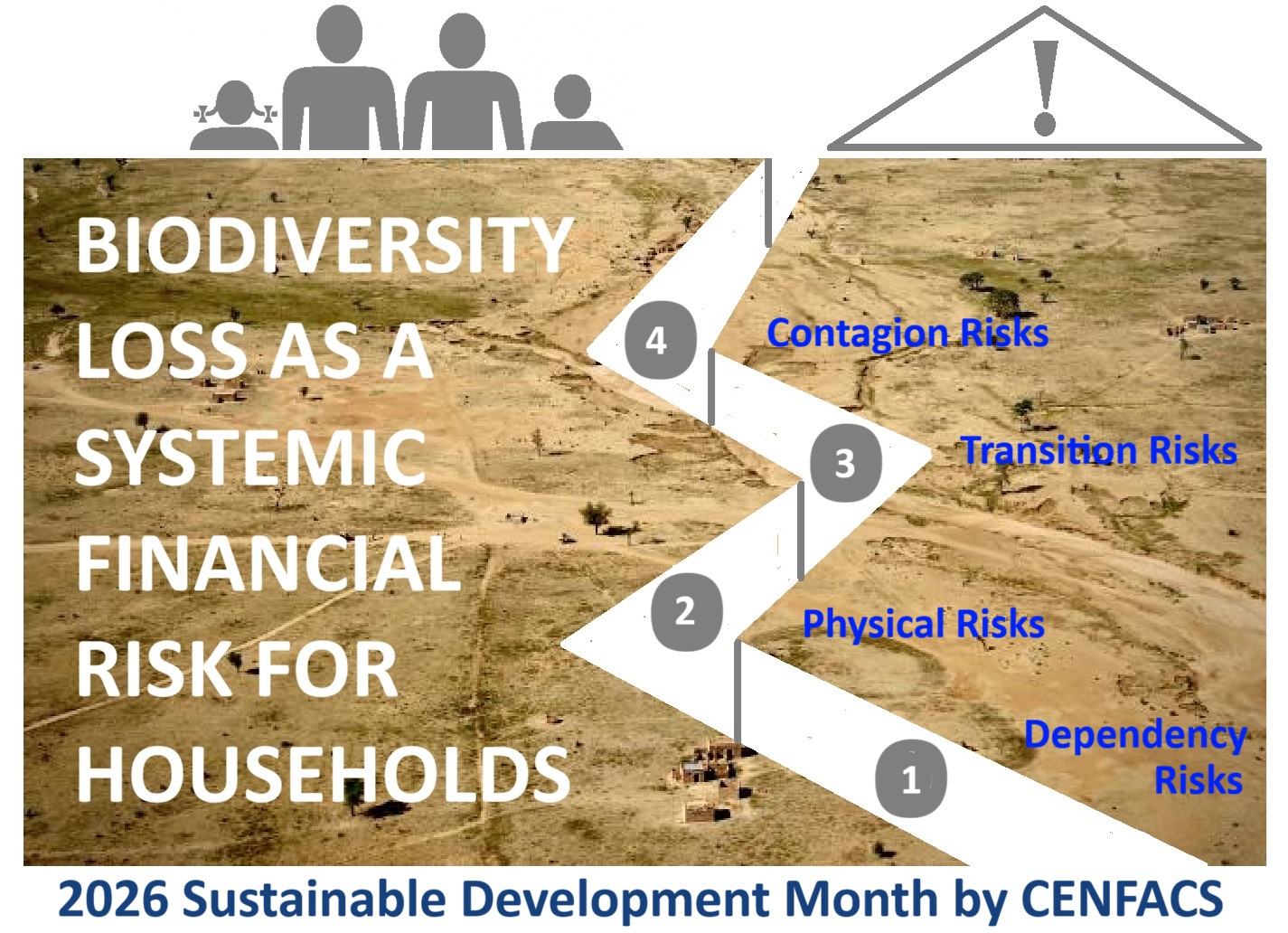
• 2026 Sustainable Development Month with a Focus on Biodiversity Loss as a Systemic Financial Risk for Households
February is the month of Sustainable Development, according to CENFACS development calendar or planner. It is the month during which we reflect on our initiatives connected to sustainable development. Specially, we take another look at the United Nations (1) Seventeen Sustainable Development Goals (SDGs) and their associated 169 targets. Typically, we focus on one of the themes within the framework of the SDGs and targets and we concentrate our efforts on it.
For February 2026, our focus will on Biodiversity Loss as a Systemic Financial Risk for Households. We are going to consider the SDGs that are linked to Biodiversity Loss as a Systemic Financial Risk, which are SDGs 12, 13, 14 and 15.
Indeed, the degradation of natural ecosystems (i.e., forests, oceans, wetlands, pollinators) can trigger widespread cascading economic shocks that can disrupt incomes, destroy assets, and increase costs for households, especially for the poorer ones. It is this climate risk that 2026 Sustainable Development Month at CENFACS will be about. This climate risk will be considered through SDGs 12, 13, 14 and 15, which are connected to it. What are these connections or links between climate risk and these SDGs?
• • Links between SDGs and Biodiversity Loss as a Systemic Financial Risk for Households
These links are explained as follows.
SDG 12 is Responsible Consumption and Production. This goal is linked to the need for financial institutions to align financial flows with biodiversity-friendly practices and reduce economic reliance on nature-depleting activities. The climate risk here affects households that rely their economies on nature-depleting activities.
SDG 13 is Climate Action. This goal is closely linked with Biodiversity Loss as a Systemic Financial Risk for Households because biodiversity loss accelerates climate change (e.g., loss of forests reduces carbon sequestration), increasing the risk of double crisis for financial stability of households and other economic agents.
SDG 14 is Life below Water. This goal focuses on conserving and sustainably using oceans and marine resources, which are essential for industries like fisheries and tourism, whose households/human lives depend upon.
SDG 15 is about Life on Land. This goal focuses on halting biodiversity loss, managing forests sustainably, and combating land degradation. It is central to reducing physical risks to agriculture, mining, and real estate sectors which are linked to household and people lives.
So, during our 2026 Sustainable Development Month, we shall look at climate risk – in particular dependency risks, physical risks, transition risks and contagion risks – in relation to SDGs associated to them. We shall as well work on strategies for households to save their income and produce that can be turned into a liability, and to reduce their assets value as a result of biodiversity loss.
To make our Month of Sustainability relevant, we are going to engage our community members and Africa-based Sister Organisations on the issue of Biodiversity Loss as a Systemic Financial Risk for Households and help reduce poverty linked to this issue.
• • Engaging our Household Members and Africa-based Sister Organisations on Biodiversity Loss as a Systemic Financial Risk for Households
We are engaging or reminding the household members of our community and Africa-based Sister Organisations to be aware of and act about Biodiversity Loss as a Systemic Financial Risk for Households. In particular, we are and will be working with them in the following way:
~ The work with the community will be on micro-projects or activities to protect themselves from biodiversity losses for those of our members who would like to protect their lives or things or ecosystems
~ The work with Africa-based Sister Organisations (ASOs) will focus on ASOs having sustainable projects relating to protection against biodiversity loss and that would like us to get involved.
To enable us to smoothly approach the theme of Biodiversity Loss as a Systemic Financial Risk for Households; we have organised an action plan (please refer to the below given Schedule of Notes under the Main Development section of this post).
For further information about this theme, please read under the Main Development section of this post.

• Activity/Task 2 of the ‘A’ Project: Find Sustainable Alternatives for Poor People’s Sustainability
To understand this Activity/Task, it is better to say what it is consisted of and ways of engaging with it.
• • What Does this Activity 2 Consist of?
Activity 2 consists of find sustainable alternatives or alternative approaches (like circular economies or grassroots initiatives) to replace the dominant, resource-intensive models with approaches that prioritise community empowerment, biodiversity, and long-term well-being. What are sustainable alternatives?
The website ‘sustainability-directory.com’ (2) argues that
“Sustainable alternatives are choices replacing harmful practices with planet-friendly, long-term solutions for a resilient future”.
The website ‘sustainability-directory.com’ (3) provides the aim of these alternatives in the following terms:
“Sustainable alternatives aim to replace harmful practices with methods that respect ecological limits and promote social well-being”.
This Activity 2 is directly encapsulated in Sustainable Development Goal 1 of the United Nations SDGs (op. cit.), which is No Poverty. In particular, Target 1.5 of this Goal 1 seeks to build the resilience of the poor and reduce their vulnerability to climate-related, economic, and social shocks. This goal focuses on moving away from purely aid-based approaches to creating sustainable and self-sufficient livelihoods.
The research for alternatives for sustainability indicates that they include circular solutions among other alternatives. These solutions are about promoting waste-to-resources initiatives that create opportunities for the poor.
• • Engaging with Activity/Task 2
One thing is to know about this Activity/Task 2, another thing is to engage with it. Engaging with it is about working with those in our community are looking for alternatives to find sustainability in their lives. This could be in any areas of life like education, health, housing, transportation, energy, etc. where they need sustainable alternatives (that is, a product, method, or material that is different from something else and offering the possibility of choice, while minimising environmental harm, promoting social equity and ensuring long-term economic viability).
The above is what Activity/Task 2 is about.
Those who would like to engage with this Activity/Task can go ahead with it.
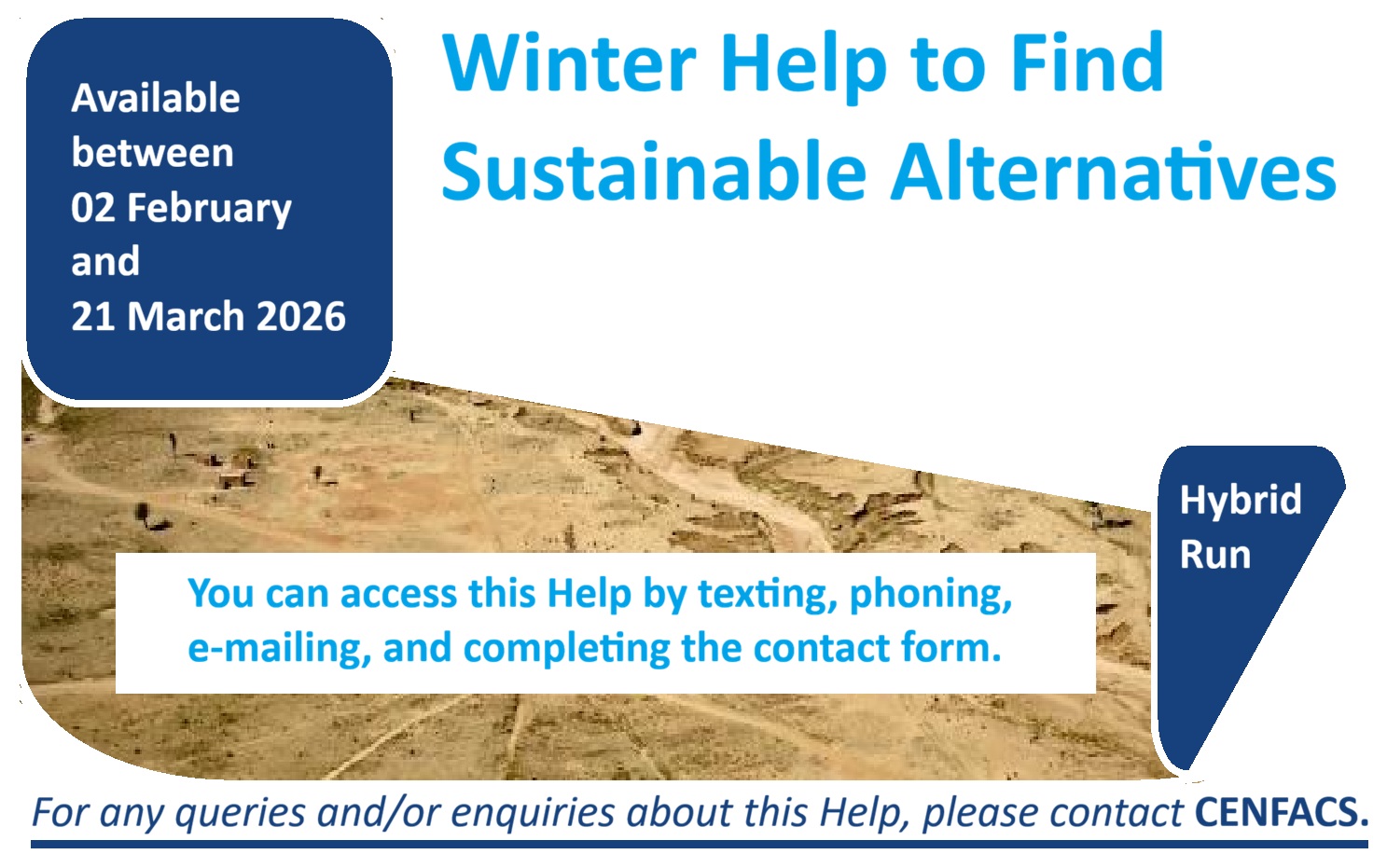
For those who need some help before embarking on this task, they can speak to CENFACS.
For any other queries and enquiries about the ‘A’ Project and this year’s dedication, please contact CENFACS as well.

• Go for the Double Goal of the Month: Reduction of Poverty as the Inability to Stop One’s Income or Assets from Becoming a Liability due to Biodiversity Loss
To approach this goal, let us first define the two types of poverty it includes.
• • What Is Poverty as the Inability to Stop One’s Income from Becoming a Liability due to Biodiversity Loss?
It is described as a situation where a person’s livelihood – originally dependent on nature (e.g., farming, fishing, and foraging) – becomes a source of debt, cost, or ruin due to the degradation of the ecosystem. In this scenario, natural capital (i.e., forests, soil, and pollinators) that once provided free resources turns into a liability (e.g., degraded land requiring expensive fertilizer, lost crops creating debt) that the individual cannot manage.
• • What Is Poverty as the Inability to Stop One’s Assets from Turning into Liabilities due to Biodiversity Loss?
It refers to a vicious cycle (poverty trap) where essential natural capital, which previously provided a livelihood, becomes a source of economic, physical, or social ruin. According to the literature on this matter, rural or marginalised communities who heavily depend on ecosystems (like forests, wetlands, soil, and wildlife) lose their ability to survive when those ecosystems degrade, turning their assets (such as fertile land, fish stocks) into liabilities (e.g., barren land, flooded areas).
The above-mentioned two definitions show that poverty is not just a lack of money, but also a lack of well-being and a high vulnerability to environmental change.
• • Implications for Selecting the Goal for the Month
After selecting the goal for the month, we focus our efforts and mind set on the selected goal by making sure that in our real life we apply it. We also expect our supporters to go for the goal of the month by working on the same goal and by supporting those who may be suffering from the type of poverty linked to the goal for the month we are talking about during the given month (e.g., February 2026).
For further details on the goal of the month, its selection procedure including its support and how one can go for it, please contact CENFACS.
Extra Messages
• African Children’s Climate, Nature and Sustainable Development Goals (Generation Global Goals Project) – In Focus: Key Steps for Integrating Global Climate, Development and Nature Goals for Children
• Poverty Reduction Shows in 2026 – In Focus for This Winter: Examples of Poverty Reduction despite International/Foreign Aid Cuts
• All-Year-Round Projects, Triple Value Initiatives: Extra Support about Start-up, Fundamentals, Maths and Goals

• African Children’s Climate, Nature and Sustainable Development Goals (Generation Global Goals Project) – In Focus: Key Steps for Integrating Global Climate, Development and Nature Goals for Children
Normally, the project that carries this month of Sustainable Development is African Children’s Climate, Nature and Sustainable Development Goals (ACCNSDGs). It is also known as Generation Global Goals (3G) project.
3G project is the impact level in CENFACS’ process of advocating that global goals (like the United Nations Sustainable Development Goals or Kunming-Montreal Global Biodiversity Framework) work for children and not way around. It is indeed the testing of the gains that global goals claim to achieve and of their impact on the welfare and well-being of children. This is regardless whether these children are in spaces and times of peace or lack of peace (like conditions of wars, areas stricken by viruses or epidemics and time of natural disasters). Unsurprisingly, these gains should be materialised even in time of crisis like of the cost-of-living crisis.
• • Children Generation of Global Goals
The children generation of global goals are those two generations of children relating to two sets of global goals: Millennium Development Goals (MDGs) and Sustainable Development Goals (SDGs). The generation of Millennium Development Goals will be those children or persons born and live between 2000 and 2015, whereas the generation of Sustainable Development Goals will be referred to those born and live from 2015 until now (ideally between 2015 and 2030). The two generations are relating to the lifespan of these two sets of goals.
These generations relating to global goals have to be differentiated from the conventional definition of generations which classified them as follows: Generation Beta (born 2025-2039), Gen Alpha (2013 – 2025), iGen/Generation Z (1995 -2012), Millennials/Generation Y (1980 – 1994), Xennials (1975 – 1985), Generation X/Baby Bust (1965 – 1979) and Baby Boomers (1946 – 1964). This is without forgetting the generation who has been impacted by the scars or legacies of the coronavirus pandemic disaster. Most of these generations born when a particular or group of global goals was or has been set.
Although these goals were set up from different historical circumstances of their time, they are not supposed to work or to be applied independently. They can be integrated to better work.
This week, we are continuing with the work of global goals integration which we started last year. We are advocating to take key steps to integrate them so that they can better work for children and the generations to come.
• • Key Steps for Integrating Global Climate, Development and Nature Goals for Children
To integrate climate, nature, and sustainable development goals for children, educators and those working on this integration matter can follow these steps:
σ Educate on interconnectedness: Teach children about interconnectedness within the wider ecological context and the impact of their actions on the planet
σ Embed nature-based learning: Integrate nature-based learning into the curriculum to encourage children to take action to improve their setting for people and wildlife
σ Use resources and guidance: Utilize resources and guidance provided by educational authorities and other statutory organizations to embed climate and nature into learning
σ Support eco-schools: Participate in eco-school initiatives to connect with other children and educators committed to sustainable development education
σ Promote sustainable practices: Encourage children to make sustainable practices stick through activities like growing vegetables, recycling, and energy monitoring.
The above-mentioned steps are just the few ones. They can be completed with other ones aiming to achieve the integration goals.
For those who would like to find out more on how we can engage Children Generation of Global Goals in the above-named integration process; they can contact CENFACS.

• Poverty Reduction Shows in 2026 – In Focus for This Winter: Examples of Poverty Reduction despite International/Foreign Aid Cuts
Showing that poverty reduction is happening despite the events like international and foreign aid cuts and removals is another extra message we would like to share with our users, Africa-based Sister Charitable Organisations and other stakeholders. We do it through poverty reduction shows.
• • What Are Poverty Reduction Shows?
Poverty reduction shows (PRS) are reports and documentaries or high-impact documentary series and films that focus on the realities of poverty and efforts towards its reduction. In short, PRS discuss poverty and efforts made to reduce it.
As part of these shows, we would like our local people and Africa-based Sister Charitable Organisations to show or showcase via a variety of evidence, testimonies, cases, films, videos, news and examples of poverty reduction that poverty reduction has happened and continues to happen despite the lingering ill-fated effects of the multiple crises of recent years. For them to show or showcase, they may need to focus on a particular aspect of poverty reduction.
• • In Focus for This Winter: Examples of Poverty Reduction despite International/Foreign Aid Cuts
Our focus for this Winter will be on the examples of poverty reduction despite international and foreign aid cuts. Last year, the news that international and foreign aid cuts announced by certain institutional donors had sent a pessimistic message that poverty reduction could become difficult, and even impossible in many places. Some humanitarian aid analysts went far in talking about the end of humanitarian aid from the rich nations leading to the end of poverty reduction in Africa.
This impossibility or end did not materialize. Poverty reduction is still happening. This is why this year in our shows, we are looking and appealing for the news, examples and experiences of how people and communities managed to reduce poverty despite they or their neighbourhoods being the victims of these aid cuts or removals.
Equally, we are seeking poverty-reduction moving stories from our Africa-based Sister Organisations on how they are continuing their poverty reduction mission despite any funding cuts they may have experienced.
Those who have these stories, examples and experiences; they can share and participate to our shows. These shows have some values.
• • Value of Poverty Reduction Shows
Poverty reduction shows can add value to stories of poverty reduction we normally run.
Through this showing exercise, we hope to build a better picture of these poverty reduction cases with features, similarities, differences, patterns and trends for learning and development experience about our system of poverty reduction. It is about proofing and acknowledging that poverty reduction does happen in real life. Because it does happen, we can work with those who are dreaming for poverty reduction so that their dreams become a reality. This finally provides us with the opportunity to reset or change our system of poverty reduction if there is a need to do so.
To show or share your experience on how poverty reduction has happened to you or those you know despite the lingering ill-fated effects of the multiple crises of recent years (like international and foreign aid cuts), please contact and share with CENFACS.

• All-Year-Round Projects, Triple Value Initiatives: Extra Support about Start-up, Fundamentals, Maths and Goals
Last week, we announced the kickoff for our All-Year-Round Projects, Triple Value Initiatives. For those who are interested in engaging with these projects/initiatives, we would like to highlight the following four points: start-up, fundamentals, maths and goals.
We are going to underline them as well as provide a simple advice about them.
• • All-Year-Round Project, Triple-Value-Initiative Start up
• • • What is All-Year-Round Project start up? What is Triple-Value-Initiative Start up?
Your all-year-round project start up is the first phase of your project cycle that transitions a concept into a defined, authorised project. It involves confirming project viability, defining the scope and objectives, appointing the project team members and securing stakeholder approval to begin setting the foundation for successful execution.
Your start up for a triple value initiative will be an innovative approach designed to create simultaneous value in three areas of sustainability (economic, environmental and social). It is about maximising positive impact across these three pillars, viewing them as mutually reinforcing rather than competing trade-offs.
• • • What is our advice regarding All-Year-Round Project, Triple-Value-Initiative Start up?
It is better to start up early, although people can always join at any time. The earlier you start the better. This is because everybody is busy with their own lives and has other things to do. Also, the sooner you start, the earlier CENFACS can help if one encounters any problems.
Briefly, the message is: start up early.
• • All-Year-Round Project, Triple-Value-Initiative Fundamentals
• • • What are All-Year-Round Project fundamentals? What are Triple-Value-Initiative fundamentals?
AYRP fundamentals are the core principles, processes, and skills required to manage an AYR project from start to finish. These fundamentals are essential for ensuring projects are successfully delivered, on time, and within budget.
The fundamentals for your TVI are People (Social Equity), Planet (environmental Stewardship), and Prosperity (Economic Prosperity).
• • • What is our advice regarding All-Year-Round Project, Triple-Value-Initiative Fundamentals?
You need to get the fundamentals about All Year-round Projects, Triple Value Initiatives right from the beginning. You need to clearly sort out the basic principles and bases of these projects/initiatives so that you move to the right direction early without being forced to change course as you progress or repeat from scratch.
Briefly, the message is: get the fundamentals right.
• • All-Year-Round Project, Triple-Value-Initiative Maths
• • • What are All-Year-Round Project Maths? What are Triple-Value-Initiative Maths?
Your AYRP math is a directive to calculate, analyse, and evaluate all financial, technical, and scheduling aspects of a project to ensure it is viable, realistic, and worth the investment before committing resources. It means figuring out yourself or running the numbers to avoid costly mistakes or failure. It also signifies preventing waste, having a roadmap and validating goals. It is in fact about doing the math for your project. The breakdown of this math will include the three forms of feasibility (i.e., financial, technical, and scheduling) and risk assessments.
The maths for your TVI are quantifiable impact, sustainability and social value. They can include the following calculations:
~ Social Value Measurement (e.g., Use of the Social Value TOMs; TOMs meaning Themes, Outcomes, and Measures)
~ Environmental Impact or Carbon Accounting (e.g., Reduction of CO2 emissions on contracts against a specific baseline)
~ Economic and Operational Efficiency (e.g., Savings achieved during a reporting period).
• • • What is our advice regarding All-Year-Round Project, Triple-Value-Initiative Maths?
It is a good idea to guess estimate the costs of undertaking you play or run or vote for poverty reduction and sustainable development. It is also wise to find out how you will cover these costs even if they are small (e.g., getting a bottle of water to run).
Briefly, the message is: do the maths or add up your numbers.
• • All-Year-Round Project, Triple-Value-Initiative Goals
• • • What are All-Year-Round Project Goals? What are Triple-Value-Initiative Goals?
AYRP goals are designed to foster continuous improvement, sustainable growth, and long-term skill development. These goals are generally structured to be SMART (that is, Specific, Measurable, Achievable, Relevant, and Time-bound) and are categorised across for each of these projects (Play, Run and Vote).
The primary goals of TVIs are to foster long-term sustainability, enhance brand reputation, and ensure ethical operational practices. This is because a TVI – often referred to as the Triple Bottom Line or 3P framework (People, Planet, Prosperity) – aims to shift organisational focus solely financial profitability to a holistic, sustainable model that measures success across three dimensions.
• • • What is our advice regarding All-Year-Round Project, Triple-Value-Initiative Goals?
Whether you play or run or vote for poverty reduction and sustainable development, the exercise is for you to reach your goal of delivering the objectives you set up from the onset. It means you need to be clear in your mind set about what you want to achieve. Again, if you have any problems in setting up clear goals (aim or purpose) and objectives, CENFACS can be of help.
Briefly, the message is: be clear about what you want to achieve.
You can select a theme to run, create your play station game and watch people to vote. This is what Triple Value Initiatives or All-Year-Round Projects are all about. Good luck!

Message in English-French (Message en Anglais-Français)
• CENFACS’ be.Africa Forum E-discusses the Impact of Video Games on Poverty Reduction in Africa
The impact of video games on health poverty, particularly on mental health, is now known. These benefits underscore the potential of video games as a tool for mental health promotion and social inclusion. According to ‘unhcr.org’ (4), research suggests that video games have been shown to have a positive impact on mental health, offering stress relief, creativity, adaptability and a sense of belonging. A survey of over 24,000 players in 21 countries found that 72% of Europeans reported gaming helps them feel less stressed, while 56% reported it reduces loneliness.
Although these findings speak about Europeans, it is possible – everything remaining equal – to extrapolate these gains or health benefits to Africa and Africans. Indeed, video games have the potential to significantly reduce poverty in Africa by leveraging their unique properties to address social issues and promote positive change. Video games can do it in the following ways:
σ Empowerment through activism: Games like ‘Urgent Evoke’ encourage players to engage in real-life activism like researching environmental solutions that can lead to tangible improvements in deprived communities
σ Educational impact: Games can educate players about poverty and its causes, in doing so fostering a deeper understanding of the issues and inspiring them to take action
σ Civic engagement: Games can inspire players to participate in local governance and civic responsibility
σ Job creation: Gaming industry in Africa is growing, creating jobs that can help alleviate poverty by providing opportunities for skilled labour and entrepreneurship
σ Cultural representation: Games set in Africa and led by positive African characters can change perceptions and help Africans see themselves as leaders and heroes.
So, video games can be a powerful tool for reducing poverty in Africa, offering solutions to some of Africa’s most pressing and urgent challenges.
The above thought on video gaming and their effects on poverty reduction in Africa provides materials and space for reflection, expression, discussion and action.
Those who may be interested in reflection, expression, discussion and action on the Impact of Video Games on Poverty Reduction in Africa can join our poverty reduction pundits and/or contribute by contacting CENFACS’ be.Africa Forum, which is a forum or space for discussion on poverty reduction and sustainable development issues in Africa and which acts on behalf of its members by making proposals or ideas for actions for a better Africa.
To contact CENFACS about this discussion, please use our usual contact address on this website.
• Le Forum ‘Une Afrique Meilleure’ de CENFACS discute en ligne de l’impact des Jeux Vidéo sur la Réduction de la Pauvreté en Afrique
L’impact des jeux vidéo sur la pauvreté en matière de santé, en particulier sur la santé mentale, est maintenant connu. Ces avantages soulignent le potentiel des jeux vidéo en tant qu’outil de promotion de la santé mentale et d’inclusion sociale. Selon ‘unhcr.org’ (4), la recherche suggère que les jeux vidéo ont démontré un impact positif sur la santé mentale, offrant soulagement du stress, créativité, adaptabilité et sentiment d’appartenance. Une enquête menée auprès de plus de 24 000 joueurs/ses dans 21 pays a révélé que 72 % des Européen(ne)s ont déclaré que jouer les aide à se sentir moins stressés, tandis que 56 % ont indiqué que cela réduit la solitude.
Bien que ces résultats concernent les Européen(ne)s, il est possible – toutes choses étant égales par ailleurs – d’extrapoler ces gains ou bénéfices pour la santé à l’Afrique et aux Africain(e)s. En effet, les jeux vidéo ont le potentiel de réduire significativement la pauvreté en Afrique en exploitant leurs propriétés uniques pour traiter les problèmes sociaux et favoriser un changement positif. Les jeux vidéo peuvent le faire de la manière suivante :
σ Autonomisation par l’activisme : Des jeux comme « Urgent Evoke » incitent les joueurs/ses à s’engager dans un activisme concret, par exemple en recherchant des solutions environnementales susceptibles d’améliorer tangiblement les conditions de vie des communautés défavorisées.
σ Impact éducatif : Les jeux peuvent sensibiliser les joueurs/ses à la pauvreté et à ses causes, favorisant ainsi une meilleure compréhension des enjeux et les incitant à agir.
σ Engagement civique : Les jeux peuvent encourager les joueurs/ses à participer à la gouvernance locale et à exercer leur responsabilité civique.
σ Création d’emplois : L’industrie du jeu vidéo en Afrique est en pleine croissance et crée des emplois qui contribuent à la réduction de la pauvreté en offrant des opportunités de formation professionnelle et d’entrepreneuriat.
σ Représentation culturelle : Les jeux se déroulant en Afrique et mettant en scène des personnages africains positifs peuvent faire évoluer les mentalités et permettre aux Africain(e)s de se percevoir comme des leaders et des héros/ïnes.
Ainsi, les jeux vidéo peuvent constituer un outil puissant pour lutter contre la pauvreté en Afrique, en proposant des solutions à certains des défis les plus pressants et urgents du continent.
La réflexion ci-dessus sur les jeux vidéo et leurs effets sur la réduction de la pauvreté en Afrique offre matière à réflexion, expression, discussion et action. Les personnes intéressées par la réflexion, l’expression, la discussion et l’action concernant l’impact des jeux vidéo sur la réduction de la pauvreté en Afrique peuvent rejoindre notre groupe d’experts et/ou y contribuer en contactant le ‘me.Afrique’ du CENFACS (ou le Forum ‘Une Afrique Meilleure’ de CENFACS), qui est un forum ou espace de discussion sur les questions de réduction de la pauvreté et de développement durable en Afrique et qui agit au nom de ses membres en faisant des propositions ou des idées d’actions pour une Afrique meilleure.Pour contacter le CENFACS au sujet de cette discussion, veuillez utiliser nos coordonnées habituelles sur ce site Web.

Main Development
• 2026 Sustainable Development Month with a Focus on Biodiversity Loss as a Systemic Financial Risk for Households
The following contents make up the Main Development of this post:
σ Key Terms
σ Biodiversity Loss as a Systemic Financial Risk
σ Sustainable Development Goals Linked to Biodiversity Loss as a Systemic Financial Risk
σ Actions to Reduce the Impact of Biodiversity Loss on Households Income and Assets
σ Key Metrics to Track Risks to Households
σ Working with the Community Members on Biodiversity Loss as a Systemic Financial Risk
σ February 2026 Working Plan on Biodiversity Loss
σ Week Beginning Monday 02/02/2026: Dependency Risks
Let us gives some highlights about each of these contents.
• • Key Terms
There are two terms that we would like to highlight, which are biodiversity loss and systemic risk. Let us explain them.
• • • What is Biodiversity Loss?
Biodiversity loss is defined by ‘undrr.org’ (5) as
“The reduction of any aspect of biological diversity (i.e., diversity of the genetic, species and ecosystem levels) in a particular area through death (including extinction), destruction or manual removal. It can occur at many scales, from global extinctions to local population extinctions, leading to a decline in total diversity at the same scale”.
The World Economic Forum (6) puts together biodiversity loss and ecosystem collapse to mean this:
“Severe consequences for the environment, humankind and economic activity, due to destruction of natural capital stemming from a result of species extinction or reduction, spanning both terrestrial and marine ecosystems”.
From its report about 2026 Global Risks, the same World Economic Forum classifies biodiversity loss and ecosystem collapse as lower ranking risks (representing only 1% compared to other global risks) by severity in short-term period (2 years horizon). Despite being classified as a lower ranking risk, when biodiversity loss occurs it can have a systemic financial risk for households.
On the website ‘lse.ac.org’ (7), biodiversity loss is considered as a systemic financial risk. The ‘lse.ac.org’ argues that biodiversity loss is a systemic financial risk where the destruction of ecosystems threatens global economic stability by undermining the natural services – such as pollination, water purification, and flood control – that underpin business activity. Similar to climate change, this loss creates cascading financial, credit, and sovereign risks across the economy.
• • • Systemic risk
According to ‘corporatefinanceinstitute.com’ (8),
“Systemic risk can be defined as the risk associated with the collapse or failure of a company, industry, financial institution, or entire economy. It is the risk of a major failure of financial system, whereby a crisis occurs when providers of capital, i.e., depositors, investors, and capital market, lose trust in the users of capital, i.e., banks, borrowers, leveraged investors, etc. or in a given medium of exchange (US dollar, Japanese yen, gold, etc.). It is inherent in a market system and hence unavoidable”.
Similarly, ‘tutor2u.net’ (9) states that
“Systemic risk is the possibility that an event at the micro level of an individual bank/insurance company for example could then trigger instability or collapse an entire industry or economy. Systemic risk refers to the potential for a failure or crisis in one or more parts of the financial system to spread and cause widespread disruption of the entire system. It can be defined as the risk that an event in one part of the financial system will trigger a chain reaction leading to a widespread failure of the financial system”.
Biodiversity loss is recognized as a systemic financial risk because over half of global gross domestic product (GDP) is moderately or highly dependent on nature, with critical ecosystem services (such as pollination, water purification, and carbon sequestration) underpinning financial stability.
So, the above-mentioned key terms will help to shape and deal with the theme of our Sustainable Development Month; theme which is Biodiversity Loss as a Systemic Financial Risk for Households.
• • Biodiversity Loss as a Systemic Financial Risk
As argued by ‘lse.ac.org’ (op. cit.), biodiversity loss is a systemic financial risk where the destruction of ecosystems threatens global economic stability by undermining the natural services – such as pollination, water purification and flood control – that underpin business activity. Similar to climate change, this loss creates cascading financial, credit, and, or sovereign risks across the economy.
Concerning households, widespread cascading economic shocks created by the biodiversity loss can disrupt their income, destroy their assets, and increase costs for them.
• • Sustainable Development Goals Linked to Biodiversity Loss as a Systemic Financial Risk
The SDGs primarily linked to biodiversity as a systemic financial risk are SDGs 12, 13, 14, and 15. Their links are explained below.
SDG 12 is Responsible Consumption and Production. This goal is linked to the need for financial institutions to align financial flows with biodiversity-friendly practices and reduce economic reliance on nature-depleting activities. The climate risk here affects households that rely their economies on nature-depleting activities.
SDG 13 is Climate Action. This goal is closely linked with Biodiversity Loss as a Systemic Financial Risk for Households because biodiversity loss accelerates climate change (e.g., loss of forests reduces carbon sequestration), increasing the risk of double crisis for financial stability of households and other economic agents.
SDG 14 is Life below Water. This goal focuses on conserving and sustainably using oceans and marine resources, which are essential for industries like fisheries and tourism, whose households/human lives depend upon.
SDG 15 is about Life on Land. This goal focuses on halting biodiversity loss, managing forests sustainably, and combating land degradation. It is central to reducing physical risks to agriculture, mining, and real estate sectors which are linked to household and people lives.
So, during our 2026 Sustainable Development Month, we shall look at climate risk – in particular dependency risks, physical risks, transition risks and contagion risks – in relation to SDGs associated to them. We shall as well work on strategies for households to save their income and produce that can be turned into a liability, and to reduce their assets value as a result of biodiversity loss.
• • Actions to Reduce the Impact of Biodiversity Loss on Households Income and Assets
Actions to reduce the impact of biodiversity loss on households’ income and assets are about raising awareness of this impact. These actions will focus on enhancing resilience, diversifying income sources, and protecting natural capital. We can mention two types of action:
a) Actions for income and diversification
b) Actions for protecting assets.
Let us highlight them.
a) Actions for income and diversification
They will include the ones below:
~ Adopting regenerative (sustainable) agriculture,
~ Diversifying livelihoods,
~ Supporting local food systems
~ Engaging in nature-positive businesses.
b) Actions for protecting assets
They will involve the following:
~ Natural flood and erosion management
~Investing in nature-based solutions
~ Protecting local land values.
These actions will be taken by using the key metrics to track the risk to households.
• • Metrics to Track Risks to Households
These key metrics revolve around the degradation of essential ecosystem services (like food, water and air), which can lead to rising costs, asset devaluation, and reduced insurance affordable.
Among the metrics to track risks to households are the following ones:
~ Household cost-of-living indicators: They include food price index for biodiversity-sensitive commodities, water supply cost and availability, impact on healthcare costs, etc.
~ Asset value and real estate metrics: Amongst them are property value depreciation (nature-sensitive zones), mortgages default rates on high-risk areas, insurance premium increases, etc.
~ Financial stability metrics (Household exposure): They include loan-to-value ratio impairment, household exposure to nature-dependent sectors, pension fund exposure to high impact assets, etc.
~ Direct ecological metrics impacting households: They involve mean species abundance, species threat abatement and restoration metric, land-cover change or deforestation, etc.
When ecological collapse directly translates into household-level financial instability, there needs to be metrics to track this impact. Most of the above-mentioned metrics will be used to help households track the impact of biodiversity loss.
• • Working with the Community Members on Biodiversity Loss as a Systemic Financial Risk
During this month of February 2026, CENFACS is going to engage the community members or households interested in the Reduction of Poverty that can be caused by a systemic financial risk deriving from biodiversity loss.
Working with them will be on the key aspects of biodiversity loss as a systemic financial risk. These aspects or risks are:
a) Dependency Risks: Jeopardies associated with the fact that a large portion of global economic output depends on natural ecosystem services
b) Physical Risks: Dangers linked to the collapse of ecosystem services on which households rely
c) Transition Risks: Perils relating to household wealth when governments and companies are reacting to biodiversity loss
d) Contagion Risks: Uncertainties when households are directly impacted because biodiversity loss is triggering broader economic instability.
Working with households to understand and deal with these risks will help them against threats of turning their output which is highly dependent on nature into liability, leading to increased costs and reduced asset values.
The following working plan provides a glimpse of the way in which we are going to both carry out the Month of Sustainable Development and support the community’s households on any matters raising from Biodiversity Loss as a Systemic Financial Risk.
• • February 2026 Working Plan on Biodiversity Loss as a Systemic Financial Risk
From the beginning of each week of this month, we will be dealing with the following:
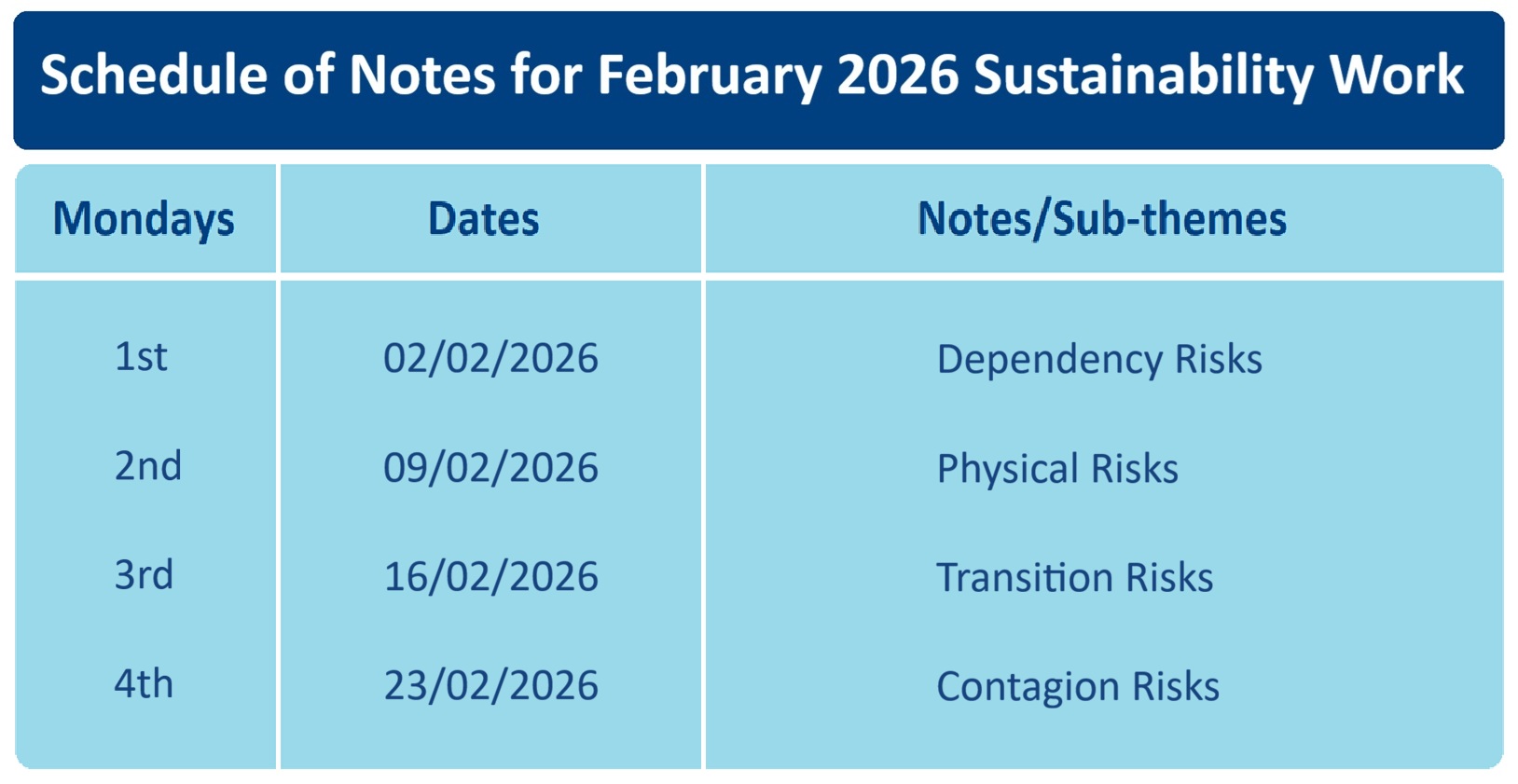
Each of the notes or sub-themes will be treated in relation to poverty reduction.

• • Week Beginning Monday (02/02/2026) – In Focus: Dependency Risks
• • • What are Dependency Risks?
Dependency risks associated with biodiversity loss are those that act as a systemic financial risk for households. They threaten the stability of income, increase living expenses, and erode the value of assets that heavily rely on ecosystem services.
These dependency risks occur when a large portion of global economic output is dependent on natural ecosystem services, such as raw materials and stable water supplies. Research within the literature on new climate risk indicates that nature underpins more than 50% of global GDP (Gross Domestic Product).
• • • What do Key Dependency Risks include?
Key dependency risks for households include:
~ Direct income and livelihood risks (linked to agricultural and fisheries collapse, loss of ecosystem services)
~ Rising costs of living or inflationary pressures (meaning food and water scarcity, increased health costs)
~ Asset and property value depreciation (associated with physical damage of assets, investment portfolio risks)
~ Transition risks to households (related to regulatory changes, substitution costs)
~ Increased vulnerability and inequality (expressed as worsening inequality, compound risk of nature and climate).
For households, this climate risk – which can create cascading financial effects across the economy – can also impact household well-being. This is why it makes sense to work with households so that they can be empowered to deal with the consequences of systemic financial risk resulting from biodiversity loss.
• • • How CENFACS can work with those in need of reducing poverty linked to Dependency Risks
Poverty-driven dependency is linked to biodiversity loss through a dependency risk where vulnerable, low-income populations directly rely on ecosystems for subsistence, food security, and income. This type of poverty can be reduced by working together with those in need of reducing it.
Working with them on this matter requires a shift from viewing biodiversity solely as an environmental issue to recognizing it as a critical economic safety net. Effective ways of working with them will focus on the following:
~ Strengthening their resilience
~ Diversifying incomes sources to reduce reliance on overexploited resources
~ Ensuring sustainable management of natural capital.
In other words, key approaches to working with them to mitigate these risks will include:
σ Diversify livelihoods to reduce dependency on a single ecosystem service
σ Strengthen natural capital as risk insurance
σ Implement financial and policy incentives
σ Engage them via participative approaches
σ Focus on ‘win-win’ opportunities.
For those members of our community who may be interested in the above-mentioned approaches and in dealing with Dependency Risks associated with biodiversity loss, they are free to contact CENFACS.
For any queries or enquiries about Sustainable Development Month and Biodiversity Loss as a Systemic Financial Risk; please also communicate with CENFACS.
_________
• References
(1) https://sdgs.un.org/2030agenda (accessed in February 2026)
(2) https://climate.sustainability-directory.com/term/sustainable-alternatives/ (accessed in February 2026)
(3) https://pollution.sustainability-directory.com/question/what-are-sustainable-alternatives-to-current-practices (accessed in February 2026)
(4) https://www.unhcr.org/innovation/wp-content/uploads/2025/04/what-can-Video-Games-Offer-to-Forcibly-Displaced-People.pdf (accessed in February 2026)
(5) https://www.undrr.org/understanding-disaster-risk/terminology/hips/en050/ (accessed in February 2026)
(6) https://weforum.org/publications/global-risks-report-2026/ (accessed in February 2026)
(7) https: www.lse.ac.org/granthaminstitute/news/nature-loss-threatens-financial-stability-and-central-banks-should-act-new-report/#:~:text=… (accessed in February 2026)
(8) https://corporatefinanceinstitute.com/resources/career-map/sell-side/risk-management/what-is-systemic-risk/ (accessed in February 2026)
(9) https://www.tutor2u.net/economics/reference/what-is-systematic-risk (accessed in February 2026)
_________
• Help CENFACS Keep the Poverty Relief Work Going This Year
We do our work on a very small budget and on a voluntary basis. Making a donation will show us you value our work and support CENFACS’ work, which is currently offered as a free service.
One could also consider a recurring donation to CENFACS in the future.
Additionally, we would like to inform you that planned gifting is always an option for giving at CENFACS. Likewise, CENFACS accepts matching gifts from companies running a gift-matching programme.
Donate to support CENFACS!
FOR ONLY £1, YOU CAN SUPPORT CENFACS AND CENFACS’ NOBLE AND BEAUTIFUL CAUSES OF POVERTY REDUCTION.
JUST GO TO: Support Causes – (cenfacs.org.uk)
Thank you for visiting CENFACS website and reading this post.
Thank you as well to those who made or make comments about our weekly posts.
We look forward to receiving your regular visits and continuing support until the end of 2026 and beyond.
With many thanks.