Welcome to CENFACS’ Online Diary!
21 January 2026
Post No. 440

The Week’s Contents
• FACS, Issue No. 90, Winter 2025/2026, Issue Title: Local African Charities, the Double Transfer (of Climate Technology and Finance) and Poverty Reduction – Approaching Charitable Transfers from a Win-win Perspective
• The Internally Displaced Persons of Central Sahel Region Need Your Support
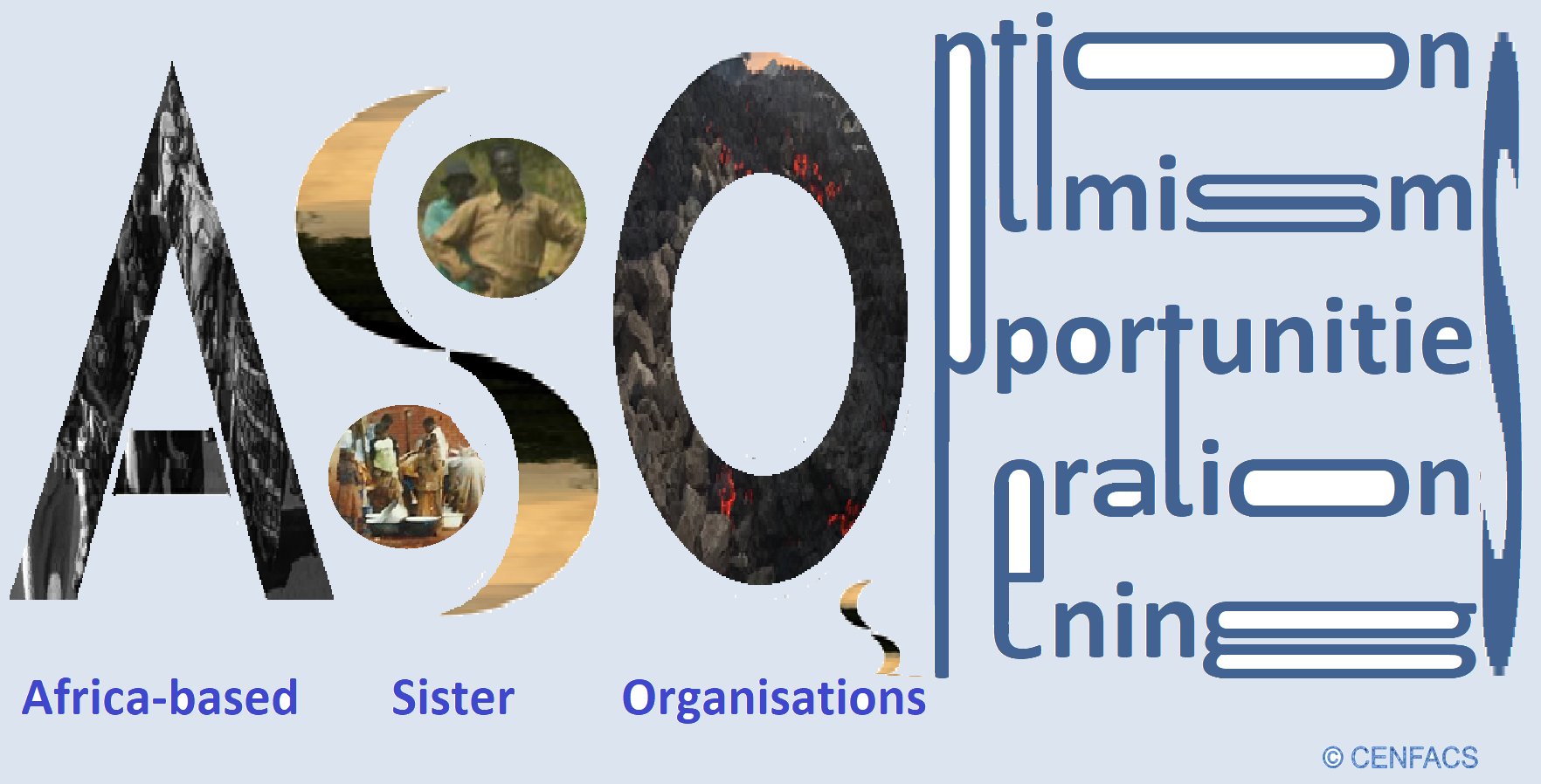
• Africa-based Sister Charitable Organisations in 2026 as a Year of Opportunities, Openings, Operations, Optimisms and Options to Reduce Poverty
… And much more!


Key Messages
• FACS, Issue No. 90, Winter 2025/2026, Issue Title: Local African Charities, the Double Transfer (of Climate Technology and Finance) and Poverty Reduction – Approaching Charitable Transfers from a Win-win Perspective
The topic of transfer, whether it is about technology or finance, has always be at the heart of any climate talks. The same topic cannot be detached from the problematic of poverty in Africa. This is because if one wants people, in particular the poor ones, to transition away from the use of fossil fuel energies to clean ones, they are required to ensure that these poor people have both the technology and finance to do so. Yet, these poor people may not easily transition away from poverty since the kind of poverty they are experiencing could be linked to the type of technology they are using or do not have, and at the same time they are lacking financial resources to acquire clean technologies. In this respect, there could be a need to operate a double transfer of both climate technology and climate finance to these peoples or communities in need of energy transition and of means to finance this transition.
It is these transfers that we are interested in, particularly the international charitable ones. Charitable transfers involve moving assets (that is, money, property and investments) from one entity to another for charitable purposes, often from one charity to another or from individuals to charities, offering benefits like tax relief, but requiring careful legal steps to ensure proper use and compliance. The type of charitable transfers to be treated here is charity-to-charity transfers (that is, one charity gives assets like cash, property, technology and investments) to another. We are as well dealing with them in international context, that is charitable transfers between Multinational Charities and Local African Charities.
In the case of Issue 90 of FACS, it is the transfer of climate technologies and finance from Multinational Charities (MCs) to Local African Charities (LACs). This is despite the fact that statistics indicate that a very small percentage of international climate finance reaches the local level in Africa, and the overall funding to Africa is severely inadequate compared to the needs.
Perhaps, to elucidate what we are talking it is better to explain the concepts of climate technology, climate finance and the double transfer. Let us start with climate technology. From the perspective of ‘unepccc.org’ (1),
“Climate technologies are all those technologies that are instrumental in contributing to achieving mitigation and adaptation objectives and they exhibit similar patterns as other technologies, particularly in terms of geographical concentration in high income countries and low levels of diffusion in developing countries”.
As to climate finance, the website ‘explorian.io’ (2) explains that
“Climate finance in developing countries refers to financial flows support, and investment provided by developed countries, international institutions and other sources to assist developing nations in implementing climate action initiatives, such as mitigating greenhouse gas emissions and adapting to the impacts of climate change”.
Both climate technology and climate finance can be transferred. It is this double transfer that this Issue 90 is dealing with. Within the climate literature, double transfer in climate action refers to the linked process of transferring climate technology and climate finance from developed to developing countries. The double transfer suggests that there is a need for a coordinated approach that involves both the transfer of technology and the transfer of financial resources.
In this double transfer, LACs – particularly CENFACS’ Local Africa-based Sister Organisations working on the ground in their areas of operation in Africa – found that there is a lack of or gap in climate technology and climate finance. It is the interlinkage of these two problems and their links to poverty or poverty reduction that the 90th Issue of FACS consists of.
The 90th Issue deals with challenges and potential negative impacts (such as challenge linked to accessing climate funds by LACs, capacity gaps, the character donor-centric of climate finance, the lack of local ownership in technology transfer, the problem of climate accountability and transparency, and funding disparities).
Both technology and finance transfers do not happen in the vacuum. They happen through a channel. The 90th Issue highlights the key mechanisms for technology transfer (like direct financial support, technical assistance, and capacity building, collaborative partnerships, hard technology deployment). In this respect, the 90th Issue deals with the economic case for climate technology transfer as climate technologies offer new or alternative solutions in different areas that are important to economic development and poverty reduction.
The 90th Issue considers the transfer done through MCs or charitable entities – that is the transfers of both climate technology and climate finance to Africa or LACs from multinational charitable entities – while looking at the principles or theories and practices underpinning these transfers.
In this regard, the 90th Issue highlights key theories and frameworks for climate technology transfer (like national innovation systems, market-based mechanisms and firm level theories, enabling environments, equity and redistribution claims, intellectual property rights, etc.) and theories of climate finance (such as transformational finance theory, additionality principle, theory of change models, etc.), as well as their suitability or unsuitability with the contents of the 90th Issue.
The 90th Issue particularly focuses on the double transfer theory, which posits that climate technology transfer and climate finance transfer are intrinsically linked and mutually reinforcing. The double transfer theory emphasizes the importance of understanding the specific bottlenecks that constrain the transfer of climate technologies and the role that development cooperation can play in enabling it. It also calls attention to the need for international support to accelerate the transfer of climate technologies to LACs since statistics show that only a small percentage of these technologies reaches them.
The 90th Issue looks at the key relationships between LACs, MCs, climate finance transfer, climate technology transfer and poverty reduction in Africa, as well. These relationships will be checked at the levels of access to climate finance, project implementation and technology, capacity building and innovation, barriers to access to climate technologies and finance by LACs, poverty reduction and local relevancy.
Far from being a discourse based on speaking highly about the merits of climate technologies and finance transfers, the 90th Issue approaches transfers as a win-win game. It embraces a collaborative, locally-led, and transparent approach that involves shifting from traditional top-down aid models to a partnership framework that builds local capacity, ensures technology appropriateness, and leverages the unique strengths of both MCs and LACs. In doing so, it showcases the relationships between the global (multinational) and local as far as international charitable transfers are concerned.
Finally, the 90th Issue treats of the role that LACs play as intermediaries, capacity builders, poverty relievers and project implementors in the transfer of climate technologies and finance, particularly in reaching local communities and having projects align with local needs.
For additional understanding of the 90th Issue of FACS, kindly review the summaries located in the Main Development area of this post.

• The Internally Displaced Persons (IDPs) of Central Sahel Region Need Your Support
The humanitarian situation in Central Sahel Region remains critical, with a huge number of IDPs. The region has seen a high increase in refugees, most of them fleeing from Burkina Faso to Mali and Niger. Like in any crisis of this kind, access to basic services is severely limited, and the number of humanitarian organisations working in the region has dropped.
The following figures explain more this humanitarian situation.
According to ‘unhcr.org’ (3),
“The Central Sahel – Burkina Faso, Mali, and Niger – faces worsening conflict, insecurity, and climate shocks, compounded by food insecurity and economic fragility”.
The same ‘unhcr.org’ adds that
“92,800 refugees and asylum-seekers forced to flee their countries,
2.9 million are internally displaced in the Sahel region, and
62% of forcibly displaced people in the Central Sahel are displaced within their own countries”.
The IDPs of Central Sahel Region Need Your Support!
• • Donate to Support Them
You could donate to support them. You can give either your influence or money or both to support them.
If you decide to provide influence, you could put your positive influence on those who have the key to this humanitarian crisis or the factors feeding this crisis so that the Central Sahelian victims of this crisis can move out of it.
If you choose instead to donate money, you can give £7 or any amount above. Your money will be allocated as follows:
£3 from your £7 can be used to meet the sanitation needs of the IDPs of Central Sahel Region
£4 can assist them in accessing safe drinking water and medical care, while releasing pressure at the IDPs of Central Sahel Region.
Please, let us give hope to and strengthen resilience of these displaced people of Central Sahel region.
To support and or enquire about this appeal, please contact CENFACS.
• Africa-based Sister Charitable Organisations in 2026 as a Year of Opportunities, Openings, Operations, Optimisms and Options to Reduce Poverty
Every year brings along with it challenges and opportunities. 2026 does not make any exception as it brings both challenges and opportunities. 2026 could be a year of challenges and opportunities for Africa-based Sister Charitable Organisations (ASCOs).
ASCOs can do their own SWOT analysis to identify and determine the internal Strengths and Weaknesses of their organisations as well as the external Opportunities and Threats they may come across throughout 2026. They can as well conduct PEST analysis or assess the four external factors of this PEST analysis and find how these factors can affect their 2026 performance and activities. These well-known PEST analysis factors are political, economic, social and technical.
By focusing on opportunities and openings from the SWOT analysis rather than on the other three elements of SWOT analysis, they can appraise their external environment and their presence in African markets of poverty reduction as well as formulate a strategy and develop their services to work with those in need in a new or improved direction.
They need to consider the five mentioned attributes of what could be 2026 for Africa, which are 2026 as a Year of Opportunities, Openings, Operations, Optimisms and Options to Reduce Poverty. To explain these attributes, we have referred to a number of futurist and prospective studies and analyses. We have summarised or interpreted and included them in our own analysis as indicated by the following points.
• • 2026 as a Year of Opportunities and Openings
2025 as a Year of Opportunities and Openings to reduce poverty means that there will be favourable or advantageous conditions for Africa to reduce poverty, and ASCOs can take advantage of those conditions. It is also a year of chance for them. What are those conditions and chances?
A summary of these opportunities and openings suggests that 2026 can be a year of significant funding opportunities for ASCOs, driven by a focus on climate adaptation, women’s empowerment, youth innovation and local capacity building. Various windows are opening for ASCOs operating in Africa.
Key funding opportunities and grant areas for 2026 include the following:
~ Funding for climate adaption and environment: Examples include IKI Small and Medium Grants Programme, International Organisation for Migration, Global Environment Facility Small Grants Programme, etc.
~ Women’s empowerment and health: Funding opportunities to apply are FemFocus 2026-2030 (from Netherlands Government), Aidsfonds (EmpowHER Fund), Africa Reproductive Justice Litigation Fund, etc.
~ Youth innovation and entrepreneurship: Among the opportunities are AU-EU Youth Action Lab, Tony Elumelu Foundation and so on.
~ Capacity building and localised funding: Opportunities include Africa Impact Fundraising Grant Programme, Fostering Community Philanthropy (Global Fund for Community Foundation).
~ Education and skill development: Funds available are Diamond Education Grant, BK Foundation and so on.
~ Humanitarian Aid and Security: Opportunities such as Rapid Response Funding (Frontline AIDS & Urgent Action Fund Africa) and Embassy of Japan can help ASCOs.
ASCOs working in the areas covered by the above-mentioned funding opportunities can apply to these opportunities.
• • 2026 as a Year of Optimisms
2026 could be a Year that Africa Needs to Take Hopeful View of Things that may happen and expect the best possible outcomes from these things. This year is emerging as a period of renewed optimisms for ASCOs, driven by a strategic shift towards local leadership, technical integration, and sustainable, homegrown funding models. The narrative is there is a shift from reliance on external help to empowerment, which can also be backed by the following:
~ The shift to local leadership and homegrown solutions, which is characterized by decolonising philanthropy, capital with conscience, and African-led collaboration
~ Innovative funding and economic resilience, which will happen by unlocking domestic resource, micro-ownership and diaspora bonds, and diaspora engagement
~ Technological empowerment and efficiency, which are represented by AI for social impact, impact transparency, and youth-driven innovation
~ There will be stronger ecosystems and structured support through capacity building, collaboration over competition, and purpose-driven focus.
ASCOs need to keep their optimisms alive where possible look for homegrown solutions.
• • 2026 as a Year of Operations
In 2026, the operational landscape for ASCOs is defined by a shift towards digital innovation, localised leadership, and micro-ownership funding models, even as they face challenges from shifting donor priorities and shrinking civic space.
The year can be marked by a focus on impact partnerships rather than traditional sponsorship, with ASCOs leveraging AI, blockchain-verified donation, and community-led sustainable solutions.
In brief, key trends and operational shifts in 2026 include the micro-ownership fundraising model, AI and digital transformation, impact partnerships over sponsorships, digital subscription models, diaspora investments, and data-driven transparency.
To stay relevant in 2026 and beyond, ASCOs need to seriously consider the above-mentioned key trends and operational shifts.
• • 2026 as a Year of Options
2026 is finally a Year of Options to Reduce Poverty. 2026 offers options centred on self-sufficiency, AI integration, and targeted specialised grants. It is a year of strategic shift towards regional leadership, digital adoption, and diversified, localised funding.
The analysis of the key options and trends indicate that the following may happen:
~ Strategic funding opportunities and trends to be marked by Decade of Reparations (2026-2036) and Specialised Grant Landscape (December 2025 – January 2026), and locally-led development
~ Digital transformation and AI adoption.
So, there are options for ASCOs despite what is happening on the African and international scenes (like international aid cuts, hotspots of conflicts, trade tariffs, weather extremes, conflicts over critical minerals, etc.). ASCOs can seize these options and advance in their mission to reduce and possibly end poverty in Africa.
The above possibilities show that Africa-based Sister Charitable Organisations can cautiously grab the opportunities and openings of the 2026 year in order to operate and further up their poverty reduction work and regain the lost hard-won poverty reduction results; lost results because of economic crises, climate change and armed conflicts in Africa.
Besides that, they need to be optimist, not pessimist about Africa and the people they serve while choosing from the new options brought the new changing philanthropic landscape.
For those optimist Africa-based Sister Charitable Organisations wanting to fully operate, grab the above-mentioned opportunities and openings, and take the right options but finding some difficulties to operate; they can discuss the matter with CENFACS so that together we can plan a 2026 market development strategy.
Need a market development strategy or plan in order to fully operate, mindfully and thoughtfully take option and optimistically engage with the 2026 array of tremendous opportunities and openings to reduce and end poverty in Africa; please do not hesitate to contact CENFACS.

Extra Messages
• The Gifts of Peace, Edition 2025-2026
• Looking for Help and Support on Thoughtful Consumption
• AI-powered Financial Monitoring and Controls for Households’ Finance Capacity and Capability Building Experiences

• The Gifts of Peace, Edition 2025-2026: Still Running!
Our Season of Giving through the Gifts of Peace for Edition 2025-2026 has not yet finished. The Gifts-of-Peace Campaign will end on 31 January 2026. We still have almost one week and half to go until the end of this month. We are making a plea to those who have not yet managed to support to keep these gifts and our agenda for peace in their mind.
If you have not yet supported, you can still do something for poverty relief.
Although the deadline for the Season of Donation for these gifts is 31 January 2026, we will still accept any donations made after this deadline to enable those who will not be in a position to donate by this deadline to have a chance to donate after.
Please do not wait for the expiration of the deadline as the needs are pressing and urgent.
We know that many supporters of good causes have been affected by the polycrises of recent years. We are as well aware of the current economic situation of the UK economy which does not make easier for people of all financial abilities to donate to good causes.
However, for those who can please do not hesitate to support these noble causes of peace since the potential beneficiaries of them are trebly impacted by:
a) The lingering economic effects of previous crises
b) The already extremely poor conditions in which they are living
c) The scars of the enduring high costs of living.
Every support counts to help reduce and end extreme poverty.
Please keep the Gifts of Peace in your mind as the giving season continues.
For further details about these Gifts of Peace (that keep making helpful difference) and or to support, go to http://cenfacs.org.uk/supporting-us/
We look forward to your support.
Thank you!

• Looking for Help and Support on Thoughtful Consumption
Thoughtful Consumption (TC) is a conscious and deliberate approach to purchasing and utilising goods and services, where individuals consider the environmental, social, and personal impacts of their choices. There are individuals who can easily adopt this approach. There are others who may be struggling in their TC steps or drive.
For those users who are looking for help and support, we can work with them so that they can navigate their way out of thoughtless consumption-based poverty. We can together explore the following options or tips to deal with thoughtful consumption or spending:
√ Improving their spending intent
√ Creating a budget to track income and expenses and deal with emotional triggers
√ Pausing before purchasing
√ Identifying the root motivation (boredom, stress and true need) behind the desire to buy
√ Setting up cost cutting targets on budget items such as takeaways, eating out, clothing, etc.
√ Calculating cost in hours by determining how many hours to work it takes to afford an item
√ Switching to cheap thoughtful retailers to save money
√ Investing in quality or longevity by choosing durable or sustainable items that last and reduce future waste
√ Trimming budget
√ Prioritising expenses
√ Setting up a policy not to borrow money for thoughtless expenses
√ Adopting cost-saving behaviour
√ Spending on things that genuinely improve their well-being
√ Briefly, developing a strategy or policy for Thoughtful Spending (TS) to help them decide that their money is invested in things that support well-being, connection, and meaningful experiences, not just accumulation.
We can even work with them on a project to write their budget journal for TS.
The above-mentioned options or tools will help them to build confidence throughout 2026 and beyond.
For those users who would like to dive into the reduction of thoughtless consumption-based poverty, we can provide them with online and print resources relating to this matter. These resources highlight the TS tips and hints.
There is a lot of online resources and websites they can sign up and receive advice on this matter.

• AI-powered Financial Monitoring and Controls for Households’ Finance Capacity and Capability Building Experiences
We are continuing with Financial Capacity and Capability Building Programme and Financial Empowerment Programme. We are available to work in hybrid mode with users via these programmes so that they can start or be stronger in this New Year. These programmes will help beneficiaries to reduce risks linked to financial incapacity and incapability while improving their intergenerational income and transfers.
From 19 to 24 January 2026, we are dealing with the second activity of these programmes which is:
Helping Households through AI-powered Financial Monitoring and Controls.
However, before embarking in this activity, let us reiterate the importance of Financial Monitoring and Controls for Households.
• • Why Are Financial Monitoring and Controls Important for Households?
Financial Monitoring and Controls are essential for households to effectively manage their finances. They involve tracking income and expenses, creating budgets, identifying financial trends, evaluating investment performance, and managing debt.
These practices help households make informed decisions, set financial goals, allocate resources, and build savings and investments. Regular monitoring and adjustments ensure that financial plans stay on track and adapt to changes in circumstances or market conditions.
As technologies develop, the tools to undertake Financial Monitoring and Controls can also be adapted. Since AI-powered tools have become a fashion, households need to adapt ways of conducting their Financial Monitoring and Controls. As a result, we will be sharing (from 19 to 24/01/2026) with households this new technology (AI technology) in the way they approach Financial Monitoring and Controls.

• • 19 to 24 January 2026: Helping Households through AI-powered Financial Monitoring and Controls for Their Finance Capacity and Capability Building Experiences (Structured Finance Activity 2)
CENFACS can work with households to leverage AI to provide valuable support to households by implementing financial monitoring and controls. Ways of working with households through AI-powered solutions include the following: predictive analytics, automated communication, fraud detection, and impact measurement.
Let us summarise these solutions.
~ Predictive analytics: AI can analyse past data to predict future financial needs and opportunities, helping households make informed decisions about their finances.
~ Automated communication: AI-driven chatbots can provide instant responses to household enquiries, offering information and assistance without the need for human intervention.
~ Fraud detection: AI systems can detect suspicious financial transactions, ensuring compliance and preventing fraudulent activities.
~ Impact measurement: AI tools can assess the effectiveness of programmes by analysing data trends and feedback from households as project beneficiaries, allowing the possibility to refine strategies to gain better outcomes.
CENFACS can work with households through the integration of AI-powered tools. This way of working together can enhance the financial management of households, providing them with the necessary support to navigate their financial challenges and achieve their goals.
This second Structured Finance Activity, which is part of Financial Capacity and Capability Building Programme and Empowerment Programme, will be run in the form direct questions/answers on how to use AI-enabled Tools to Monitor and Control Your Finances. We can answer questions on dealing with the following matters: predictive analytics, automated communication, fraud detection, and impact measurement.
If any of our users have questions to ask about AI-powered Financial Monitoring and Controls for Their Finance Capacity and Capability Building Experiences, they can ask CENFACS for answers.
Have a question about AI-powered Financial Monitoring and Controls for Your Finance Capacity and Capability Building Experiences, please do not hesitate to contact CENFACS.
In additions, if you have financial planning problems, you can communicate with CENFACS so that we can work together on your financial planning needs and help you stay stronger in this New Year.


Message in French (Message en français)
• Activité/Tâche 1 du projet « A » : Travailler avec les Personnes dans le Besoin pour Trouver des Alternatives à la Consommation Non Durable
• • En quoi consiste cette Activité 1 ?
Il consiste à passer à l’action ou à entreprendre un processus pour trouver des solutions alternatives à une manière de consommer des biens et des services qui n’est pas durable.
Peut-être, pour mieux aborder cette activité ou tâche, il est important d’expliquer la consommation durable, puis de trouver des moyens ou des alternatives à la consommation non durable.
• • Qu’est-ce que la consommation durable ?
‘Sustainability-directory.com’ (4) explique que
« La consommation durable signifie réduire, réutiliser et repenser nos choix pour une planète et un avenir plus sains ».
Le même ‘sustainability-directory.com’ (5) ajoute que
« Les alternatives de consommation durable représentent un changement fondamental dans notre perception de nos besoins et notre interaction avec les ressources de la planète… Au cœur de la consommation durable se trouve la minimisation de l’impact environnemental tout en maintenant ou en améliorant la qualité de vie ».
La consommation peut aussi être non durable. Selon ‘sustainability-directory.com’ (op. cit.),
« La consommation non durable, caractérisée par la surexploitation des ressources naturelles et la génération de déchets excessifs, constitue une menace importante pour l’environnement et l’avenir. S’attaquer à ce problème nécessite une transition vers des pratiques plus responsables et durables ».
• • Alternatives à la consommation non durable
À partir de ces définitions, il est possible de prendre des mesures ou de travailler avec ceux ou celles qui ont besoin d’une consommation durable pour trouver des alternatives à la consommation non durable. Les actions avec eux (elles) pour trouver des alternatives peuvent inclure les suivantes :
~ Réduire, Réutiliser, Réparer, Recycler et Composter (les 4 R et 1 C) en se demandant si un objet est vraiment nécessaire avant de l’acheter
~ Achat conscient : Consiste à soutenir les entreprises qui utilisent des matériaux provenant de sources durables
~ Changements alimentaires : Adopter une alimentation plus végétale qui peut réduire l’impact environnemental
~ Transport durable : Minimiser l’usage de la voiture en marchant
~ Conservation de l’énergie : Économiser l’eau et l’électricité à la maison.
Les actions mentionnées ci-dessus peuvent aider ceux ou celles qui sont dans le besoin à trouver des alternatives à une consommation non durable.
Cela peut impliquer une réévaluation fondamentale de la manière dont nous produisons, consommons et éliminons les biens et services. En d’autres termes, il s’agit de consommer de manière consciente et réfléchie.
Pour ceux ou celles qui ont besoin d’aide avant de se lancer dans cette tâche, ils/elles peuvent s’adresser à CENFACS.
Pour toute autre question ou demande de renseignements concernant le projet « A » et la dédicace de cette année, veuillez également contacter le CENFACS.

Main Development
• FACS, Issue No. 90, Winter 2025/2026, Issue Title: Local African Charities, the Double Transfer (of Climate Technology and Finance) and Poverty Reduction – Approaching Charitable Transfers from a Win-win Perspective
The contents and key summaries of the 90th Issue of FACS are given below.
• • Contents and Pages
I. Key Terms Relating to the 90th Issue of FACS (Page 2)
II. Theories and Frameworks Used in the 90th Issue of FACS (Page 2)
III. Making the Transfer of Climate Technologies and Finance from Multinational Charities to Local African Charities a Win-win Game (Page 3)
IV. Statistics Regarding the Transfer of Climate Technologies and Climate Finance from Multinational Charities to Local African Charities (Page 3)
V. Challenges Faced by Local African Charities to Effective Transfers (Page 4)
VI. Local African Charities and the Need of Using Key Performance Indicators to Tackle Challenge Linked to Climate Technologies Transfer and Finance Security (Page 4)
VII. Les Organisations Caritatives Locales Africaines comme Intermédiaires de Projets (Page 5)
VIII. Les Organisations Caritatives Locales Africaines en tant que Constructrices de Capacités (Page 5)
IX. Les Organisations Caritatives Locales Africaines comme Agents Réducteurs ou Dissipateurs de la Pauvreté (Page 6)
X. Les Organisations Caritatives Locales Africaines en tant qu’Exécutrices de Projets (Project 6)
XI. Survey, Testing Hypotheses, E-questionnaire and E-discussion on the Double Transfer (Page 7)
XII. Support, Tool and Metrics, Information and Guidance on Climate Technologies and Climate Finance Services (Page 8)
XIII. Workshop, Focus Group and Booster Activity about Climate Technologies and Climate Finance (Page 9)
XIV. Giving and Project (Page 10)
• • Key Summaries
Please find below the key summaries relating to the 90th Issue of FACS from page 2 to page 10.
• • • Key Terms Relating to the 90th Issue of FACS (Page 2)
There are five key terms used in the context of this Issue of FACS. These terms are Local African Charities, Multinational Charities, Climate Technologies, Climate Finance and Double Transfer. Let us briefly explain these key terms.
• • • • Local African Charities
Local African Charities (LACs) are organisations often community-led, focusing on specific needs like education, health, agriculture, poverty, water, and women’s empowerment. They work within African communities or with diaspora support to create sustainable change from the ground up, contrasting with Multinational Charities (MCs) or large international non-governmental organisations.
Examples of local and grassroots African charities include African Child Trust, Africa Advocacy Foundation, For Afrika, Village by Village, etc.
These organisations need support as they do not receive what they need or is needed in terms of climate technologies and finance transfers.
• • • • Multinational Charities
A multinational charity (or international charity/non-governmental organisation) is a non-governmental organisation (NGO) that operates and provides aid in multiple countries, tackling global issues like poverty, health crisis, human rights, and disaster relief, often coordinating efforts through a network of national branches or partners to deliver services worldwide.
Examples of Multinational Charities include Save the Children International, Charities Aid Foundation, Oxfam, World Vision, Action Aid, Greenpeace, Medecins Sans Frontieres, etc.
These organisations can transfer both climate technologies and finance to LACs.
• • • • Climate Finance
According to ‘unfccc.int’ (6),
“Climate finance refers to local national or transnational financing – drawn from public, private and alternative sources of financing – that seeks to support mitigation and adaptation actions that address climate change”.
Another definition is from the website ‘explorian.io’ (op. cit.), which explains that
“Climate finance in developing countries refers to financial flows support, and investment provided by developed countries, international institutions and other sources to assist developing nations in implementing climate action initiatives, such as mitigating greenhouse gas emissions and adapting to the impacts of climate change”.
These definitions are used to understand the contents of the 90th Issue of FACS.
• • • • Climate Technology
Climate technology can be defined in many ways. One of its definitions comes from ‘netzeroinsights.com’ (7) which explains that
“Climate tech is an umbrella term for technological solutions built to address the climate tech crisis”.
The same ‘netzeroinsights.com’ adds that
“According to the EU taxonomy, climate tech refers to innovative products, services, and technologies that address at least on the six objectives for sustainable activities”.
Still ‘netzeroinsights.com’ provides examples of climate technologies which are solutions built to support decarbonization, energy transition and emission reduction.
From the perspective of ‘unepccc.org’ (op. ct.),
“Climate technologies are all those technologies that are instrumental in contributing to achieving mitigation and adaptation objectives and they exhibit similar patterns as other technologies, particularly in terms of geographical concentration in high income countries and low levels of diffusion in developing countries”.
In short, climate tech refers to a broad range of technologies and innovations designed to reduce greenhouse gas (GHG) emissions, remove carbon from the atmosphere, and help societies adapt to the impacts of global warming, spanning sectors like renewable energy, sustainable food, and carbon capture to create a more resilient and decarbonized economy.
These technologies can be transferred to Local African Charities.
• • • • Double Transfer
Within the climate literature, double transfer in climate action refers to the linked processes of transferring climate technology and climate finance from developed to developing countries.
The above-named five key terms shape the contents of the 90th Issue of FACS. However, theories and frameworks are also required to explain these transfers.
• • • Theories and Frameworks Used in the 90th Issue of FACS (Page 2)
Climate technologies and finance transfers are explained by a combination of theories and conceptual frameworks drawn from innovation, economics, and international policy focusing on market mechanisms, instituational capacity and equity.
There are theories and frameworks for climate technology transfer and those for climate finance transfer.
# Theories and frameworks for climate technology include National Innovation Systems Theory, Market-based Mechanisms and Firm-level Theories, Enabling Environments, Intellectual Property Rights, and Equity and Redistribution Claims.
# Theories and frameworks for climate finance transfer encompasses Transformational Finance Theory, Additionality Principle, Theory of Change Models, Finance Enables Technology, Technology Drives the Need for Finance.
These theories and frameworks suggest that an effective global climate response requires a holistic approval where committee finance and appropriate technology transfer, backed by strong local capacities work in tandem to achieve climate-resilient development pathways.
These key theoretical frameworks help in understanding the contents of the 90th Issue.
• • • Making the Transfer of Climate Technologies and Finance from Multinational Charities to Local African Charities a Win-win Game (Page 3)
To make this happen, it requires adopting a collaborative, locally-led, and transparent approach. This involves shifting from traditional top-down aid models to a partnership framework that builds local capacity, ensures technology appropriateness, and leverages the unique strengths of both parties (that is, Multinational Charities and Local African Charities).
In order to achieve a win-win scenario, the following strategies could be applied:
~ Locally-led design and implementation of projects, which includes co-creation of projects and the respect for local knowledge
~ Appropriate technology transfer that focuses on sustainable solutions and capacity building
~ Financial transparency and accessibility, which encompasses direct access to funding, flexible and predictable financing, and shared metrics for success
~ Fostering true partnership, which involves equitable decision-making process, and knowledge exchange.
These key strategies will not only enable Local African Charities to play their full part in this game, but also to achieve climate resilience that benefits Africa and everybody involved in the process.
• • • Statistics Regarding the Transfer of Climate Technologies and Climate Finance from Multinational Charities to Local African Charities (Page 3)
These statistics indicate three main points:
1) A very small percentage of international climate finance reaches the local level in Africa
2) The overall funding to Africa is severely inadequate compared to the needs
3) The transfer process is dominated by international public finance institutions, with limited direct access for LACs.
In other words, statistics highlight significant shortfalls and structural inequalities in the transfer of climate finance and technology to LACs and communities, with the bulk of the money managed by larger international entities and a considerable funding gap remains.
Key statistics and trends regarding climate technologies transfer from MCs to LACs also reveals the following:
~ Low local direct receipt of funding
~ Declining direct support to LACs
~ Low-carbon technological gap
~ Limited technology deployment capacity
~ High bottlenecks in transfer
Etc.
In terms of what this transfer supports, data shows that there is a shift towards supporting locally-led, nature-based and digital solutions , though such funding represents a small portion of total climate flows.
• • • Challenges Faced by Local African Charities to Effective Transfers (Page 4)
These challenges can be summarised in terms of structural barriers they face, the lack of standardised metrics, the focus on mitigation and application processes.
# Concerning structural barriers, it is worth mentioning that there are complex international funding procedures and a lack of institutional capacity and coordination in many African countries hinder the disbursement of committee funds or the funds that LACs would have received from MCs.
# Regarding the lack of standardised metrics, it is true to say that the absence of standardised metrics to measure the impact of adaptation projects makes tracking finance difficult and complicates the assessment of where funds are most needed.
# Respecting focus on mitigation, it has to be argued that historically speaking, global climate finance has favoured large-scale commercially viable projects (e.g., renewable energy) over smaller and localised adaptation projects run by LACs, although Africa has a higher proportion of adaptation funding compared to others. Also, while MCs often act as intermediaries, direct access to international climate funds for LACs remains limited.
# As to application processes, smaller grassroots organisations with limited capacity are often at a disadvantage of navigating the complex, competitive and often bureaucratic application processes of international funding agencies or charities (like the Green Climate Fund).
The above-mentioned challenges need to be broken down to create a level playing field for LACs.
• • • Local African Charities and the Need of Using Key Performance Indicators to Tackle Challenge Linked to Climate Technologies Transfer and Finance Security (Page 4)
LACs can use Key Performance Indicators (KPIs) focused on tracking technology adoption, financial mobilisation, and tangible adaptation/mitigation results. Effective and context-specific KPIs allow these organisations to demonstrate impact to climate donors and ensure alignment with National Determined Contributions.
These KPIs for LACs to be used include the ones given below.
a) KPIs linked to climate technologies and adoption
These KPIs track the deployment, adoption rate and operational sustainability of imported or locally adapted technology.
They include Installed Capacity of Clean Energy, Number of People/Households with Access to Technology, Adoption Rate of Climate-resilient Agriculture Technology, and Operational Rate of Transferred Technology.
b) KPIs relating to climate finance mobilisation and efficiency
These KPIs track the ability to secure funding and effectively use it, including leveraging private capital.
They encompass Amount of Climate Finance Mobilisation, Cost per Unit of Impact (e.g., cost per ton of CO2 avoided), Grant Utilisation Rate, etc.
c) Impact and resilience indicators (outcomes)
These metrics measure the ultimate success of the technology and finance in improving livelihoods and environmental sustainability.
Among impact and resilience indicators, there are Tons of Greenhouse Gas Emissions Reduced/Avoided, Area of Ecosystem Protected/Restored (hectares), Reduction in Post-harvest Loss, etc.
Depending on the sector in which LACs operate they can use the indicators to demonstrate impact to climate donors and ensure alignment with National Determined Contributions.

• • • Les Organisations Caritatives Locales Africaines comme Intermédiaires de Projets (Page 5)
Considérer les Organisations Caritatives Locales Africaines (OCLA) comme intermédiaires de projet signifie faire appel à des organisations communautaires locales pour gérer, distribuer et superviser les fonds ou projets de développement, plutôt que de se fier à des ONG internationales. Ces organisations (par exemple, Pananetugri) comblent le fossé entre les bailleurs/resses de fonds étrangers et les besoins locaux, agissant comme des connecteurs qui garantissent que les projets sont dirigés localement et culturellement appropriés. Elles peuvent agir comme redistribuants (distributeurs/rices de fonds), formateurs/rices de capacités, expert(e)s locaux/les, gestionnaires de risques et protecteurs/rices, ainsi que bâtisseurs/ses de confiance.
• • • Les Organisations Caritatives Locales Africaines en tant que Constructrices de Capacités (Page 5)
Les OCLA peuvent renforcer les organisations de base, autonomiser les communautés dans les domaines de la santé, de l’éducation et de la gouvernance, et favoriser le leadership local pour stimuler le développement durable. Ces organisations peuvent développer des forces internes (direction, finances, gestion de projet) et des réseaux externes, passant de la dépendance à l’aide à l’autonomie.
Investir dans les OCLA en tant que constructrices ou bâtisseuses de capacités garantit que les solutions de développement sont culturellement pertinentes, durables et pilotées par les communautés africaines elles-mêmes, dépassant les solutions à court terme pour parvenir à une habilitation à long terme.
• • • Les Organisations Caritatives Locales Africaines comme Agents Réducteurs ou Dissipateurs de la Pauvreté (Page 6)
Les OCLA et les organisations communautaires jouent un rôle crucial dans la réduction et l’atténuation de la pauvreté en mettant en œuvre des solutions durables et locales adaptées aux besoins spécifiques des communautés, en se concentrant sur des domaines tels que l’agriculture, l’éducation, la santé et la génération de revenus.
Ces organisations privilégient souvent l’autonomie à long terme plutôt que l’aide immédiate, aidant les communautés à rompre le cycle de la pauvreté grâce à la formation professionnelle, au soutien à l’emploi et à l’infrastructure durable.
Des exemples de ces organisations incluent For Afrika, Self Help Africa, The Africa Trust, Bread and Water for Africa, African Children’s Trust, etc.
• • • Les Organisations Caritatives Locales Africaines en tant qu’Exécutrices de Projets (Project 6)
Parler des OCLA en tant que responsables de projets fait référence à un modèle opérationnel où les projets de développement ou humanitaires en Afrique sont directement exécutés par des organisations implantées dans ces communautés plutôt que par des agences d’aide internationales. Cette approche privilégie la localisation, en veillant à ce que les connaissances, la direction et les ressources locaux guident le processus de développement.
En essence, cela signifie transférer le pouvoir des entités externes et internationales vers des organisations locales de base pour diriger le changement dans leurs communautés.

• • • Survey, Testing Hypotheses, E-questionnaire and E-discussion on the Double Transfer (Page 7)
• • • • Survey on the dynamics and challenges of Climate Technology (CT) and Climate Finance (CF) transfers
The survey is on the dynamics and challenges of CT and CF transfers, in particular on issues such as tracking CF flows and technology transfer barriers.
The purpose of this survey is to collect information from a sample of our local Africa-based Sister Organisations and community members regarding their perception on CT and CF transfers. It is also about the feelings of LACs on this matter since the data regarding the transfer of CT and CF from multinational charitable entities indicates that there is a shift towards supporting locally-led, nature-based, and digital solutions, although the funding of such transfers represents a small portion of total climate flows.
Participation to this survey is voluntary.
As part of the survey, we are running a questionnaire which contains some questions. These are questions surrounding the double transfer of CT and CF and relate to ensure effective and equitable deployment of resources while avoiding issues like double counting or inappropriate accounting of funds and benefits. One of these questions relates to effectiveness and accountability is:
How can the effectiveness of CT and CF transfer be measured to ensure they meet the specific needs and priorities of recipient African countries or Local African Charities?
You can respond and directly send your answer to CENFACS.
• • • • Testing hypotheses about the double transfer
The core hypotheses is that effectively designed and implemented climate finance and technology transfer are compatible with and can actively drive poverty reduction, provided they integrate social policies and target the unique vulnerability of poor populations. However, their impact is not automatic and faces challenges.
For those of our members who would like to dive deep into hypotheses surrounding the double transfer, they can test the inference of the following hypotheses:
a.1) Null hypothesis (Ho): Transferring climate-relevant technologies can help recipient leapfrog traditional high-carbon development paths, directly enabling low-carbon and resilient development
a.2) Alternative hypothesis (H1): Transferring climate-relevant technologies cannot help recipient leapfrog traditional high-carbon development paths, not directly enabling low-carbon and resilient development
b.1) Null hypothesis (Ho): Technology transfer is hypothesized to stimulate the creation of new green jobs in renewable energy, sustainable agriculture
b.2) Alternative hypothesis (H1): Technology transfer is not hypothesized to stimulate the creation of new green jobs in renewable energy, sustainable agriculture
c.1) Null hypothesis (Ho): For technology transfer to succeed, it needs to include capacity building, knowledge sharing and adapting technology to local conditions
c.2) Alternative hypothesis (H1): For technology transfer to succeed, it does not need to include capacity building, knowledge sharing and adapting technology to local conditions.
The above tests to be carried out are for those of our members who would like to dive deep into the double transfer of CT and CF. In order to conduct these tests, one needs data.
• • • • E-questionnaire on your view about the double transfer
This is an electronic questionnaire to be used for data collection. It is part of a localised research project on the double transfer of CT and CF. Two of these questions are:
Q1: How can Local African Charities effectively communicate their priority climate technology needs?
Q2: How can the operational collaboration between the bodies responsible for technologies and those of finance be improved?
Any of our readers and users can answer the above-mentioned question. You can provide your answer directly to CENFACS.
For those answering any of this question and needing first to discuss the matter, they can contact CENFACS.

• • • • E-discussion on the benefits of the win-win approach
This e-discussion or online dialogue is on…
the benefits of win-win approach for Local African Charities and Multinational Charities in the context of the double transfer of CT and CF to Africa.
It is about shifting power dynamics and embracing genuine partnership and how they can effectively drive sustainable development and climate resilience in Africa by benefiting all stakeholders.
For those of our members who may have any views or thoughts or even experience to share with regard to this matter, they can join our e-discussion to exchange their views or thoughts or experience with others.
To e-discuss with us and others, please contact CENFACS.
• • • Support, Tool and Metrics, Information and Guidance on CT and CF Services (Page 8)
• • • • Support on CT and CF services
Those seeking to combine CF transfer with necessary financing can access support through a mix of double transfer service providers. This support focuses on building capacity, de-risking investments, and demonstrating new technologies, with a strong push towards blended finance – combining public, private and third sector capital.
They can as well ask CENFACS for Guidance on organisations that prioritise social and environmental goals over profit. CENFACS can guide them on where to find them.
The above-mentioned areas of guidance can also be done through capacity building, advocacy, advice, networking, signposting, etc. run by CENFACS.
For those African Charities, especially CENFACS’ Africa-based Sister Organisations that are looking for guidance or direction for CT and CF services or organisations integrating financial support (grants or loans) with the deployment of low-carbon technology (such as solar, heat pumps, efficiency measures) to enable adoption, CENFACS is prepared to work with them on this matter.
CENFACS can work with them to explore ways of aligning their mission with the goals with a double transfer approach. The double transfer approach aims to overcome both the technological knowledge gap and the high upfront cost barrier, often facilitated through fintech, green banking, and international climate funds.
We can work with them under our International Advice-, Guidance- and Information-giving Service. We can as well signpost them to organisations working on the double transfer matters.
Need advice, guidance and information; please contact CENFACS for support.
• • • • Tools and metrics of the 90th Issue of FACS
To navigate the dual challenge of adopting new climate technologies and accessing necessary climate finance, LACs can leverage a blend of traditional instruments and digital tools. What are those tools?
• • • • • Tools for Local African Charities
Among the tools that LACs can use in the context of CT and CF sector and that have been considered in the 90th Issue of FACS are the following ones:
a) Grants and Small-scale Funding (Technical assistance): Among them are Africa Climate Change Fund, Global Environment Facility (GEF) Small Grants Programme, and TerraFund for AF100
b) Blended Finance and Risk Mitigation: Examples of these tools are Blended Finance Facilities, Credit Guarantees, and Adaptation Benefits Mechanisms
c) Climate Fintech and Digital Tools: Within this category, it is worth mentioning Pay-As-You-Go Models, Blockchain for Transparency, and Crowdfunding Platforms
d) Specialised Funds for Technology Transfer: Examples of such funds include Sustainable Energy Funds for Africa, Africa Disaster Risks Financing, and Alliance for Green Infrastructure in Africa.
The above-mentioned range of financial tools are available for Local African Charities to use them.
• • • • • Metrics relating to CT and CF
The 90th Issue of FACS considers both metrics for climate technologies transfer and climate finance transfer.
# Metrics for technology transfer focus on the deployment and adoption of environmentally sound technologies and the associated capacity building. Key metrics for climate technologies include:
~ Deployment and Adoption Rates
~ Avoided Emissions (Mitigation)
~ Improved Resilience (Adaptation)
~ Capacity Building and Know-how Transfer
~ Intellectual Property and Licensing.
ASCOs can use these metrics to check the success of climate technologies transfer.
# Metrics for tracking climate finance flows focus on the volume, source, and destination of funds, as well as their intended impact. Key metrics for climate finance include:
~ Committed and Disbursed Amounts
~ Financial Instruments Used
~ Mobilized Private Finance
~ Alignment with Climate Goals.
ASCOs can use these metrics to track climate finance flows or transfers.
These above-mentioned metrics will be used to provide a clear understanding of Local African Charities, the Double Transfer (of Climate Technology and Finance) and Poverty Reduction.

• • • • Information, guidance and signposts on CT and CF Services and Entities for charities in Africa
Information, Guidance and Signposts (IGS) on double transfer of CT and CF are resources that provide expertise and support for mechanisms where both the technology and its accompanying finance are simultaneously transferred to Africa.
IGS offers guidance, capacity building and knowledge products that inform stakeholders on how to effectively combine finance and technology to achieve climate goals.
IGS includes three types or areas of support via CENFACS, which are:
a) Information service: making available information about CT and CF services for those looking for this information
b) Guidance service: includes orientation, counselling, exploration and placement on CT and CF Services and Entities to help people and organisations make informed decisions and adjust to life’s changes
b) Signposting service: guides individuals to other organisations or support networks that can better meet their needs in double transfer matters.
• • • • • Information and guidance on CT and CF Services and Entities for Households
There are two types of services we would like to mention:
a) Services to reduce the upfront capital required for households to adopt green technologies
b) Services to ensure households can access, understand and use new, cleaner or more resilient technologies
• • • • • Services to reduce upfront capital required for households to adopt green technologies
They include the following:
~ Green mortgages and loans
~ Pay-As-You-Go (PAYGO) Models
~ Micro-savings and Layaway
~ Green Crowdfunding and Leading
~ Risk Mitigation and Subsidies.
• • • • • Services to ensure households can access, understand, and use new, cleaner or more resilient technologies
Amongst these services, it is worth mentioning these ones below:
~ Smart Energy Systems and Internet of the Things
~ Energy-efficient Appliances
~ Renewable Energy Solutions
~ Climate-resilient Infrastructure.
Having information about these services can guide those households wanting to know more about the type of support available on the double transfer matter. The listing is not exhaustive and has to be used with other sources of information on the subject.
Those households or members of CENFACS Community who are looking for information and guidance on CT and CF matters or to embrace double transfer approach and that do not know what to do, CENFACS can work with them (via needs assessment conducted under CENFACS’ Leaves-based Advice Service) or provide them with leads about organisations, institutions and services that can help them.
We can provide information and guidance to address the double transfer issues and support to both our members and ASOs to reduce information and knowledge gaps. Our information and guidance services will help them foster creativity, community engagement and opportunities for growth through the double transfer models.
• • • • • Signposts to improve Users’ Experience about CT and CF Services and Entities
For those who are looking for whereabout to find help about CT and CF Services and Organisations, we can direct them.
More tips and hints relating to the matter can be obtained from CENFACS‘ Advice-giving Service and Sessions.
To make an appointment for Advice Service or Sessions, please contact CENFACS by providing your name and contact details.
• • • Workshop, Focus Group and Booster Activity about CT and CF (Page 9)

• • • • Mini themed workshop on the double transfer awareness
It is a training or learning event that will explore the double transfer models. It will focus on strengthening the linkages between the mechanisms that handle technology transfer and those that manage climate finance, as a lack of coordination between them is a significant barrier to effective climate action.
The objective of the workshop is to ensure that LACs receive the necessary know-how, experience, and equipment for mitigating and adapting to climate change, supported by appropriate and accessible funding.
The workshop will cover topics such as identifying technology needs of LACs, strengthening linkages, and overcoming barriers.
The workshop aims at supporting those without or with less information and knowledge about the double transfer. Those who need an in-depth skills training assessment in the areas of CT and CF are also welcome. The workshop will provide recommendations for actions with options and opportunities for the participants.
Briefly, the workshop aims to educate participants about the double transfer models and ways of embracing them.
To enquire about the workshop, please contact CENFACS.
• • • • Focus group discussion on double transfer
The focus group will be a qualitative research method to be used to gather in depth perspectives from experts and stakeholders on how to optimize the combined impact of financial and technological support in climate action in Africa. It will explore the synergies and challenges in ensuring that the provision of funds directly facilitates or is tied to the successful transfer and adoption of necessary technologies.
The focus group will bring together a small group of individuals (between 6 and 10) making the CENFACS Community and others to…
discuss their ideas, experiences, and perspectives on effectiveness and gaps in terms of progress made in coordinating finance and technology transfers and where the current gaps are in achieving a synchronised approach.
The focus group will help understand needs, inform policy, promote ownership, identify barriers, and test new ideas about the double transfer.
To take part in the focus group, group that will use deliberative practice strategies, please contact CENFACS.
• • • • Booster activity: ‘Talking to a Climate Finance or Transition Advisor or Sustainability Consultant’
This is a specific, high-impact solution or strategic initiative designed to accelerate growth, efficiency, or progress in the areas of CT and CF transfers.
It is a strategic intervention that rapidly scales up the implementation of climate solutions by ensuring that both the money and the technology flow efficiently and effectively to where they are needed most.
It is finally a user involvement activity revolves around the answers to the following question:
Do you talk to a Climate Finance or Climate Transition Advisor or a Sustainability Consultant to deal with the double transfer of CT and CF?
Those who would like to answer this question and participate to our ‘Talking to a Climate Finance or Transition Advisor or even a Sustainability Consultant, they are welcome.
To take part in this activity, please contact CENFACS.
• • • Giving and Project (Page 10)
• • • • Readers’ giving
You can support FACS, CENFACS bilingual newsletter, which explains what is happening within and around CENFACS.
FACS also provides a wealth of information, tips, tricks and hacks on how to reduce poverty and enhance sustainable development.
You can help to continue its publication and to reward efforts made in producing it.
To support, just contact CENFACS on this site.
• • • • Project for the Double Transfer of Climate Technology and Climate Finance (PDTCTCF)
PDTCTCF, which combines the two separate attributes of climate technologies and finance within s single and cohesive framework, aims to accelerate the transition to low-carbon, climate-resilient development pathways in Africa by demonstrating the technical and charitable viability of new solutions and mobilising necessary capital. In doing so, it is hoped that PDTCTCF will help to reduce poverty linked to the lack CT and CF.
PDTCTCF combines CT transfer (providing access to equipment, knowledge, and skills) with financial mechanisms to overcome significant barriers (like upfront costs, perceived investment risks, and lack of technical capacity). PDTCTCF will address both the financial and technical constraints that hinder effective climate action, moving beyond a simple transfer to fostering a sustainable, long-term economic transformation.
To support or contribute to PDTCTCF, please contact CENFACS.
For further details including the implementation plan of the PDTCTCF, please contact CENFACS.
The full copy of the 90th Issue of FACS is available on request.
For any queries and comments about this Issue, please do not hesitate to contact CENFACS.
_________
• References
(1) https://unepccc.org/wp-content/uploads/2023/06/tech-transfer-policy-brief-oecd.pdf (accessed in January 2026)
(2) https://explorian.io/climate-finance-in-developing-countries (accessed in January 2026)
(3) https://www.unhcr.org/emergencies/sahel-emergency (accessed in January 2026)
(4) https://pollution.sustainability-directory.com/question/what-are-alternatives-to-unsustainable-consumption/ (accessed in January 2026)
(5) https://climate.sustainability-directory.com/question/what-are-sustainable-consumption-alternatives-available (accessed in January 2026)
(6) https://unfccc.int/topics/introduction-to-climate-finance (accessed in January 2026)
(7) https://netzeroinsights.com/what-is-climate-tech/#:~:text=… (accessed in January 2026)
_________
• Help CENFACS Keep the Poverty Relief Work Going This Year
We do our work on a very small budget and on a voluntary basis. Making a donation will show us you value our work and support CENFACS’ work, which is currently offered as a free service.
One could also consider a recurring donation to CENFACS in the future.
Additionally, we would like to inform you that planned gifting is always an option for giving at CENFACS. Likewise, CENFACS accepts matching gifts from companies running a gift-matching programme.
Donate to support CENFACS!
FOR ONLY £1, YOU CAN SUPPORT CENFACS AND CENFACS’ NOBLE AND BEAUTIFUL CAUSES OF POVERTY REDUCTION.
JUST GO TO: Support Causes – (cenfacs.org.uk)
Thank you for visiting CENFACS website and reading this post.
Thank you as well to those who made or make comments about our weekly posts.
We look forward to receiving your regular visits and continuing support until the end of 2026 and beyond.
With many thanks.