Welcome to CENFACS’ Online Diary!
08 April 2026
Post No. 451

The Week’s Contents
• ICDP (Individual Capacity Development Programme) Resource, Holiday with Relief – Featured in the Spring 2026 Issue: Holiday with Alternative Activities
• Protection Phase/Keynote 2 – From Wednesday 08/04/2026: Planning and Skill Development
• Household- and Area-focused Programmes for Assets and Economy Building for Families – In Focus from 08/04/2026: Asset-based Community Development
… And much more!

Key Messages
• ICDP (Individual Capacity Development Programme) Resource, Holiday with Relief – Featured in the Spring 2026 Issue: Holidays with Alternative Activities
How to make the most of your vacation to strengthen bonds, learn new skills, and create unforgettable memories
The current Issue of our ICDP Resource entitled as ‘Holiday with Relief’ focuses on Holidays Offering Alternative Activities. The Issue echoes the year’s dedication within CENFACS of 2026 as a Year of Alternatives, reflecting CENFACS’ commitment to alternatives for 2026. It is particularly timely, coinciding with CENFACS’ Spring 2026 campaign, a period of rebuilding and renewing lives, infrastructures, and institutions. Active holidays can contribute to this rebuilding and renewal.
To better understand this topic, let us define what “Holidays with Alternative Activities” means. These are family holidays offering unique experiences and activities beyond traditional beaches or amusement parks. Such holidays can include adventure trips, educational experiences, and local excursions tailored to different interests and age groups. They offer families the opportunity to strengthen bonds, acquire new skills, and create unforgettable memories in a more enriching and educational way.
For instance, in the UK “the Holiday Activities and Food Programme” provides healthy meals, enriching activities, and free childcare places to children from low-income families, benefiting their health, well-being and learning” (1).
An activity-based holiday is indeed a trip focused on specific, organized activities—such as sports, adventure, or learning new skills—rather than simple relaxation. These holidays, like yoga retreats, sailing trips, or hiking excursions, offer a blend of wellness, adventure, and local cultural immersion, often providing a more active and immersive experience.
The Spring 2026 Issue of our ICDP guide is dedicated to these trips. It contains tools for planning and budgeting for vacations with alternative activities, as well as tips for organizing a trip focused on these activities. It also highlights organizations that offer this type of trip.
This Issue, which aims at people in need or low-income families and households, offers strategies for addressing poverty related to a lack of alternative vacation activities or the means to access and enjoy them. It also discusses the diversity of the activities mentioned and provides examples.
Key highlights or content summaries about the 2026 Issue of Holiday with Relief are given under the Main Development section of this post.

• Protection Phase/Keynote 2 – From Wednesday 08/04/2026: Planning and Skill Development
To cover this second keynote, let us clarify the meanings of planning and skill development, and apply them in the context of protection through alternative income sources.
• • Basic Understanding of Planning and Skill Development
The definition of planning retained here comes from ‘skillsbuilder.uk’ (2) which notes that
“Planning is the ability to set clear, tangible goals, and devise a robust route to achieve them”.
Planning can be associated with organisation skills. The website ‘cambridgestudents.cam.ac.uk’ (3) explains this association by stating that
“Planning and organisation skills focus on how you identify tasks, manage resources, and coordinate activities to successfully achieve your goals within deadlines”.
These two definitions take us to that of skills development. According to ‘saviom.com’ (4),
“Skill development refers to a continuous process of acquiring, enhancing, or refining an individual’s wide range of skills, knowledge, and competencies for better performance and adaptability in the workplace”.
The website ‘saviom.com’ also states that firms can implement skill development in three ways, which are upskilling, cross-skilling, and re-skilling.
These notions of planning and skill development can be applied in the context of protection through alternative income sources and make up Phase 2 of these sources.
• • Phase 2: Planning and Skill Development
Phase 2 consists of cash-first approach, skill training and mentoring, diversification strategy, and action plan development. Let us summarize each of these elements.
Phase 2.1: Cash-first Approach
This approach prioritizes providing support in the form of cash grants or initial capital rather than just in-kind goods, which gives families dignity, choice, and control.
Phase 2.2: Skill training and mentoring
It is about providing training that matches market demand and beneficiary capacity, including technical skills (e.g., livestock rearing, handicrafts) and business management (like literacy, numeracy, marketing, etc.).
Phase 2.3: Diversification strategy
It helps households create multiple income streams, such as combining home-based businesses with small-scale agricultural projects to minimize dependency on one source.
Phase 2.4: Action plan development
It involves developing tailored plans for each household with clear, short-term ‘quick wins’ to build trust and long-term milestones for independence.
These sub-phases can be used to work with the community to enhance the fences of protection through alternative income sources.
• • Ways of Working with Poor Households Making the CENFACS Community on Planning and Skill Development
There are households within our community that can handle the problems of their needs of alternative income protection by themselves. There are others that need support or to work with somebody else in order to navigate their way to the solution about problems related to alternative income protection. For the latter ones, CENFACS can work with them in order to find the level of protection they need to resolve their problem of alternative income protection. Working with the latter can be on specific matters and/or general strategies.
• • • Working with poor households on specific matters
Working with them on planning and skill development in the context of protection via alternative income sources will be about adopting a people-centred and long-term approach that blends skills training, financial planning, and active participation in decision-making process. Key aspects of this model of working together will include the following:
σ Collaborative planning and assessment: They involve co-production, livelihood mapping, and long-term strategy
σ Skill development and training: They include vocational and entrepreneurial training, soft skills enhancement, and peer-to-peer learning
σ Development of alternative income: It encompasses asset support, financial inclusion, and secure spaces
σ Sustainability and social protection: It requires building financial resilience, strengthening local networks, and social cohesion.
Besides the above-mentioned specific ways of working together, there are general strategies that can be included.
• • • Working with poor households on general strategies
These general strategies are things such as
√ Running workshops or one-on-one sessions on alternative income protection
√ Providing alternative income protection tips
√ Discussing with them their alternative income protection strategies
√ Analysing their accounts using alternative income protection metrics and indicators
√ Advising them on issues linked to alternative income protection
√ Finding affordable and accessible protection services relating to their alternative income sources and plan
√ Recommending them to use free online support on alternative income protection services
√ Connecting them with free or low-cost assistance relating to alternative income protection
√ Guiding them on the kinds, types and levels of alternative income protection they may need
√ Making enquiries about alternative income protection on their behalf
√ Supporting them to make an application and apply online on matters relating to alternative income sources/protection
√ Signposting them to specialists in social safety nets and cash transfers
√ Organising drop-in or one-on-one sessions about alternative income initiatives
√ Running small and targeted alternative income protection clinics for those in need
√ Providing a referral service on alternative protection matters for them
√ Advocating their alternative income protection cases to services and organisations where they could be eligible
√ Keeping them informed, guided and updated about any changes in legislations about alternative income protection
√ Translating and interpreting documents or materials relating to alternative income protection
√ Explaining them the importance of developing alternative income sources and project for their protection
√ Tracking progress and evaluating the effectiveness of working with poor households on alternative income protection to ensure they are making progress
Etc.
The above are just some of the ways that CENFACS could use to support the community regarding basic alternative income protection.
Those who need help and support about alternative income protection and/or for any of the matters listed above falling within our capacity, they can contact CENFACS.
Those who would like to enquiry about any other issues linked to alternative income protection that are not listed above, they can still check with CENFACS if there is any help.
Those who may have some questions about Planning and Skill Development under Protection through Alternative Income Sources and the Protection Month itself, they should not hesitate to contact CENFACS.

• Household- and Area-focused Programmes for Assets and Economy Building for Families (H&AfP4A&EB4Hs) – In Focus from 08/04/2026: Asset-based Community Development
To approach the second Household Focused Programme, which is Asset Based Community Development, let us explain it and highlight ways of working with the community on it.
• • What Is Asset Based Community Development (ABCD)?
The website ‘commsatwork.org’ (5) states that ABCD was the work of John McKnight and Jody Kretzmann and is defined as
“A global philosophy and practice related to asset (strength) focused, place based and community driven initiatives”.
Within this literature, ABCD refers to a strategy that focuses on identifying and mobilizing the existing strengths and resources within a community to drive sustainable development and positive change. Its key principles are focus on strengths, community engagement, collaboration, sustainability, and empowerment.
The same literature suggests that ABCD enables communities to harness their inherent strengths and resources. It focuses on what communities have rather than what they lack. It is about creating solutions that enhance their overall well-being and resilience.
Quoting Embrace’s Power Shift Training Series, ‘wendymccaig.com’ (6) provides four bedrock principles that are foundational to ABCD. They are
1) Asset-based Lenses 2) Bond-building Relationships 3) Community-driven Action 4) Development Impact.
From these definitions and perspectives about ABCD, how can we work together within CENFACS Community to be an ABCD?
• • Working within the CENFACS Community as an ABCD
As an ABCD, we can
σ build on our assets, not deficits
σ strengthen our relationships and care each other members of the CENFACS Community (also known as Community Value Chains)
σ use our own collective power assets to achieve self-defined goals and shape our own destiny
etc.
Those who may be interested in working with us on ABCD, they can contact CENFACS.
Those who may have any queries and/or enquiries about ABCD or H&AfP4A&EB4Hs, they should not hesitate to communicate with CENFACS.

Extra Messages
• All-Year-Round Projects Lifecycle – Step/Workshop 8: Monitoring and Observability of Your Play, Run and Vote Projects; and Integrating Triple Value Initiatives into Your All-Year-Round Projects Monitoring and Observability
• Shop at CENFACS’ Zero Waste e-Store during This Spring Giving Season
• Making Zero Hunger Africa Campaign with a Focus on Sustainable Food Alternatives to Reduce Food Poverty in Africa

• All-Year-Round Projects Lifecycle – Step/Workshop 8: Monitoring and Observability of Your Play, Run and Vote Projects; and Integrating Triple Value Initiatives into Your All-Year-Round Projects Monitoring and Observability
To count what is happening and happened to your Play, Run and Vote Projects, you need to monitor and track them. Monitors or trackers will help you to do that. Likewise, observing your Play, Run and Vote Projects will assist in knowing what happened. These monitoring and observability processes need to incorporate Triple Value Initiatives (TVIs) for their success. So, at this step, we shall have two sub-steps, which are
a) Monitoring and Observability of Your Play, Run and Vote Projects
b) Integrating Triple Value Initiatives (TVIs) into Your Play, Run and Vote Projects Monitoring and Observability.
Let us cover these sub-steps.
• • Monitoring and Observability of Your Play, Run and Vote Projects (8.1)
Before giving an example of monitoring and observability of your Play, Run and Vote Projects, let us first explain both monitoring and observability.
• • • What is monitoring your Play, Run and Vote Projects about?
It is the step during which you regularly observe and record the activities of your Play, Run and Vote Projects. As part of this process, you will routinely and regularly collect information about the outcome of all aspects of your Play, Run and Vote Projects as the theory of monitoring suggests.
The monitoring exercise will help you check your progress against your project plans. You can plan specific dates for your project progression monitoring. If your Play, Run and Vote Projects involve other participants; then you can ask them to tell you what they think about the projects.
Because we are talking about Monitoring of All-Year-Round Projects (AYRPs), we need to explain what it is.
• • • What is monitoring your AYRPs?
Literature on this matter suggests that an all-year-round project monitoring (often referred to as continuous project monitoring) is the ongoing, systematic process of tracking a project’s progress, performance, and health throughout its entire lifecycle – from initiation to closure. Rather than conducting sporadic checks, it acts as a consistent “early warning system” that compares actual progress against the planned budget, timeline, and scope, allowing managers to address risks before they become major issues.
Key components of continuous monitoring include performance tracking, risk mitigation, budget and cost control, schedule and milestones tracking, and quality assurance.
In short, AYRP monitoring ensures that problems do not accumulate silently, transforming a well-planned project into a successful one by enabling agility.
• • • What is observability of your Play, Run and Vote Projects about?
According to ‘ibm.com'(7),
“Observability is the ability to understand a complex system’s internal state based on external outputs. When a system is observable, a user can identify the root cause of a performance problem by looking at the data it produces without additional testing or coding”.
So, observability will inform what is happening, while monitoring will tell you when something is wrong in your Play, Run and Vote Projects.
Because we are dealing with AYRPs, we need to explain an all-year-run observability.
• • • What is an AYRP observability?
Theories in the field of software observability indicate that an AYRP observability refers to the continuous, 24/7, and automated tracking of software project’s internal state, performance, and health throughout its entire lifecycle. Unlike traditional monitoring, which is often reactive and periodic, AYRP pbservability implies a proactive, ongoing approach that uses telemetry data – logs, metrics, and traces – to understand system behaviour at any time, in real-time, regardless of whether a failure has already occured.
There are key components of all-year-round observability which include continuous instrumentation, MELT (Metrics, Events, Logs and Traces) data collection, real-time analysis and AI ops, long-term data retention and strategy.
As explained earlier, there is a difference between monitoring and observability. Monitoring, which is a verb or action and reactive, is about if the system is up. On the contrary, observability – which is an attribute or state and proactive/explanatory/continuous – tries to explain why the system is behaving in a certain way.

• • Example of Monitoring Your All-year Round Projects
Let say you want to monitor your Run to Reduce Poverty in Africa. To monitor it, you will need…
~ to cover all the activities making your Run
~ to find out what all the participants think about your project
~ to know who take part in the run, their number and the frequency of their participation
~ to find the met and unmet needs
~ to identify the problems you encounter in the process of running your project
~ to figure out the resources needed for the project and the costs of running it
etc.
• • Example of Observability of Your All-year Round Projects
You can observe your Run to Reduce Poverty in Africa. Through its observability, you can
~ understand running issues
~ analyse the output data about your Run
~ detect the issues early and explore ways of resolving them
~ propose actionable insights to fix these issues
etc.
• • Recording Your All-year Round Projects
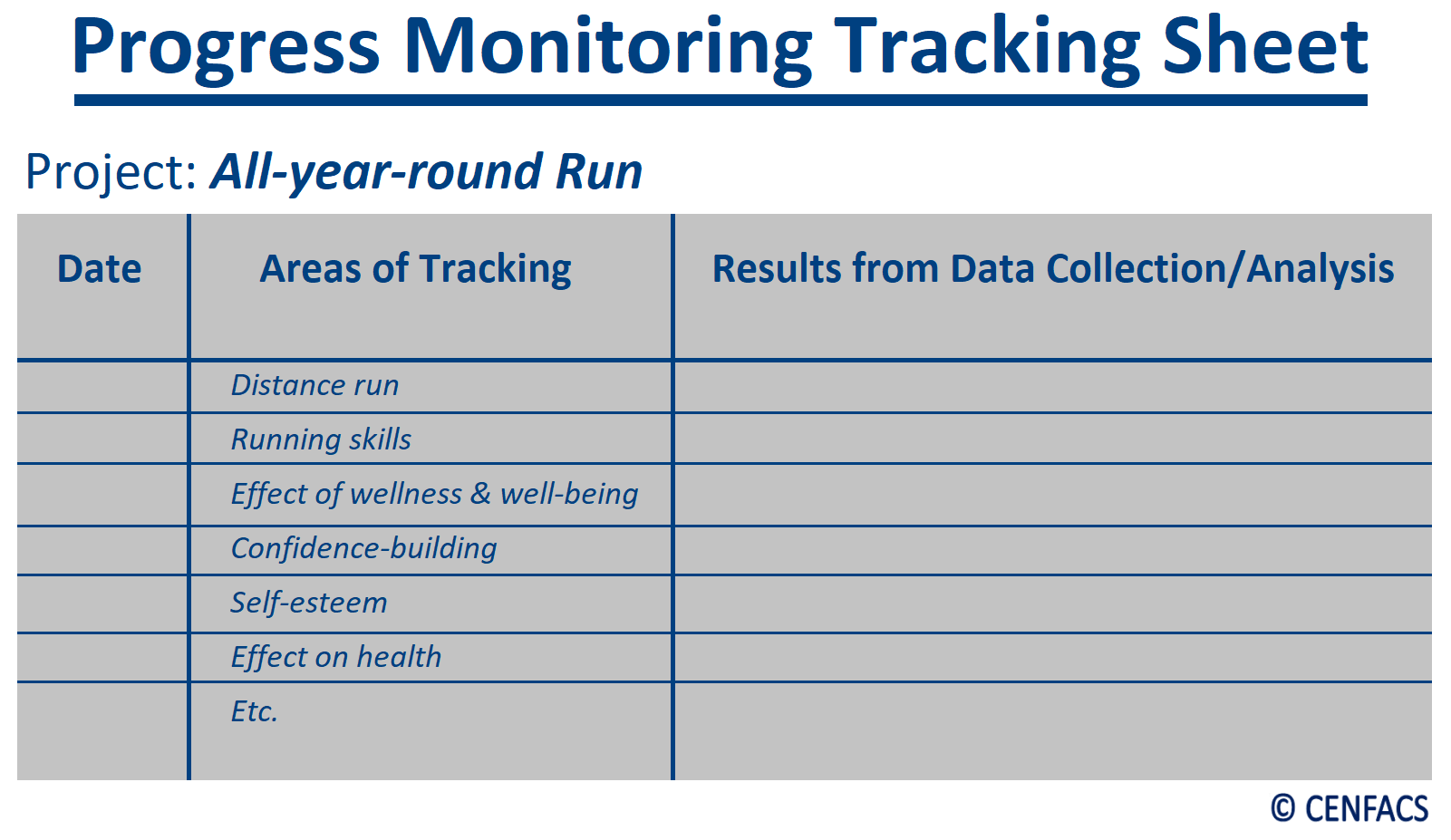
You need as well to keep all the records about the project and ask for the comments from anyone who gets involved with your Run Project.
You can do it on an outcome-monitoring sheet for effectiveness in the way you are collecting and keeping record. An outcome-monitoring sheet can include any skills, any improvement in motivation and aspirations, any boost in confidence and self-esteem, etc. that you or your participants have gained or increased as a result of your project.
You need to record changes and effects as they happen. You can keep notes of any success and failure about your project, the numbers of people involved in it and the numbers of those who benefited.
Please remember to make sure that the records you are keeping and the notes you are taking will help you to decide who is your Runner of Poverty Reduction in Africa 2026.
For those who would like to dive deeper into Monitoring and Observability of their Play or Run or Vote project, they should not hesitate to contact CENFACS.
Because sustainability must be part of daily project activities, monitoring and observability processes will not be enough unless you incorporate TVIs in them.
• • Integrating Triple Value Initiatives into Your All-Year-Round Projects Monitoring and Observability (8.2)
Let us first explain this integration separately and then jointly.
• • • Integrating Triple Value Initiatives into Your All-Year-Round Projects Monitoring
Integrating TVIs (economic, social and environmental – often called People, Planet, Prosperity) into all-year-round project monitoring requires shifting from one-time impact assessments to continuous tracking. This involves setting up a framework that combines data-driven metrics with qualitative, human stories, embedded within regular project performance reviews.
Guidance on this matter suggests following the steps:
a) Establish a Triple Value Framework from the Outset
b) Embed Monitoring into Project Cycles (Year-round)
c) Collect Data and Engage with Stakeholders
d) Include Accountability and Reporting.
• • • Integrating Triple Value Initiatives into Your All-Year-Round Projects Observability
Integrating TVIs – environmental sustainability (Planet), social responsibility (People), and economic viability (Prosperity) – into all-year-round project observability requires moving beyond traditional metrics to a holistic approach. This ensures sustainability initiatives are continuously monitored, measurable, and integrated into core project reporting rather than handled as isolated annual tasks.
To proceed with this integration, one can follow these steps:
a) Establish a Triple Value Metric Framework
b) Implement Continuous Data Collection (Metrics, Events, Logs and Traces)
c) Build Real-time Dashboards and Alerting
d) Foster a Culture of Continuous Improvement
e) Use Appropriate Tools and Techniques.
• • • Integrating Triple Value Initiatives into Your All-Year-Round Projects Monitoring and Observability
It involves embedding sustainability metrics into existing project management tools, using real-time data, and aligning with organizational ESG (Environmental, Social and Governance) goals throughout AYRP lifecycle.
The guidance on integrating TVIs into AYRP monitoring and observability suggests following these steps:
a) Establish Triple Value Key Performance Indicators at Project Inception
b) Implement Continuous Monitoring
c) Transition from Monitoring to Observability
d) Integrate into Existing Workflows and Governance
e) Use Accountability and Reporting.
In the end, it is all about projects lifecycle management which integrates the P5 standards (that is, Product, Process, Progress, People, Planet) into AYRP’s Project Management Information System.
• • Working with AYRP Users on Triple Value Initiatives Integration
CENFACS can work with AYRP users to integrate these initiatives into their project tools and lifecycle thinking processes. This will stop these TVIs being ‘add-on’ and enable them become part of the implementation of their AYRP success.
For those who are not familiar with project monitoring and observability as well as the integration of Triple Value Model into their AYR project, they should not hesitate to contact CENFACS if they need support.
They can contact CENFACS by
phoning, texting, e-mailing and completing the contact form on this website.
We can together discuss in detail your/their proposals about either your/their Run or Play or Vote projects, as well as the integration of TVIs into these projects.
For any queries and/or enquiries about All-Year-Round Projects Lifecycle, Monitoring and Observability as well as about the Integration of Triple Value Initiatives into Projects, please contact CENFACS.

• Shop at CENFACS’ Zero Waste e-Store during This Spring Giving Season
CENFACS e-Store is opened for your Spring goods donations and goods purchases.
At this time, many household expenditures have been squeezed by the cost of living pressures mostly driven by the hikes in prices of basic life-sustaining needs (e.g., food, transport, housing, council tax, energy, etc.).
The impacted of the cost-of-living pressures need help and support as prices and bills are still higher while real disposable incomes are less for many of those living in poverty.
Every season or every month is an opportunity to do something against poverty and hardships. This April too is a good and great month of the year to do it.
You can donate or recycle your unwanted and unneeded goods to CENFACS’ Charity e-Store, the zero waste shop built to help relieve poverty and hardships.
You can as well buy second hand goods and bargain priced new items and much more.
CENFACS’ Charity e-Store needs your support for SHOPPING and GOODS DONATIONS.
You can do something different this Season of Goods Donations by SHOPPING or DONATING GOODS at CENFACS Charity e-Store.
You can DONATE or SHOP or do both:
√ DONATE unwanted Easter GOODS, GIFTS and PRODUCTS to CENFACS Zero Waste e-Store this April and Spring.
√ SHOP at CENFACS Zero Waste e-Store to support noble and beautiful causes of poverty relief this April and Spring.
Your SHOPPING and or GOODS DONATIONS will help to the Upkeep of the Nature and to reduce poverty and hardships brought by the cost of living pressures.
This is what the Season of Giving is all about.
Please do not hesitate to donate goods or purchase what is available at CENFACS Zero Waste e-Store.
Many lives have been threatened and destroyed by the cost of living pressures.
We need help to help them come out poverty and hardships caused by these pressures.
To donate or purchase goods, please go to: http://cenfacs.org.uk/shop/

• Making Zero Hunger Africa Campaign with a Focus on Sustainable Food Alternatives to Reduce Food Poverty in Africa
Last year, the focus of Making Zero Hunger Africa Campaign (MZHAC) was Food Price Restoration to Reduce Food Poverty in Africa. We worked on strategies for food price restoration. Amongst these strategies, we can mention three of them: strengthening food prices, addressing economic factors and dealing with climate change.
This year, our MZHAC is still on food, but on Sustainable Food Alternatives to Reduce Food Poverty in Africa. The theme of Sustainable Food Alternatives echoes CENFACS‘ dedication of Year 2026 as of Alternatives.
However, before looking at this year’s focus, let us remind our readers the aim of Making Zero Hunger Africa Campaign.
• • Aim of Making Zero Hunger Africa Campaign
The aim of MZHAC is to raise awareness on sustainable food consumption and production in order to end hunger and malnutrition amongst those who are food deprived, particularly in Africa where the number of hungry people and families is still on the rise. It is as well a campaigning response to the challenge of rise in hunger that Africa will face in the foreseeable future. In this respect, the cost-of-living crisis has only made the matter worse as it has put a heavy toll on the consumption poor.
The contents of MZHAC are: End Hunger and Malnutrition Goal, Support Small-Scale Food Producers in Africa, Actions to Support the Food Industry in Africa, Meeting Vulnerable People’s Nutritional Needs, Actions for Sustainable Food Production Systems, etc.
This year, we are focusing on Sustainable Food Alternatives to Reduce Food Poverty in Africa.
• • Sustainable Food Alternatives to Reduce Food Poverty in Africa
As part of MZHAC and the Year of Alternatives within CENFACS, we are working on Sustainable Food Alternatives. In other words, we are focusing on Sustainable Food Sources.
• • • What are Sustainable Food Sources?
Sustainable Food Sources are food sources that…
√ ensure a healthier, more equitable, and environmentally responsible future
√ protect ecosystems
√ reduce greenhouse gas emissions
√ prioritize soil and water health
√ combat climate change
√ and preserve biodiversity.
Sustainable Food Sources help safeguard the environment, promote food security, enhance public health, foster economic resilience, and advance social equity.
We are particularly considering plant-based alternatives (e.g., agricultural crops such as soy, palm oil and almonds, lentils, chickpeas, peas, etc.) to animal-based foods. We are looking at a new generation of plant-based alternatives as explained by ‘wwf.org.uk’ (8).
For instance, Bry-Chevalier (9) studies sustainable food system transitions by comparing meat alternatives for a sustainable food. From Bry-Chevalier’s study, there are four alternatives protein sources (plant-based meats, cultivated meat, insects, and single-cell proteins) to contribute to a sustainable food system. The study assessed each option across four dimensions: environmental impact, production scalability, consumer acceptability, and animal welfare. The findings from this research suggests prioritizing plant-based meats in policy and strategies.
We are as well dealing with these alternatives in the context of food poverty reduction.
• • • What is food poverty?
The website ‘sustainweb.org’ (10) explains that there is no agreed definition of food poverty. The website ‘sustainweb.org’ quotes the following definitions of food poverty from different organisations:
” The inability to afford or to have access to food to make up a healthy diet (The Department of Health)
Food poverty is worse diet, worse access, worse health, higher percentage of income on food and less choice from a restricted range of foods (Professor Tim Lang)
The inability to consume an adequate quality or sufficient quantity of food in socially acceptable ways or the uncertainty that one will be able to do so (Professor Elizabeth Dowler)”.
• • Actions on Sustainable Food Alternatives to Reduce Food Poverty in Africa in the Context of MZHAC
In MZHAC, we are trying to organise a series of actions to gain support for sustainable food alternatives/sources to help reduce food poverty in Africa. We are as well taking action so that food poverty can be sensibly reduced in Africa.
Make Zero Hunger Africa could further be undertaken by investing in projects that set food prices to make food accessible, available, affordable and utilisable for the food insecure as well as helping to reduce food poverty.
For those who would like to support MZHAC and Sustainable Food Alternatives to Reduce Food Poverty in Africa, they can contact CENFACS.

Message in English-French (Message en Anglais-Français)
• CENFACS’ be.Africa Forum E-discusses False Positives of Poverty Reduction in Africa
To kick off this e-discussion, it is better to explain false positives of poverty reduction.
The literature review on false positives suggests that false positives of poverty reduction refer to situations where data or policies incorrectly indicate that people have moved out of poverty, or when non-poor individuals are wrongly included in poverty reduction programmes (inclusion errors). These misses in targeting and reporting create an illusion of progress often hiding the reality of persistent deprivations.
These misses can also be found in African context. False positives of poverty reduction in Africa would be scenarios where conventional economic data suggests a decline in poverty but in reality, living conditions have not improved or improvements are fragile and temporary.
There are uncountable situations of false positives that can be found in Africa as economics studies on Africa reveal. Amongst these false positives identified in Africa, it worth mentioning the following ones:
σ Economic growth that is not pro-poor (e.g., a strong GDP that does not translate into poverty reduction)
σ Neglect of high inequality (e.g., when the poor see little improvement in their living conditions)
σ Vulnerability to shocks (like droughts, floods, health crises and economic downturns for households not having sustainable livelihoods)
σ Failure to account for debt (e.g., households with temporary income boost but acquired at the cost of high-interest debt).
σ Manipulation of poverty lines (by adjusting the international poverty line to lower levels can create a chemical reduction in poverty numbers)
σ Unreliable data and measurement bias (reliance on misleading national consumer price indexes for poverty estimates)
σ Unsubstantial job growth (misleading employment figures covering jobs that do not meet needs)
Etc.
All these situations can create the impression that poverty has been reduced or disappeared while in reality there has not been any change. In depth studies show that over-reliance on GDP growth rates as a direct proxy for poverty reduction is a well-known false positive in any African development discussions. In fact, when there is eruption of crises (like now with the global energy crisis), the extent and magnitude of these false positives appear. Theory postulates that false positives happen when metrics of poverty show a decline, but the experience of poverty persists.
These false positives are what we are trying to discuss this week. We are as well looking at strategies for poverty reduction to reflect or take into account this misleading information on poverty in Africa. This provides materials and space for reflection, expression, discussion and action.
Those who may be interested in reflection, expression, discussion and action on False Positives of Poverty Reduction in Africa can join our poverty reduction pundits and/or contribute by contacting CENFACS’ be.Africa Forum, which is a forum or space for discussion on poverty reduction and sustainable development issues in Africa and which acts on behalf of its members by making proposals or ideas for actions for a better Africa.
To contact CENFACS about this discussion, please use our usual contact address on this website.
• Le Forum ‘Une Afrique Meilleure’ de CENFACS discute en ligne de Faux Positifs de la Réduction de la Pauvreté en Afrique
Pour lancer cette discussion en ligne, il est préférable d’expliquer les faux positifs en matière de réduction de la pauvreté.
L’analyse documentaire sur les faux positifs suggère que ces faux positifs en matière de réduction de la pauvreté désignent des situations où les données ou les politiques indiquent à tort que des personnes sont sorties de la pauvreté, ou encore lorsque des personnes non pauvres sont incluses à tort dans les programmes de réduction de la pauvreté (erreurs d’inclusion). Ces erreurs de ciblage et de communication créent une illusion de progrès, masquant souvent la réalité de privations persistantes.
On retrouve également ces erreurs dans le contexte africain. En Afrique, les faux positifs en matière de réduction de la pauvreté se manifestent par des scénarios où les données économiques conventionnelles suggèrent un recul de la pauvreté, alors qu’en réalité, les conditions de vie ne se sont pas améliorées ou que les améliorations sont fragiles et temporaires.
Les études économiques sur l’Afrique révèlent d’innombrables cas de faux positifs. Parmi ceux-ci, on peut citer :
σ Une croissance économique non favorable aux plus démunis (par exemple, un PIB élevé qui ne se traduit pas par une réduction de la pauvreté)
σ La négligence des fortes inégalités (par exemple, lorsque les personnes pauvres constatent peu d’amélioration de leurs conditions de vie)
σ Vulnérabilité aux chocs (tels que les sécheresses, les inondations, les crises sanitaires et les ralentissements économiques pour les ménages ne disposant pas de moyens de subsistance durables)
σ Omission de prendre en compte l’endettement (par exemple, les ménages bénéficiant d’une augmentation temporaire de leurs revenus, mais acquise au prix d’un endettement à taux d’intérêt élevés)
σ Manipulation des seuils de pauvreté (l’abaissement du seuil international de pauvreté peut créer une réduction artificielle du nombre de personnes vivant dans la pauvreté)
σ Données peu fiables et biais de mesure (recours à des indices nationaux des prix à la consommation trompeurs pour estimer la pauvreté)
σ Croissance de l’emploi insuffisante (chiffres de l’emploi trompeurs incluant des emplois ne répondant pas aux besoins)
Etc.
Toutes ces situations peuvent donner l’impression que la pauvreté a diminué, voire disparu, alors qu’en réalité, rien n’a changé. Des études approfondies montrent que le recours excessif aux taux de croissance du PIB comme indicateur direct de la réduction de la pauvreté est un écueil bien connu dans les discussions sur le développement en Afrique. En effet, lors de crises (comme la crise énergétique mondiale actuelle), l’ampleur et la gravité de ces écueils apparaissent au grand jour. La théorie postule que des phénomènes positifs se produisent lorsque les indicateurs de pauvreté montrent un déclin, mais que l’expérience de la pauvreté persiste.
C’est précisément ces faux positifs que nous abordons cette semaine. Nous examinons également des stratégies de réduction de la pauvreté qui tiennent compte de ces informations trompeuses sur la pauvreté en Afrique. Ce travail offre un espace et des ressources pour la réflexion, l’expression, la discussion et l’action.
Les personnes intéressées par la réflexion, l’expression, la discussion et l’action concernant les faux positifs en matière de réduction de la pauvreté en Afrique peuvent rejoindre notre groupe d’experts sur la réduction de la pauvreté et/ou contribuer en contactant le ‘me.Afrique’ du CENFACS (ou le Forum ‘Une Afrique Meilleure’ de CENFACS), qui est un forum ou espace de discussion sur les questions de réduction de la pauvreté et de développement durable en Afrique et qui agit au nom de ses membres en faisant des propositions ou des idées d’actions pour une Afrique meilleure.
Pour contacter le CENFACS au sujet de cette discussion, veuillez utiliser nos coordonnées habituelles sur ce site Web.

Main Development
• ICDP (Individual Capacity Development Programme) Resource, Holiday with Relief – Featured in the Spring 2026 Issue: Holiday with Alternative Activities
How to make the most of your vacation to strengthen bonds, learn new skills, and create unforgettable memories
Looking forward to building an activity holiday experience?
You are in the right place as the following contents will show you:
∝ What Is Holiday with Relief (HwR)?
∝ What Is the Focus for This Year’s HwR?
∝ Reduction of Poverty as a Lack of Holiday with Alternative Activities
∝ For Whom This Resource Is Designed
∝ Types and Examples of Alternative Activities for Your Holiday
∝ Plan and Budget for Holiday with Alternative Activities
∝ Providers of Holiday with Alternative Activities
∝ Key Metrics for Evaluating Holiday Programme of Alternative Activities
∝ Needing Help and Support to Plan Your Holiday with Alternative Activities
Let us summarise these contents.
• • Content Summaries, Tips and Hints about Spring 2026 Holiday with Relief
• • • What Is Holiday with Relief?
Holiday with Relief (HwR) is an awareness, preparedness and solutions focused Resource to Manage Information over holidays (e.g. Easter and Summer holidays).
As an Information Manager, HwR is a set of life-changing tips and tricks to help and enable vulnerably unaware people to plan and have their holiday or break with confidence in taking into account all aspects of life and by making sure that key areas of those life aspects are not adversely affected.
• • • What Is the Focus for This Year’s HwR?
The focus for this year’s HwR is on Holidays Offering Alternative Activities. This focus echoes the year’s dedication within CENFACS of 2026 as a Year of Alternatives, reflecting CENFACS’ commitment to alternatives for 2026. It is particularly timely, coinciding with CENFACS’ Spring 2026 campaign, a period of rebuilding and renewing lives, infrastructures, and institutions. Holidays with Alternative Activities can contribute to this rebuilding and renewal.
To better understand this topic, let us define what “Holidays with Alternative Activities” means. These are family holidays offering unique experiences and activities beyond traditional beaches or amusement parks. Such holidays can include adventure trips, educational experiences, and local excursions tailored to different interests and age groups. They offer families the opportunity to strengthen bonds, acquire new skills, and create unforgettable memories in a more enriching and educational way.
For instance, in the UK “the Holiday Activities and Food Programme provides healthy meals, enriching activities, and free childcare places to children from low-income families, benefiting their health, well-being and learning” (op. cit.).
• • • Reduction of Poverty as a Lack of Holiday with Alternative Activities
This Spring Season, we shall find ways of working with the members of our community who are likely to face poverty as a lack of holiday with alternative activities. What is it?
• • • • Understanding poverty as a lack of holiday with alternative activities
Poverty as lack of holiday with alternative activities is a form of social and economic deprivation where low-income families cannot afford school break trips, outings, or enrichment activities. This creates a ‘holiday experience gap’, leading to child isolation, food insecurity (holiday hunger), and limited access to safe, stimulating play.
Key aspects and impacts of this type of poverty are holiday hunger, social isolation, reduced development, parental strain, etc.
Like any forms of poverty, poverty as a lack of holiday with alternative activities can be reduced or ended.
• • • • Reducing poverty as a lack of holiday with alternative activities
Reducing poverty as ‘the holiday experience gap’ – where children in low-income households miss out on fun, learning, and nutrition during school breaks – requires a combination of national policy initiatives, community-based programmes and financial support for families.
Key strategies for reducing this type of poverty can include the following:
# expanding funded activity programmes
# offering free transport and nutritious food
# facilitating access to affordable leisure
etc.
There are as well specific ways of reducing poverty as the lack of holiday with alternative activities, which are:
# Government-funded Holiday Schemes (like Holiday Activities and Food Programme)
# Providing alternative activities: It involves leverage local amenities, active play opportunities, take and make activity kits
# Financial support and reduced costs: They encompass targeted grants and subsidies, subsidized transport, concessionary pricing, and subsidized school trips
# Addressing underlying drivers by strengthening income support and providing flexible childcare support.
These strategies and specific ways of dealing with poverty as the lack of holiday with alternative activities will help children from low-income households to have the opportunity of holiday with alternative activities.
We hope that working together with these households will help them avoid during their holiday this type of poverty.
Through this wealth of information contained in the ‘Holiday with Relief’, we will try together to tackle this type of holiday poverty.

• • • For Whom This Resource Is Designed
This resource is primarily designed for the CENFACS Community members and those related to them. The resource is designed to help families facing financial hardship, isolation, or find accessible, free or subsidized activities and breaks.
Key beneficiary groups for this holiday guide with alternative activities include:
√ Single parent families
√ Families with disabled children or adults
√ Families in crisis or experiencing it
√ Children with special needs needing specialized, low-stress or educational activities
√ Carers or individuals in need of respite holidays and breaks with alternative activities
Etc.
The resource also caters for the following:
√ Those who are looking for some basic ideas about how to build a holiday with alternative activities
√ Those who are searching for holiday schemes and programmes with alternative activity contents
√ Those who would like to use their holiday to strengthen bonds, acquire new skills, and create unforgettable memories in a more enriching and educational way
√ Those who need a more active and immersive experience
√ Those who want holiday that involves activities beyond traditional beaches or amusement parks
√ Those who are planning adventure trips, educational experiences, and local excursions tailored to different interests and age groups
√ Those who are interested in creating holiday plan and budget that meet their alternative activity needs or requirements
√ Busy parents eager to use holiday to get their energy and joy back through alternative activities
√ Those who are looking forward to raising money for their holiday with alternative activities
√ Those who wish to fund their break with alternative activities as disabled persons and their carers
√ Those who are keen in measuring the effects of their holiday experiences by using metrics of holiday with alternative activities
√ Anyone interested in improving the perceived qualities of their holiday, breaks and vacation destinations with alternative activities.
All these above-mentioned potential beneficiaries can find in HwR and its theme of Alternative Activity Holiday a really useful resource or tool about their plans for a holiday with alternative activities.

• • • Types and Examples of Alternative Activities for Your Holiday
Alternative holiday activities for low-income families focus on free or low-cost local experiences, including free museum visits, library workshops, nature-scavenger hunts, camping home den building, and utilizing community hubs.
• • • • Types of Alternative Activities for Your Holiday
The types of these activities are highlighted below.
# Cultural and educational visits: They include free museums, art galleries, and local library workshops
# Nature and outdoor exploration: It involves hiking, park visits, bug hunting, geocaching, bird watching and building forest dens
# Creative indoor activities: They encompass DIY crafting, car-making, baking, and building indoor forts
# Active recreation: It includes Swimming, bike rides, etc.
# Community events: They comprise with free street performances, volunteer opportunities, and community festivals
Etc.
Whatever the choice that families can make, what they are looking for in the above-mentioned activities is to make the most of their vacation, strengthen bonds, learn new skills, and create unforgettable memories.
• • • • Examples of Alternative Activities for Your Holiday
Low-income families or households can have alternative activities to traditional ones as these few examples and cost-effective ideas show. These examples are staycation, cheap days out, charity support, local resources and affordable fun. Let us consider each of them and what they can do as alternative activities.
# Staycation: A low-income family can create a ‘holiday at home’ vibe with garden games, tent camping in the backyard, or a ‘no-spend’ challenge day.
# Cheap days out: A low-income family can enquire about where to find vouchers (e.g., Tesco Club Card ones) or offers (like National Rail 2-for-1) for discounted entry to attractions.
# Charity support: A low-income family can seek support to charities supporting alternative activities for children, particularly children with disabilities or illnesses.
# Local resources: A low-income family can visit library websites or local authority listings for free community activities.
# Affordable fun: A low-income family can pack a homemade picnic to avoid restaurant costs at parks or beaches.
In short, the above-mentioned examples and ideas show that it is possible for low-income families to break the monotony of traditional vacations to develop new skills, get fit, and form deeper connections with their chosen environment. They can spend holiday even if they do not have money to travel to holiday destinations they cannot afford.
Advice, tips and hints can be given on the above types and examples of alternative activities for their holiday.

• • • Plan and Budget for Holiday with Alternative Activities
The starting point in the planning process of any holiday is to have a plan for your holiday and a budget for it. This process is even crucial for families or households with limited income.
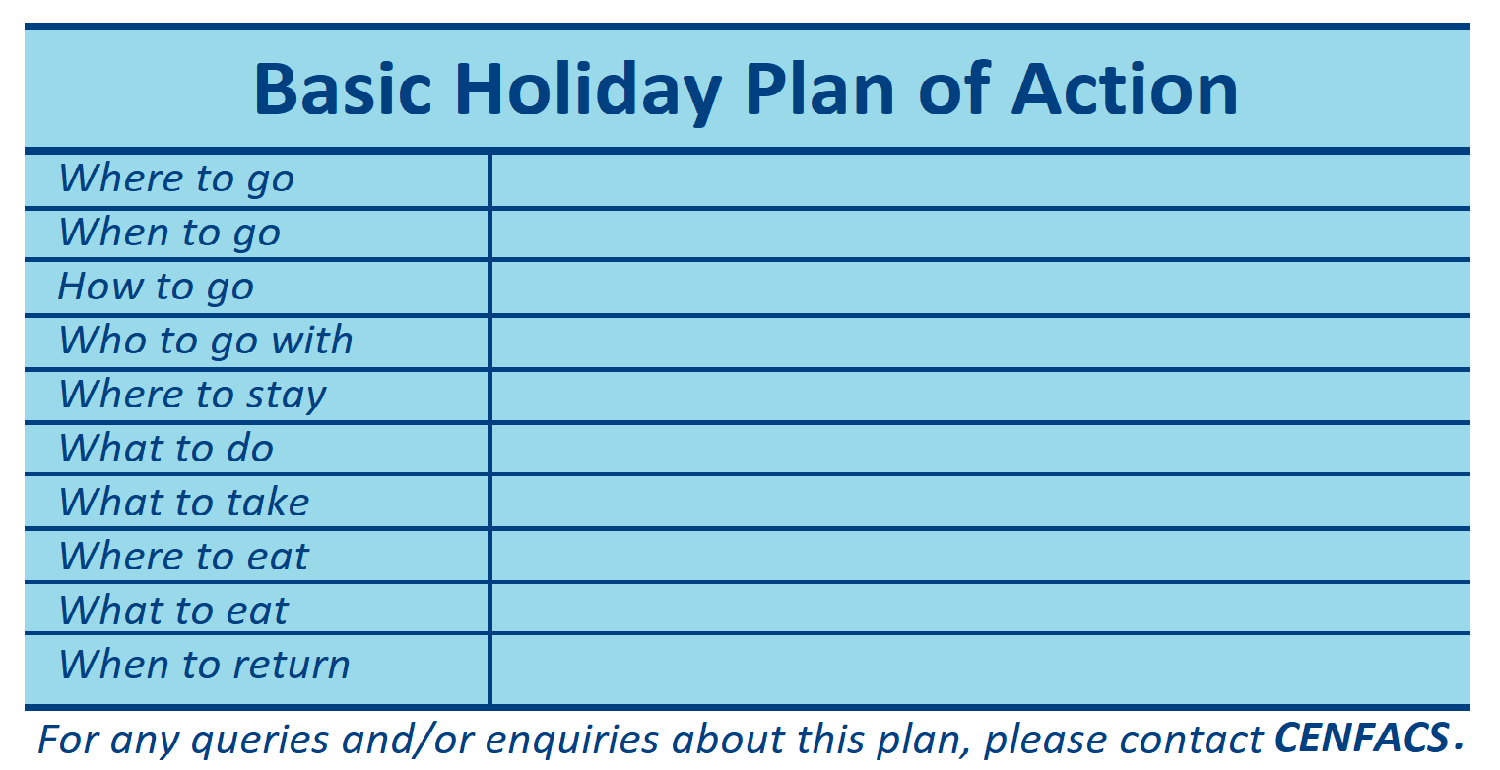
Because of financial constraints, a low-income holiday budget (as indicated on the above Table 1) will focus on minimizing travel and accommodation costs by prioritizing local, free, or heavily discounted activities. Therefore, a budget for a holiday with alternative activities will prioritize low-cost, experience-driven options over expensive tourist traps, often focusing on camping, self-catering, hiking and free local attractions to keep daily costs minimal.
Regarding your activity holiday plan, you need to include the following:
the environment/place with alternative activities to go if not staying at home, when to go, how to go, who to go with, where to stay, what to do, what to eat, when to return, what not to take with you to maximise the substitution effect of your holiday, etc.
In your plan, you would consider an activity holiday place which will provide you with alternative activities to choose.
Concerning your alternative holiday budget, the theory recommends taking inventory or stock of last year’s holiday accounts. In practice, you will use your last year’s holiday expenses and divide them by 12 to obtain the monthly amount of saving or spending you need to budget for the next holiday.
To create your alternative activity holiday budget, you can use the following steps as provided by ‘hrss.cpa’ (11):
Income evaluation, setting spending limit, review of past expenses, allocation of funds, expense monitoring, future planning, and adaptability to challenges.
However, you should bear in mind that there are economic factors (like changes in interest rate, exchange rate, inflation, the cost of living, the cost of holidaying, trade tensions, the current energy crisis, etc.) you should include when working your numbers. You budget will be adjusted for these factors. You could as well use an online holiday budget calculator to do it for you. It could be a good idea not to forget to use the retreat cost calculator.

• • • Providers of Holiday with Alternative Activities
There is a number of organisations working on alternative activity holiday matters. They provide supported, therapeutic, or educational experiences tailored for specific needs (such as children in need or disability). They can be grouped according to the following matters: supported and disability-focused holidays, children and families in need, adventure and activity-focused holidays, eco-tourism, volunteering and special interest. Below these groupings/categories, we have named some of these organisations.
# Supported and disability-focused holidays
Under this category, the following organisations or providers can be named:
~ Revitalise
~ The 3H Foundation
~ Lets-Go Supported Holidays
~ The Newman Holiday Trust
~ Nutley Edge
~ Seagull Trust Cruises
~ Enable Holidays
# Children and families in need
The following organisations can be included
~ The Newman Holiday Trust
~ The Family Holiday Association
~ Holiday Activities and Food Programme
# Adventure and activity-focused holidays
Organisations dealing with holiday with alternative activities representing this category are
~ Calvert Trust
~ PGL & YHA
~ Speyside Trust Badaguish Centre
# Eco-tourism, volunteering and special interest
The following organisations can be found under this category:
~ Responsible Travel
~ WWOOF (World Wide Opportunities on Organic Farms)
~ Dementia Adventure
~ YHA/PGL
etc.
Some of these organisations provide grants or financial support.
There are other organisations that are specialised in grants for disabled children and adults, adventurous holidays for adventurous families, etc.
Most of the organisations listed in this Spring 2026 Issue of Holiday with Relief are generally from the charity and voluntary sectors.
For those who are interested in them, it will be a good idea to check their requirement, size, length, decision timescale, deadline and qualifying criteria.
For those who may be having some problems in finding these details, they can contact CENFACS for guidance and support.
• • • Key Metrics for Evaluating Holiday Programme of Alternative Activities
Key metrics for evaluating holiday programmes for low-income families focus on accessibility, engagement, and well-being. Core metrics can include these ones below:
~ Attendance rates
~ Percentage of sessions offering free, nutritious meals
~ The variety of enriching activities provided.
There are also key impact indicators, which involve the following:
~ Increased physical activity (e.g., 60+ minutes per day)
~ Reduced social isolation
~ Improvements in children’s mental well-being and self-esteem.
To sum up, key metrics and impact measures would include accessibility and attendance (e.g., percentage of participants), activity diversity (e.g., participation rates in various activities), nutritional quality (e.g., percentage of meals provided meeting nutritional standards), well-being and social impact (e.g., increased self-reported confidence among participants).
One can as well consider key data trends (for instance, the percentage of participation in community-based activities or the percentage of families trying a new activity).
Any low-income family or household wanting to join an alternative activity can check some of these metrics to find out if the activity will provide them with the outcome they are looking for. They can as well read the reviews about these activities from those who undertook them before.

• • • Needing Help and Support to Plan Your Holiday with Alternative Activities
CENFACS can work with the members of its community to plan their alternative activity holiday. The plan will include the tips on focus, location, time, connection, boundaries, priority, engagement and budget.
Through this alternative activity holiday plan, people will be more aware of the key elements of their holiday with alternative activities.
CENFACS can as well work together with them/you to measure the substitution effects of their/your holiday by tracking changes in stress levels, mood, cognitive function and physical health before, during, and after the holiday, using tools like questionnaires, diaries and physiological measurements.
We can work together on the above-mentioned matters. Where our capacity is limited, we can signpost beneficiaries to organisations, particularly charities working in the field of alternative activity holiday.
Additionally, there are charities and voluntary organisations that can help around holiday budget matters such as
∝ paying for holiday with alternative activities
∝ finding the right activities for holiday for families with a member with alternative activity needs
∝ finding a break and or respite with suitable alternative activities.
CENFACS can as well work with the members of its community to streamline holiday budget processes and achieve better results in terms of spending by guiding them on the following matters:
∝ what to do with unused holiday funds
∝ how to use unrestricted/unassigned/undesignated/designated fund balance to help balance your alternative activity holiday budget
∝ how to coordinate your needs of raising funds for your alternative activity holiday and the necessities of accounting for the holiday money raised to be received
∝ what to do with unspent alternative activity holiday grants
etc.
We hope that the above content summaries will provide an insightful idea about this year’s Issue of Holiday with Relief.
For those users who would like to dive into Holiday with Alternative Activities, we can provide them with online and print resources (e.g., a detailed list of organisations providing holidaying support for those in need) relating to Holiday with Alternative Activities.
To support the theme of Holiday with Alternative Activities and get the full Spring 2026 Issue of ICDP Resource (Holiday with Relief), please contact CENFACS.
_________
• References
(1) https://www.gov.uk/government/publications/holiday-activities-and-food-programme/holiday-activities-and-food-programme-2025 (accessed in April 2026)
(2) https://www.skillsbuilder.uk/universal-framework/planning (accessed in April 2026)
(3) https://www.cambridgestudents.cam.ac.uk/skills-development/build-your-skills/categories/planning-organisation (accessed in April 2026)
(4) https://www.saviom.com/resources/human-resources/articles/skill-development/ (accessed in April 2026)
(5) https://www.commsatwork.org/wp-content/uploads/2024/02/2022-ABCD-Booklet-Handout-PROOF02.pdf (accessed in April 2026)
(6) https://www.wendymccaig.com/p/what-is-asset-based-community-development (accessed in April 2026)
(7) https://www.ibm.com/blog/observability-vs-monitoring/ (accessed in April 2024)
(8) https://www.wwf.org.uk/sites/default/files/2022-09/WWI-PLANT-BASED-ALTERNATIVES-SummaryReport.pdf (accessed in April 2026)
(9) Bry-Chevalier, T. (2026, Comparing meat alternatives for a sustainable food system.npf sci Food. https://doi.org/10.1038/s41538-025-00694-3 (accessed in April 2026)
(10) https://www.sustainweb.org/foodpoverty/whatisfoodpoverty/ (accessed in April 2026)
(11) https://hrss.cpa/budgeting-for-the-holidays-guide-to-keeping-your-finances/ (accessed in April 2024)
_________
• Help CENFACS Keep the Poverty Relief Work Going This Year
We do our work on a very small budget and on a voluntary basis. Making a donation will show us you value our work and support CENFACS’ work, which is currently offered as a free service.
One could also consider a recurring donation to CENFACS in the future.
Additionally, we would like to inform you that planned gifting is always an option for giving at CENFACS. Likewise, CENFACS accepts matching gifts from companies running a gift-matching programme.
Donate to support CENFACS!
FOR ONLY £1, YOU CAN SUPPORT CENFACS AND CENFACS’ NOBLE AND BEAUTIFUL CAUSES OF POVERTY REDUCTION.
JUST GO TO: Support Causes – (cenfacs.org.uk)
Thank you for visiting CENFACS website and reading this post.
Thank you as well to those who made or make comments about our weekly posts.
We look forward to receiving your regular visits and continuing support until the end of 2026 and beyond.
With many thanks.