Welcome to CENFACS’ Online Diary!
28 January 2026
Post No. 441

The Week’s Contents
• 2026 All-Year-Round Projects (Triple Value Initiatives): Play, Run and Vote for Poverty Relief and Sustainable Development
• 2026 Donor Cultivation and Donor Stewardship Development Programmes
• The Project for the Double Transfer of Climate Technology and Finance
… And much more!

Key Messages
• 2026 All-Year-Round Projects (Triple Value Initiatives): Play, Run and Vote for Poverty Relief and Sustainable Development
CENFACS’ All-Year-Round Projects, the Triple Value Initiatives, are now back for this year. You can play, run and vote to reduce poverty this year.
The 2026 Edition of All-Year-Round Projects starts this 28 January 2026.
You can Run or Organise a Run Activity to Reduce Poverty in 2026.
You can Play the CENFACS League for Poverty Relief.
You can Vote your 2026 African Poverty Relief and Development Manager.
Before going any further with these projects, let us briefly explain them.
• • What Are All-Year-Round Projects (AYRPs)?
AYRPs are initiatives or activities to be continuously run throughout the entire year rather than being restricted to a single season, short-term period or specific or temporary or seasonal event. They are designed for longevity, providing consistent engagement, support, and production over a 12-month period.
Key characteristics of AYRPs are continuous operation, routine and habit formation, sustainability and evolution, and annual plans.
CENFACS’ AYRPs (that is, Play, Run and Vote Projects) are also Triple Value Initiatives.
• • What Are Triple Value Initiatives (TVIs)?
TVIs refer to a strategic approach that simultaneously delivers, measures, and maximizes value across the three interconnected dimensions: social well-being, environmental sustainability, and economic prosperity.
CENFACS’ TVIs draw inspiration from the model that ensures that initiatives termed ‘Triple Bottom Line’ (TBL) or ‘People, Planet, Purpose/Prosperity’ create a sustainable, long-term exit from poverty, for beneficiaries while benefiting the wider community and environment.
Let us highlight these values.
• • • CENFACS’ TVIs focus on People (or Social equity and well-being)
It means the emphasis is on improving the livelihood of people, in particular the poor, including health, education, gender equality, and empowerment.
• • • CENFACS’ TVIs focus on Planet (Environmental sustainability)
It signifies that CENFACS’ TVIs recognize that humans, especially the poor ones, are dependent on natural resources. Therefore, AYRPs must protect the local environment to ensure long-term, sustainable livelihoods.
• • • CENFACS’ TVIs focus on Prosperity (Economic opportunity)
This refers to the building of sustainable income streams, financial inclusion rather than just providing temporary relief. This involves not only financial success but also the overall quality of life, health, happiness, and the ability to flourish within the ecological limits of a finite planet.
The above-mentioned three Ps are adapted to ensure a comprehensive impact from CENFACS’ TVIs.
Knowing what All-Year-Round Projects or Triple Value Initiatives are about, one can proceed with them.
• • Proceeding with AYRPs or TVIs
Before proceeding with one of the All-Year-Round Projects, it is recommendable to speak to CENFACS. We can discuss in detail together your plan or the way you want to approach, participate or engage with these initiatives.
For more information about these projects, please read under the Main Development section of this post.
• 2026 Donor Cultivation and Donor Stewardship Development Programmes
Our 2026 strategy for fostering the growth of prospective donors as well as for building and maintaining relationships with donors has been reactivated. As indicated in the title, this strategy or programme is made of two parts:
1) Donor solicitation
2) Donor stewardship.
Regarding donor solicitation, we are re-embarking on the process of acquiring new donors or building relationships with prospective donors to solicit a donation from them. In this process, we are exploring qualifiable prospects.
Concerning donor stewardship, we are focusing on existing donors and retaining them. To facilitate our donor stewardship journey, we are running “Keep and Engage Supporters Week” from week beginning 26 January 2026.
This week’s event support and the 2026 collected processes and strategy for relationship-building with and retaining donors will consist of two areas:
1) Donor solicitations
2) Donor products to match these solicitations.
• • Donor Solicitations
We are continuing our solicitation to some of you as donors and /or stewards of poverty relief as follows.
• • • Solicitation relating to CENFACS’ Donor Cultivation Programme
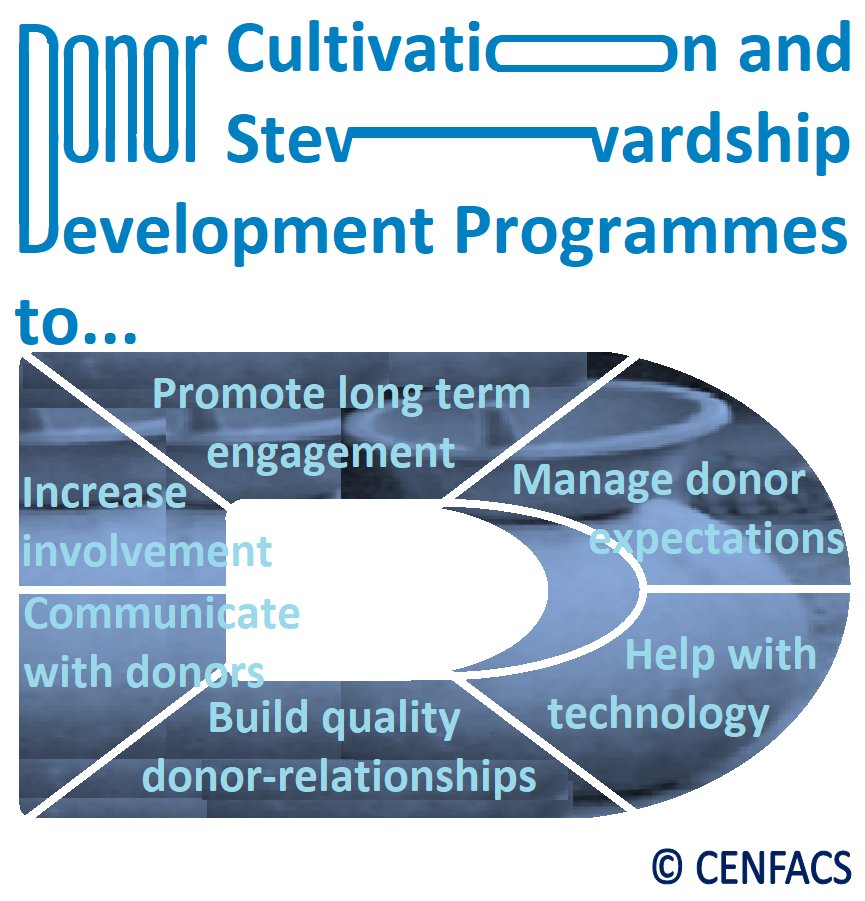
Under this programme, donors can build quality donor-relations with CENFACS.
In this Year of Alternatives at CENFACS, donor developers can help us in a number of ways, such as:
σ Influence the right people engaged to and informed about our work
σ Make our donations to grow over time
σ Help with technology like donor management software/tools to cultivate our prospects into long-term valuable donors
σ Increase the levels of involvement from users
σ Help us to manage donors expectations
σ Assist us in donor-development goals and tasks such as event support.
• • • Solicitation relating to CENFACS’ Donor Stewardship Development Programme
Under this programme, you can help us in the following:
σ Steward donors towards long-term commitment
σ Build and maintain lasting relationships and communications with those who gave to our users or us a gift or any of our noble and beautiful causes of poverty reduction
σ Enable access to and use of donor stewardship tools.
• • Donor Development Products on Offer in 2026
We recognise our funders or donors and their acts of giving through different status levels often linked to their continuous contributions or commitments to our work and cause. As a result, we are giving away the products below to those who would like to engage, develop their interest, to build bond and loyalty to CENFACS and CENFACS’ work.
We are offering to the donor development market a donor status to enable those who want to commit themselves on regular basis to giving or boosting their status as donor to have the opportunity to do so.
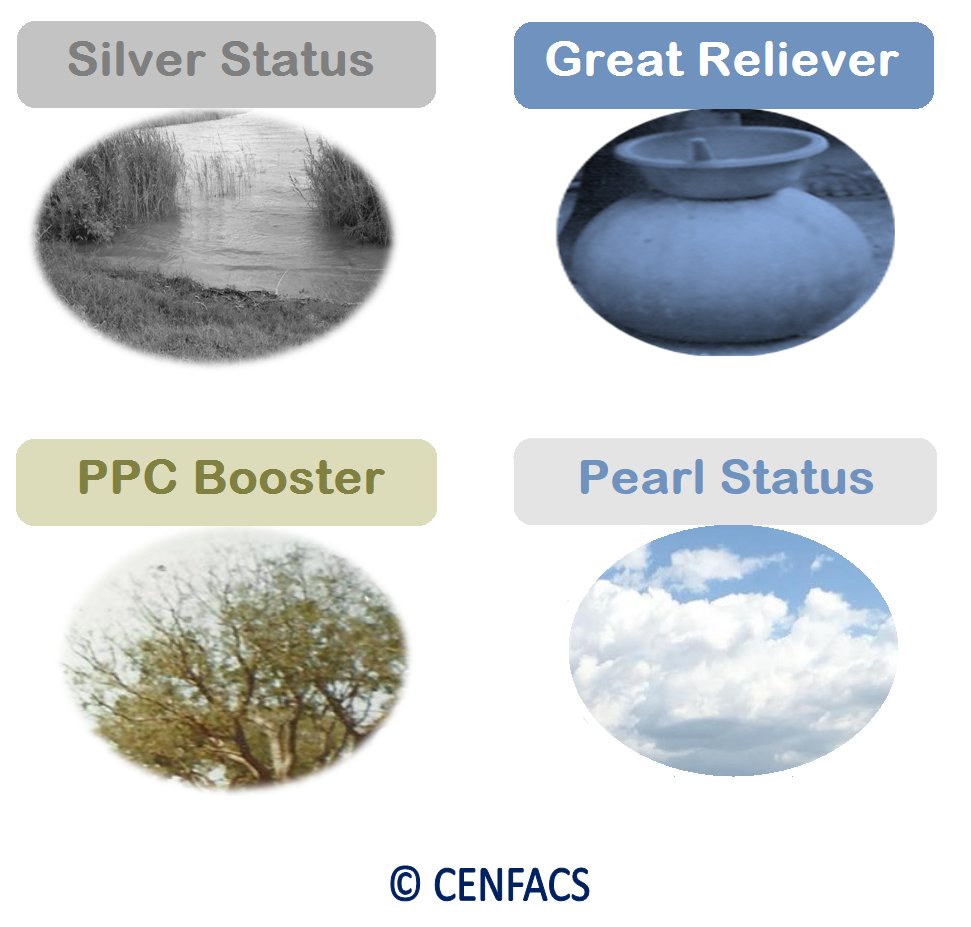
We are inviting those who want to commit themselves as funder or donor to do so. They can do it by supporting CENFACS with a silver donation, a great relief, a product booster and a pearl donation.
• • • Free for Supporters: Silver Status
Silver status is the legacy of CENFACS’ “Quadranscentennial” Year (2019). It is about supporting our projects as you can or as you choose if you visit them or if you happen to be within the area of their implementation. This will boost your support and help you to win a silver status as CENFACS’ Mid-level Donor or Supporter in a CENFACS’ Year of Alternatives.
Alternatively, you can fund CENFACS’ Year of Alternatives to win the same status and continue CENFACS’ legacy.
• • • Want to provide Great Relief as a High-level Donor or Supporter
You can provide great relief by becoming a regular giver or supporter, adding value to you support and boosting your support.
For example, at this challenging time of the high costs of living, we need those who can provide that sort of relief to keep our action going and out of the disruption caused by the costs of living.
Many individuals and organisations stepped in to support their good deserving causes during the storming time of the health crisis (the coronavirus crisis); you can do the same by supporting CENFACS during this time of the high costs of living.
For those who are interested in, they can contact CENFACS for details about becoming a Great Reliever.
• • • Need to boost your support or stewardship as a Product Booster
You can choose a particular sustainable initiative or programme or even CENFACS as your boost product.
You can support 3 projects or 2 projects and CENFACS
You can support 3 programmes or 2 programmes and CENFACS.
This will elevate your position as a Project or Programme Funder or a Product Booster.
• • • Another Free for Supporters: Pearl Status
This title has been created as the legacy of CENFACS’ Tricennial Year (2024). It acknowledges and appreciates the level of support provided or to be provided by Mid-level Donors supporting CENFACS as a tricennial creation in the context of CENFACS’ Tricennium. The title can also be awarded to those who give to our creative/creation projects on regular basis.
For further details about boosting your support or stewardship, please contact CENFACS.
• Project for the Double Transfer of Climate Technology and Finance (In short: The Climate Twin Transfer Project)
The Climate Twin Transfer Project takes at practical level many of the issues raised in the Issue No. 90 of FACS, titled as Local African Charities, the Double Transfer (of Climate Technology and Finance) and Poverty Reduction (1).
To better understand this project, it is better to define it, provide its purpose (the why, what, and value) and funding status.
• • What Is the Climate Twin Transfer Project?
The Climate Twin Transfer Project is an initiative that will enable Local African Charities (LACs) to work with Multinational Charities (MCs) or International NGOs (that may be interested) so that the former can simultaneously receive from the latter sound technology (equipment, knowledge or expertise) and the financial resources required to implement it, while giving back something to make these transfers a two-way process and win-win game for both parties.
The project is designed to help LACs both to mitigate climate change (reduce CO2 emissions) and adapt to its impacts by addressing the dual barriers of lack of capital and lack of technological capacity.
• • The Why, What and Value of the Climate Twin Transfer Project
a) Project Aim
The Climate Twin Transfer Project, which combines the two separate attributes of climate technologies and finance within s single and cohesive framework, aims to accelerate the transition to low-carbon, climate-resilient development pathways in Africa by demonstrating the technical and charitable viability of new solutions and mobilising necessary capital. In doing so, it is hoped that this project will help to reduce poverty linked to the lack climate technologies (CT) and climate finance (CF) for Africa-based Sister Organisations engaged in it.
b) Project Goals
There are three key goals about this project, which are:
i) Bridging the Gap: Directly addressing the technology gap (that is, access to green tech) and finance gap (i.e., funds to pay for it) simultaneously
ii) Mitigation and Adaptation: Providing tools for LACs and their communities to shift to low-carbon energy (mitigation) while building resilience to climate change impacts (adaptation)
iii) Local Capacity Building: Ensuring the technology is understood, adapted, and can be maintained within the local context.
c) Project Usefulness
The Climate Twin Transfer Project combines CT transfer (providing access to equipment, knowledge, and skills) with financial mechanisms to overcome significant barriers (like upfront costs, perceived investment risks, and lack of technical capacity).
The Climate Twin Transfer Project will address both the financial and technical constraints that hinder effective climate action, moving beyond a simple transfer to fostering a sustainable, long-term economic transformation.
The Climate Twin Transfer Project will enhance capacity for LACs, increase self-sufficiency, bring more community impact, and give to LACs ownerships of climate solutions. For MCs, there will be more effective, sustainable project outcomes, stronger local partnerships, enhanced reputation, and better alignment with ethical development principles.
• • Project Funding Status
So far, this project is unfunded. This means we are open to any credible funding proposals or proposition from potential funders or donors. Those who would like to support this project will be more than welcome.
To fully or partly fund this project, please contact CENFACS.
The full project proposals including budget are available on request.
To support or contribute to this project, please communicate with CENFACS.

Extra Messages
• CENFACS’ be.Africa Forum Discuses Poverty Reduction in Africa in 2026 by African Charities
• The Season of Giving, Gifting and Out-of-poverty Lifting Continues with SHOPPING and DONATIONS at http://cenfacs.org.uk/shop/
• Financial Empowerment Programme for Households

• CENFACS’ be.Africa Forum Discuses Poverty Reduction in Africa in 2026 by African Charities
How Africa’s Charitable Organisations Can Use the 5 Os (Opportunities, Openings, Operations, Optimisms and Options) They Have to Further Reduce Poverty and Enhance Sustainable Development in Africa in 2026
In our last week’s post, we argued that 2026 can be a Great Year of Opportunities, Openings, Operations, Optimisms and Options for Africa.
In particular, we mentioned the following:
1) Opportunities and Openings:
2026 can be a year of significant funding opportunities for Africa-based Sister Charitable Organisations (ASCOs), driven by a focus on climate adaptation, women’s empowerment, youth innovation and local capacity building initiatives
2) Optimisms:
2026 is emerging as a period of renewed optimisms for ASCOs, driven by a strategic shift towards local leadership, technical integration, and sustainable, homegrown funding models
3) Operations:
Key trends and operational shifts in 2026 include the micro-ownership fundraising model, AI and digital transformation, impact partnerships over sponsorships, digital subscription models, diaspora investments, and data-driven transparency
4) Options:
2026 offers options centred on self-sufficiency, AI integration, and targeted specialised grants.
In this first discussion of our forum, we are debating how Africa’s charitable organisations can fully operate, mindfully and thoughtfully take options and optimistically engage with the 2026 array of tremendous opportunities and openings to reduce and end poverty in Africa. In simple words, how they can turn the challenges faced by Africa into opportunities to achieve BIG numbers in poverty reduction and sustainable development.
The debate is also revolving around what these organisations can do to use the array of opportunities of 2026 so that 2026 could be remembered in living memory as a year of truly great results in terms of poverty reduction and sustainable development, despite polycrises (humanitarian aid crisis, climate crisis, geo-economic and global rivalries, nature crisis, etc.).
The above are the terms of reference for our first discussion of 2026. CENFACS’ be.Africa Forum would like to hear your views or opinions on the above-mentioned discussion.
Those who may be interested in this discussion can join in and or contribute by contacting CENFACS’ be.Africa, which is a forum for discussion on matters and themes of poverty reduction and sustainable development in Africa and which acts on behalf of its members in making proposals or ideas for actions for a better Africa.
They can contact us at our usual address on this site.

• The Season of Giving, Gifting and Out-of-poverty Lifting Continues with SHOPPING and DONATIONS at http://cenfacs.org.uk/shop/
Every season or every month is an opportunity to do something against poverty and hardships. January too is a good and great month of the year to do it.
You can donate or recycle your unwanted and unneeded goods gifts you received over the festive days to CENFACS’ Zero-Waste e-Store, the shop built to help relieve poverty and hardships.
You can as well buy secondhand goods and bargain priced new items and much more.
CENFACS’ Zero-Waste e-Store needs your support for SHOPPING and GOODS DONATIONS.
You can do something different this Season of Goods Donations by SHOPPING or DONATING GOODS at CENFACS’ Zero-Waste e-Store.
You can DONATE or SHOP or do both:
√ DONATE unwanted Festive GOODS GIFTS and PRODUCTS to CENFACS’ Zero-Waste e-Store this January and Winter
√ SHOP at CENFACS Zero-Waste e-Store to support the noble and beautiful causes of poverty relief this January and Winter.
Your SHOPPING and or GOODS DONATIONS will help to the Upkeep of the Nature and to reduce poverty and hardships.
This is what the Season of Giving, Gifting and Out-of-poverty Lifting is all about.

• Financial Empowerment Programme for Households
To understand this new programme, it is better to explain financial empowerment programme.
• • What Is Financial Empowerment Programme?
Let us start with financial empowerment. Financial Empowerment can be approached in various ways. According to ‘wallstreetmojo.com’ (2),
“Financial empowerment is a financial degree of autonomy, a trait of confidence that helps a community or an individual represent their interests responsibly. It allows the involved parties to act on their terms financially and economically independently and make informed decisions”.
The same ‘wallstreetmojo.com’ adds that
“It grants individuals the ability to manage their finances proficiently, allowing for savings, wise investment selections, and the avoidance of debt pitfalls”.
Knowing what financial empowerment is, it is possible to define Financial Empowerment Programme.
It emerges from the financial literature review that Financial Empowerment Programme is an initiative designed to provide individuals with the knowledge, skills, and tools necessary to achieve financial stability, independence, and improved financial well-being. These knowledge, skills and tools can also be gained by households.
• • What Is CENFACS’ Financial Empowerment Programme for Households?
Like other financial empowerment programmes, CENFACS’ Financial Empowerment Programme for Households is designed to provide households with the knowledge, skills, and tools necessary to achieve financial stability, independence, and improve their financial well-being.
It is a structured initiative that is meant to help households – particularly those on low or moderate incomes – improve their financial stability, build assets, and move away from poverty and hardships.
• • What CENFACS’ Financial Empowerment Programme Can Offer to Households
Unlike similar programmes that provide money or cash (like the Household Support Fund which assists vulnerable households struggling with essential living costs such as food, energy and water bills), CENFACS’ Financial Empowerment Programme does not provide money or cash. It however offers the following:
~ Personalised, one-to-one financial guidance
~ Workshops focusing on financial matters
~ Advocacy
~ Tools and services to manage money
~ Access to financial support and products
Etc.
The programme is integrated into CENFACS Individual and 2026 Capacity Development Programme and Community Value Chains domain to enhance the overall economic mobility of our members.
It helps households reduce their stress, work towards improving their financial skills, and empower them to successfully maintain their finances.
In short, unlike other programmes that give emergency relief (such as a one-time food bank visit) or a fish to eat, CENFACS’ Financial Empowerment Programme teaches programme beneficiaries how to fish. In this respect, CENFACS’ Financial Empowerment Programme aims to provide skills, tools, and confidence necessary to manage money, reduce debt, and build assets, ultimately break the cycle of poverty.
• • What Are Initiatives Making CENFACS’ Financial Empowerment Programme?
A programme is often made of projects and activities. CENFACS’ Financial Empowerment Programme includes these initiatives:
# 2026 Financial Monitoring and Controls as Tools for Poverty Reduction
# Guidance on Year-end Accounts for Households
# Access to AI-enabled Connected Finance Structured Micro-projects).
To kick off this programme, we conducted introductory structured finance activities for each of the above-mentioned initiatives. We are going to continue with these activities these coming weeks when we unveil the working plan for Financial Empowerment Programme for Households.
Those may be interested in Financial Empowerment Programme for Households, they can contact CENFACS. Likewise, those who have any queries and/or enquiries about this programme, they can communicate with CENFACS.

Message in French (Message en français)
• FACS, Numéro 90, Hiver 2025/2026
Titre du numéro : Les Oeuvres de Charité Africaines Locales, le Double Transfert (de la Technologie et des Finances Climatiques) et la Réduction de la Pauvreté – Une approche des transferts caritatifs sous une perspective gagnant-gagnant
Le sujet du transfert, qu’il s’agisse de technologie ou de finance, a toujours été au cœur de toute discussion sur le climat. Le même sujet ne peut être dissocié de la problématique de la pauvreté en Afrique.
En effet, si l’on veut que les populations, en particulier les plus pauvres, passent de l’utilisation des énergies fossiles à des énergies propres, il est nécessaire de leur garantir à la fois la technologie et le financement nécessaires pour ce faire. Pourtant, ces populations pauvres ne peuvent pas facilement sortir de la pauvreté, car le type de pauvreté qu’elles connaissent peut être lié au type de technologie qu’elles utilisent ou n’ont pas, et en même temps, elles manquent de ressources financières pour acquérir des technologies propres. À cet égard, il pourrait être nécessaire d’opérer un double transfert de technologie climatique et de financement climatique vers ces populations ou communautés ayant besoin de transition énergétique et des moyens pour financer cette transition.
Ce sont ces transferts qui nous intéressent, en particulier les transferts caritatifs internationaux. Les transferts caritatifs impliquent le déplacement d’actifs (c’est-à-dire l’argent, les biens et les investissements) d’une entité à une autre à des fins caritatives, souvent d’une organisation caritative à une autre ou d’individus à des organisations caritatives, offrant des avantages tels que des allègements fiscaux, mais nécessitant des démarches juridiques prudentes pour garantir une utilisation correcte et la conformité.
Le type de transferts caritatifs à traiter ici est le transfert d’une organisation caritative à une autre (c’est-à-dire qu’une organisation caritative donne des actifs tels que de l’argent liquide, des biens, de la technologie et des investissements) à une autre. Nous les traitons également dans un contexte international, c’est-à-dire les transferts caritatifs entre des organisations caritatives multinationales et des organisations caritatives locales africaines.
Dans le cas du numéro 90 de FACS, il s’agit du transfert de technologies climatiques et de financements des organisations caritatives multinationales (OCM) vers les organisations caritatives locales africaines (OCLA). Cela malgré le fait que les statistiques indiquent qu’un pourcentage très faible du financement climatique international atteint le niveau local en Afrique, et que le financement global de l’Afrique est nettement insuffisant par rapport aux besoins.
Peut-être, pour éclaircir ce dont nous parlons, il est préférable d’expliquer les concepts de technologie climatique, de finance climatique et du double transfert.
Commençons par la technologie climatique. Du point de vue de ‘unepccc.org’ (3), « Les technologies climatiques sont toutes ces technologies qui contribuent de manière significative à l’atteinte des objectifs d’atténuation et d’adaptation et elles présentent des schémas similaires à d’autres technologies, en particulier en termes de concentration géographique dans les pays à revenu élevé et de faibles niveaux de diffusion dans les pays en développement ».
En ce qui concerne le financement climatique, le site web ‘explorian.io’ (4) explique que
« Le financement climatique dans les pays en développement fait référence aux flux financiers, au soutien et aux investissements fournis par les pays développés, les institutions internationales et d’autres sources pour aider les nations en développement à mettre en œuvre des initiatives d’action climatique, telles que la réduction des émissions de gaz à effet de serre et l’adaptation aux impacts du changement climatique ».
La technologie climatique et le financement climatique peuvent tous deux être transférés. C’est ce double transfert que traite cenuméro 90. Dans la littérature sur le climat, le double transfert dans l’action climatique fait référence au processus lié de transfert de la technologie climatique et du financement climatique des pays développés vers les pays en développement. Le double transfert suggère qu’il est nécessaire d’adopter une approche coordonnée qui inclut à la fois le transfert de technologie et le transfert de ressources financières.
Dans ce double transfert, les OCLA – en particulier les Organisations Sœurs Locales en Afrique de CENFACS opérant sur le terrain dans leurs zones d’intervention en Afrique – ont constaté un manque ou une lacune en matière de technologie climatique et de financement climatique. C’est l’interconnexion de ces deux problèmes et leurs liens avec la pauvreté ou la réduction de la pauvreté qui constitue le 90e numéro de FACS.
Le 90e numéro traite des défis et des impacts négatifs potentiels (tels que les défis liés à l’accès des OCLA aux fonds climatiques, les lacunes en matière de capacités, le caractère centré sur les donateurs du financement climatique, le manque de maîtrise locale dans le transfert de technologie, le problème de responsabilité et de transparence climatiques, et les disparités de financement).
Les transferts de technologie et de finances ne se produisent pas dans le vide. Ils se font par un canal. Le 90e numéro met en évidence les principaux mécanismes de transfert de technologie (comme le soutien financier direct, l’assistance technique et le renforcement des capacités, les partenariats collaboratifs, le déploiement de technologies avancées). À cet égard, le 90e numéro traite de l’argument économique en faveur du transfert de technologies climatiques, car les technologies climatiques offrent de nouvelles solutions ou des solutions alternatives dans différents domaines importants pour le développement économique et la réduction de la pauvreté.
Le 90e numéro considère le transfert effectué par le biais des OCM ou des entités caritatives – c’est-à-dire les transferts à la fois de technologies climatiques et de financements climatiques vers l’Afrique ou les OCLA par des entités caritatives multinationales – tout en examinant les principes ou théories et pratiques sous-jacents à ces transferts.
À cet égard, le 90e numéro met en évidence les principales théories et cadres pour le transfert de technologies climatiques (comme les systèmes nationaux d’innovation, les mécanismes basés sur le marché et les théories au niveau de l’entreprise, les environnements favorables, les revendications d’équité et de redistribution, les droits de propriété intellectuelle, etc.) et les théories du financement climatique (telles que la théorie du financement transformationnel, le principe de l’additionnalité, les modèles de théorie du changement, etc.), ainsi que leur adéquation ou inadéquation avec le contenu du 90e numéro.
Le 90e numéro se concentre particulièrement sur la théorie du double transfert, qui postule que le transfert de technologies climatiques et le transfert de financements climatiques sont intrinsèquement liés et se renforcent mutuellement. La théorie du double transfert souligne l’importance de comprendre les goulots d’étranglement spécifiques qui limitent le transfert des technologies climatiques et le rôle que la coopération au développement peut jouer pour le faciliter. Elle attire également l’attention sur la nécessité d’un soutien international pour accélérer le transfert des technologies climatiques vers les OCLA, car les statistiques montrent qu’un faible pourcentage de ces technologies les atteint.
Le 90e numéro examine également les relations clés entre les OCM, les OCLA, le transfert de financement climatique, le transfert de technologies climatiques et la réduction de la pauvreté en Afrique. Ces relations seront vérifiées au niveau de l’accès au financement climatique, de la mise en œuvre des projets et de la technologie, du renforcement des capacités et de l’innovation, des obstacles à l’accès aux technologies et au financement climatiques par les OCM, de la réduction de la pauvreté et de la pertinence locale.
Loin d’être un discours basé sur l’éloge des mérites des technologies climatiques et des transferts financiers, le 90e numéro aborde les transferts comme un jeu gagnant-gagnant. Il adopte une approche collaborative, dirigée localement et transparente, impliquant un déplacement des modèles traditionnels d’aide descendante vers un cadre de partenariat qui renforce les capacités locales, garantit l’adéquation des technologies et exploite les forces uniques à la fois des OCM et des OCLA. Ce faisant, il met en évidence les relations entre le global (multinational) et le local en ce qui concerne les transferts caritatifs internationaux.
Enfin, le 90e numéro traite du rôle que jouent les OCLA en tant qu’intermédiaires, bâtisseurs de capacités, alleviateurs de la pauvreté et maîtres d’œuvre de projets dans le transfert de technologies et de financements climatiques, notamment pour atteindre les communautés locales et faire en sorte que les projets répondent aux besoins locaux.
Pour une compréhension supplémentaire du 90e numéro de FACS, contactez le CENFACS.

Main Development
• 2026 All-Year-Round Projects (Triple Value Initiatives): Play, Run and Vote for Poverty Relief and Sustainable Development
The following items provide a deep understanding of 2026 All-Year-Round Projects (Triple Value Initiatives):
σ What Is an All-Year-Round Project?
σ What Is a Triple Value Initiative?
σ How Can Running, Playing and Voting Be All-Year-Round Projects?
σ How Can Running, Playing and Voting Be Triple Value Initiatives?
σ All-Year-Round Projects Lifecycle
σ How Can CENFACS Help You to Engage with All-Year-Round Projects (Triple Value Initiatives)?
σ What We Would Like to Hear at the End of All-Year-Round Projects Implementation.
Let us summarize each of these items.
• • What Is an All-Year-Round Project (AYRP)?
AYRP is an initiative or activity that continuously runs throughout the entire year rather than being restricted to a single season, short-term period or specific or temporary or seasonal event. AYRPs are designed for longevity, providing consistent engagement, support, and production over a 12-month period. In other words, they are conceptualised to be sustainable, adaptable to changing conditions, and capable of fostering continuous improvement over an extended period.
To grasp what AYRPs offer, let us highlight their aim, objectives, key characteristics, and main benefits.
• • • AYRPs aim
The primary aim of AYRPs is to create sustained, meaningful impact and lasting change rather than just delivering a short-term, temporary output.
• • • AYRPs objectives
The primary objectives of self-driven AYRPs include skill enhancement and mastery, personal growth and discipline, fostering creativity and passion, professional development and career expansion, personal fulfillment and mental well-being.
• • • AYRPs characteristics
Key characteristics of AYRPs include continuous operation, routine and habit formation, sustainability and evolution, and annual plans.
• • • AYRPs benefits and outcomes
Main benefits of AYRPs are they are designed to reduce burnout and to allow steady progress. In project parlance, AYRPs yield significant lasting outcomes for individuals practising them. These outcomes include the following ones:
~ Enhanced skill acquisition and growth
~ Improved mental wellbeing
~ Greater personal fulfillment and development
~ Behavioural and cognitive changes
~ Social and environmental impact.
Examples of AYRPs are CENFACS’ AYRPs (that is, Play, Run and Vote Projects), which are also Triple Value Initiatives.
• • What Is a Triple Value Initiative (TVI)?
A TVI refers to a strategic approach that simultaneously delivers, measures, and maximizes value across the three interconnected dimensions: social well-being, environmental sustainability, and economic prosperity.
A TVI creates the following three values:
~ Social value (People): Improving the well-being of communities and participants
~ Environmental value (Planet): Reducing ecological footprint, promoting sustainability or improving biodiversity
~ Economic value (Prosperity): Generating social returns, cost saving or long-term economic resilience.
CENFACS AYRPs are as well TVIs (that is, they can be considered as Triple Bottom Line known as People, Planet and Prosperity). A TVI uses the sustainability framework that evaluates an organisation’s commitment to social, environmental and economic performance, often summarised as People, Planet and Prosperity.
CENFACS’ TVIs draw inspiration from this model (5) that ensures that initiatives termed ‘Triple Bottom Line’ (TBL) or ‘People, Planet, Purpose/Prosperity’ create a sustainable, long-term exit from poverty, for beneficiaries while benefiting the wider community and environment.
Let us highlight these values.
• • • CENFACS’ TVIs focus on People (or Social equity and well-being)
It means the emphasis is on improving the livelihood of people, in particular the poor, including health, education, gender equality, and empowerment.
• • • CENFACS’ TVIs focus on Planet (Environmental sustainability)
It signifies that CENFACS’ TVIs recognize that humans, especially the poor ones, are dependent on natural resources. Therefore, AYRPs must protect the local environment to ensure long-term, sustainable livelihoods.
• • • CENFACS’ TVIs focus on Prosperity (Economic opportunity)
This refers to the building of sustainable income streams, financial inclusion rather than just providing temporary relief. This involves not only financial success but also the overall quality of life, health, happiness, and the ability to flourish within the ecological limits of a finite planet.
The above-mentioned three Ps are adapted to ensure a comprehensive impact from CENFACS’ TVIs.
• • How Can Running, Playing/Gaming and Voting Be All-Year-Round Projects?
• • • Making your Running as an All-Year-Round Project
Running can be a sustainable, year-round physical exercise by adopting a flexible, season-specific approach that balances consistency with adaptation. Success involves investing in appropriate gear for different weather conditions, setting varied goals, and maintaining moderation through, for example, 365-day running challenges.
By treating running as a year-long project, you build a foundation of, for example, 32 miles per week, allowing you to maintain fitness, improve resilience, and avoid the start from zero cycle every season.
To make your running an all-year project, you need to
a) Adapt it to seasonal conditions
b) Set a strategy goal
c) Maintain motivation
d) Stay safe and recovered.
• • • Making your Playing/Gaming as an All-Year-Round Project
Playing a game can become an AYRP by transforming it from a fleeting pastime into a structured, long-term endeavour focused on skill mastery, creation, community engagement, or in-dept exploration. This approach, often termed long-gaming or gaming as a lifestyle turns leisure time into a continuous rewarding project.
Within the gaming literature, it is argued that playing a game can be an AYRP by taking into account the following:
1) The Matery Project (Skill Acquisition)
2) The Creative Project (Content Generation)
3) The Completionist Project (Explore)
4) The Community and Social Project (Long-term Interaction)
5) The Curated Experience Project (Themed Journeys).
The keys to maintain a long-term game include:
~ Setting small milestones
~ Creating a routine
~ Documenting progress.
• • • Making your Voting as an All-Year-Round Project
Voting or selecting your Poverty Reduction and Development Manager can be an AYRP by replacing once-a-year, retrospective reviews with continuous performance management, ongoing data collection, and regular data-driven recognition. This shift transforms manager evaluation from a single, high-stress event into a dynamic ‘always-on’ process that tracks consistent leadership behaviours, team engagement, and performance outcomes throughout the year.
To vote or select your best manager, you need to proceed with the following:
a) Implement continuous performance monitoring
b) Establish ‘always-on’ recognition
c) Track behavioural and cultural impact
d) Carry out continuous data collection and review.
In short, your ‘best manager’ award will be an evidence-based conclusion of year-long, transparent, and fair process rather than a subjective, last-minute decision.
• • How Can Running, Playing and Voting Be Triple Value Initiatives?
• • • Running as a physical exercise can be a TVI
Running as a physical exercise can be treated as a TVI by simultaneously providing profound benefits to an individual’s physical health, mental well-being, and social/community connection. This comprehensive approach to wellness addresses the whole person rather than just fitness, offering a high-impact low-cost activity that can lead to significant long-term benefits.
Running as a TVI can be summarised around the following areas:
~ Physical health and longevity (the body)
~ Mental well-being and cognitive function (the mind)
~ Social connection and community (the community).
• • • Playing a game can be a TVI
It can by simultaneously delivering value across three core domains:
a) Cognitive/educational growth
b) Emotional well-being
c) Social or collaborative connection.
This approach leverages the ‘triple bottom line’ of gaming – often referred to as fostering competence, autonomy, and relatedness – to provide benefits that extend far beyond simple entertainment.
So, playing a game can be considered as a TVI through these three values:
a) Cognitive and educational value (Competence)
b) Emotional and psychological value (Autonomy)
c) Social and collaborative value (Relatedness).
• • • Voting or selecting a Poverty Reduction and Development Manager can function as a TVI
Voting or selecting a person to be rewarded as a Poverty Reduction and Development Manager can function as a TVI by simultaneously generating social, economic, and organisational value. This approach aligns with the ‘triple bottom line’ (People, Planet, Purpose) framework, where focusing on social equity (people), and economic development (Purpose) drives sustainable, long-term success.
The initiative creates triple value:
a) Social value (People and Community Impact)
b) Economic value (Prosperity and Efficiency)
c) Organisational and reputational value (Brand and Trust).
• • All-Year-Round Projects Lifecycle
Like any project, All-Year-Round Projects have a lifecycle which includes
Identification, preparation, feasibility study, appraisal, negotiations and agreement, start, implementation, monitoring, reviews, termination, evaluation and impact evaluation.
We shall deal with this lifecycle this coming February by running 12-week workshop programme or Project Planning/Start Up Service for the Users of Triple Value Initiatives (or All Year-round Projects).
In meantime, let us introduce this lifecycle through the metrics for AYRPs so that those would like to embark on these projects start to figure out the quantifiable measurements they need to use to track their progress.
• • • Metrics for AYRPs
These metrics will focus on consistent progress, quality, output, and sustainability rather just short-term completion. What are these metrics? They are as follows.
1) Productivity and consistency metrics (Habits)
These metrics measure your dedication over a long period to prevent burnout and ensure steady progress.
Under this category, an all-year-round project user can use these metrics:
~ Active days per week/month
~ Consistency score
~ Total hours invested.
2) Progress and output metrics (Milestones)
These metrics track tangible progress towards the ultimate, end-of-year goal. Among these metrics are
~ Milestone completion rate
~ Percentage completion
~ Volume metrics
3) Quality and impact metrics (Improvement)
These metrics measure the improvement in skill or quality of the work over time. Metrics considered here are
~ Quality review
~ Rework rate
~ Skill growth benchmark
4) Sustainability and health metrics
They include the following:
~ Energy levels/sustainability check
~ Time utilisation
~ Cost variance.
All the above-mentioned metrics can be used in the context of AYRPs. An all-year-round project user may not use all of them. However, he/she may use key metrics such as habit consistency (e.g., days per week spent on their project), cumulative output, and milestone achievement rate. This is because AYRPs are designed to foster continuous growth, enhance skills, and provide personal fulfillment over a sustained period. It makes therefore sense to check that these benefits are happening when practising AYRPs.
• • How CENFACS Can Help You to Engage with Triple Value Initiatives
The following examples show what we can discuss together before you start.
Example 1: Run Themes
Run themes can include seasonal themes (e.g., seasonal runs), obstacle courses (e.g., mud and obstacle runs) and fun activities (e.g., colour runs).
Let’s take Run to Reduce Poverty.
There are Run Themes. You can Run alone or Run as group or even Run for fun. You can do Seasonal Run or Run to raise money for one of our noble and beautiful causes or even Run to raise awareness. However, there are health and safety issues that everyone who will be involved in this Run activity must follow.
There are ways of making your Run event simpler. To do that, you can contact CENFACS before you plan your event. CENFACS can help you to select your theme. You need to confirm the date and time with CENFACS.
There are other things to consider as well, such as
location, engagement in activities, prizes (rewards for participants), health and safety issues, child protection policy if children are involved, insurance cover, budget, refreshments, communication (e.g., sharing the information about the event online, especially on social media), etc.
Example 2: Play Station Game
Let’s take another example, which is Playing CENFACS’ League for Poverty Relief.
You can create your own play station game with CENFACS’ League and run your own tournament and matches. You can even involve colleagues, friends and families sharing the same passion about how the selected African countries are working to reduce poverty. You can group or rate these countries according to poverty reduction performance (showing which one comes on top, middle and bottom).
You can as well use game theories if you know them. Alternatively, you can use poverty simulator games or create your own fun and easy board game. Like for Run activity, you must include health and safety measures and guidance. However, any game created has to be themed around poverty relief.
Example 3: People to Watch
Let’s take the last example, which is Voting Your Poverty Relief Manager.
You can create your own list of Top 26 People to Watch throughout the year. One or two of them will be potentially the best managers of 2026. You can collect data and facts about them, follow their annual performance, assess their achievements and vote the best between the two at the end. You will need to consider their experience, communication and leadership skills.
While you are running or organising a run activity, playing the CENFACS’ League and voting your Manager of the Year 2026; we would like you to share with us and others your progress, news, events, experiences, stories and reports regarding these projects. We would like as well to hear from you some of the pitfalls or hurdles you may encounter in the process of dealing with your chosen initiative/project. As Triple Value Initiatives are results-oriented, the end product of your share will be a kind of Action-Results Report 2026, which can be included in our State of Play, Run and Vote 2026.
• • What We Would Like to Hear at the End of All-Year-Round Projects Implementation
We would like to hear from you the following three bests or stars of the year:
√ The Best African Country or Countries of 2026 which will best reduce poverty
√ The Best African Global Games Runners of 2026
√ The Best African Development Managers of 2026.
The deadline to tell us your bests or stars is 23 December 2026.
As we progress throughout the year, further information and support (in the form of workshops, discussions, questionnaires, questions-answers, focus groups, etc.) will be released for CENFACS’ Triple Value Initiatives.
Please remember, the early you start the better for you.
For more information about these projects and how they work, please contact CENFACS.
For any further queries and/or enquiries about 2026 All-Year-Round Projects (Triple Value Initiatives), please do not hesitate to communicate with CENFACS.
_________
• References
(1) http://cenfacs.org.uk/bog/2026/01/23/local-african-charities-the-double-transfer-of-climate-technology-and-finance-and-poverty-reduction/(accessed in January 2026)
(2) https://www.wallstreetmojo.com/financial-empowerment (accessed in January 2026)
(3) https://unepccc.org/wp-content/uploads/2023/06/tech-transfer-policy-brief-oecd.pdf (accessed in January 2026)
(4) https://explorian.io/climate-finance-in-developing-countries (accessed in January 2026)
(5) https://online.hbs.edu/blog/post/what-is-the-triple-bottom-line (accessed in January 2026)
_________
• Help CENFACS Keep the Poverty Relief Work Going This Year
We do our work on a very small budget and on a voluntary basis. Making a donation will show us you value our work and support CENFACS’ work, which is currently offered as a free service.
One could also consider a recurring donation to CENFACS in the future.
Additionally, we would like to inform you that planned gifting is always an option for giving at CENFACS. Likewise, CENFACS accepts matching gifts from companies running a gift-matching programme.
Donate to support CENFACS!
FOR ONLY £1, YOU CAN SUPPORT CENFACS AND CENFACS’ NOBLE AND BEAUTIFUL CAUSES OF POVERTY REDUCTION.
JUST GO TO: Support Causes – (cenfacs.org.uk)
Thank you for visiting CENFACS website and reading this post.
Thank you as well to those who made or make comments about our weekly posts.
We look forward to receiving your regular visits and continuing support until the end of 2026 and beyond.
With many thanks.